




Large Oriental Runner
When you search for a large antique oriental runner, you enter a world of hand-knotted tribal and village floor coverings made for long hallways and expansive rooms.
Large Oriental Runner
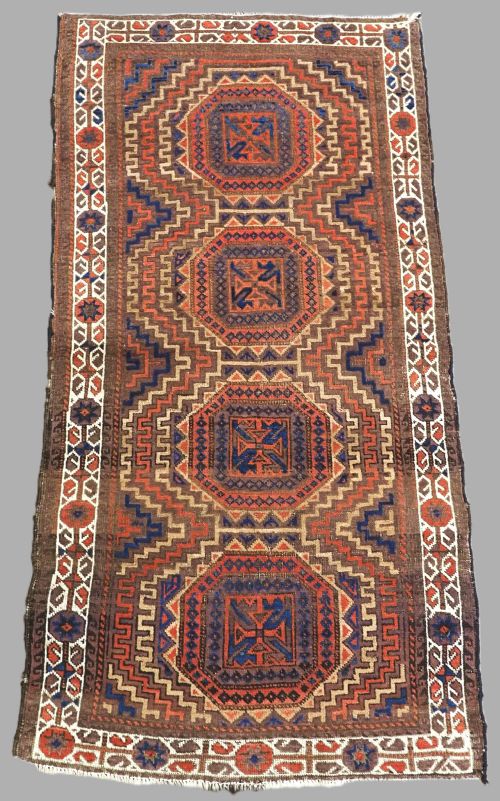
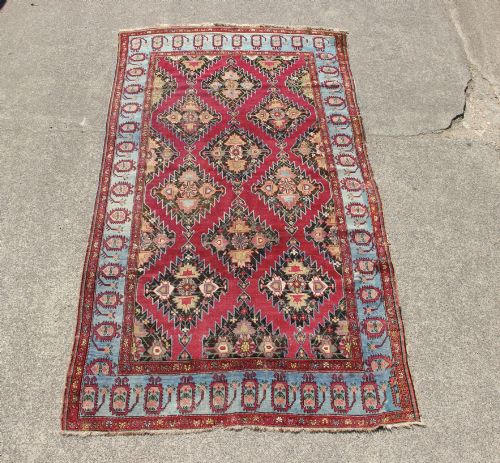
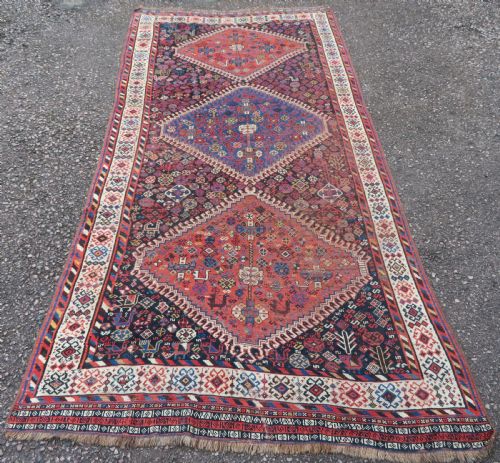
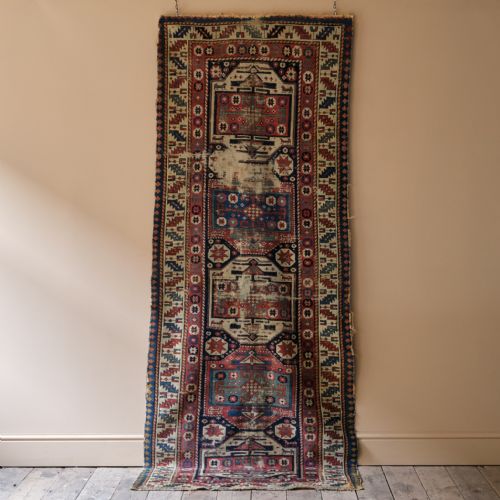
A large antique oriental runner is a long, narrow format textile designed to anchor corridors, galleries, and large reception spaces. These pieces span the nineteenth and early twentieth centuries, originating from village and nomadic workshops across the Caucasus, Persia, and Anatolia. Examples range from Kazak runners with geometric motifs to Kurdish kelleh carpets and Anatolian kelims.
Buyers encounter regional weaving traditions such as Baluch, Hamadan, and Heriz, often characterised by repeating medallions, tribal guls, or tree of life designs. The elongated proportions serve a practical function while displaying the distinct visual language of their specific weaving tribe or village.
How they were made
The foundation relies on hand-spun wool and cotton, providing a sturdy base for dense pile weaving or flatweave construction. Natural dyes yield deep tones of red, indigo, and earth pigments that develop a rich patina over decades of use.
Weavers knot the wool by hand onto the warp and weft threads, creating durable structures designed to withstand heavy foot traffic in domestic hallways. Edge finishes and kilim end panels are worked by hand to secure the structure against fraying.
Listings feature traditional hand-spun wool and natural dyes across nineteenth-century Persian tribal and Caucasian runner formats.
What varies in quality
Quality rests upon knot density, the clarity of the geometric or floral motifs, and the depth of the natural dyes. Tightly packed wool yields a crisp design execution and a resilient pile that maintains its integrity over generations.
The balance of the design, the saturation of the vegetable dyes, and the original integrity of the side cordings and end finishes set superior examples apart from standard village productions.
Kurdish weavers·Ersari Turkmen·Bakhtiari villages
The Large Oriental Runner Glossary
- Gul
- A repeating medallion or octagonal motif frequently found in Turkmen, Baluch, and central Asian carpets. It often denotes tribal identity and lineage.
- Kelleh
- A large format carpet or long rug traditionally proportioned longer than a standard room rug but wider than a narrow corridor runner. This format suits spacious galleries and hallways.
- Kilim
- A flatweave textile produced without a pile by tightly interweaving warp and weft strands. These pieces function as floor coverings or tent dividers.
- Boteh
- A stylised almond or paisley motif representing a floral shoot or cypress tree. It appears across Persian and Caucasian weaving traditions.
Large Oriental Runner: Frequently Asked Questions
Where were these runners used?
These elongated floor coverings were traditionally placed in grand hallways, long corridors, and large reception rooms to protect wooden flooring and provide warmth. Their narrow proportions matched the architectural layouts of period homes.
Nomadic tribes and village weavers also utilised them inside large tents and communal spaces where long formats suited the interior arrangement.
How do I care for a wool runner?
Regular gentle vacuuming without a rotating brush roll prevents dust accumulation in the wool pile. Professional cleaning by a specialist familiar with antique vegetable-dyed textiles preserves the fibres.
Keeping the piece out of direct, harsh sunlight protects the natural dyes from fading over time. Using an appropriate underlay prevents slipping and reduces friction against the floor.
How do I identify tribal designs?
Tribal designs are identified through repeating geometric patterns, stylized animal motifs, and distinct medallion structures such as guls or star polygons. Each weaving group, from the Caucasus to Anatolia, utilised specific palettes and symbol arrangements.
Examining the weave structure, wool texture, and fringe finish helps connect a runner to its specific region of origin.
Are natural dyes used in all pieces?
Natural dyes derived from plants, roots, and insects form the colouring agents in traditional nineteenth and early twentieth-century village weavings. These dyes produce complex, muted tones that age gracefully.
Later pieces from the twentieth century occasionally incorporate early synthetic dyes, which can be identified by sharper, less varied colour shifts.