
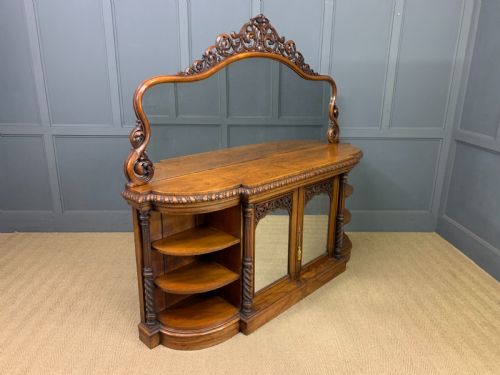


Large Mirror Sideboard
A large antique mirror sideboard brings grand scale and reflecting light to a room, combining substantial timber storage with an integrated glass back.
Large Mirror Sideboard
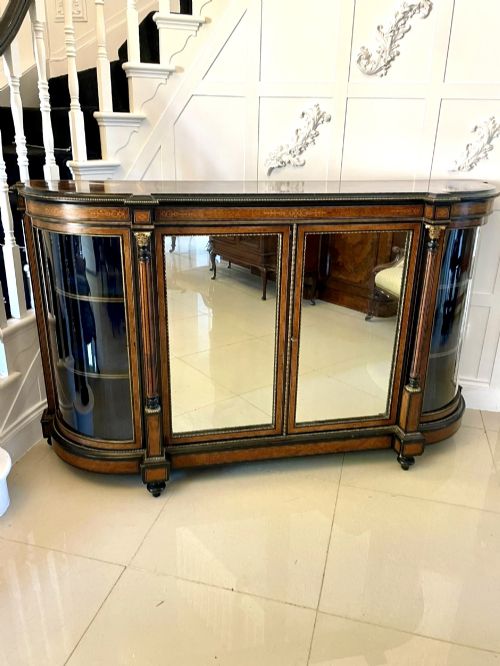
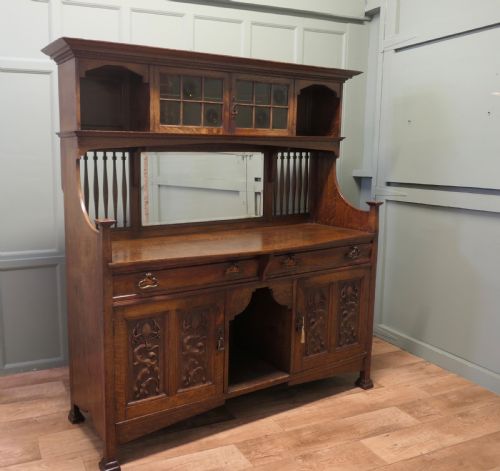
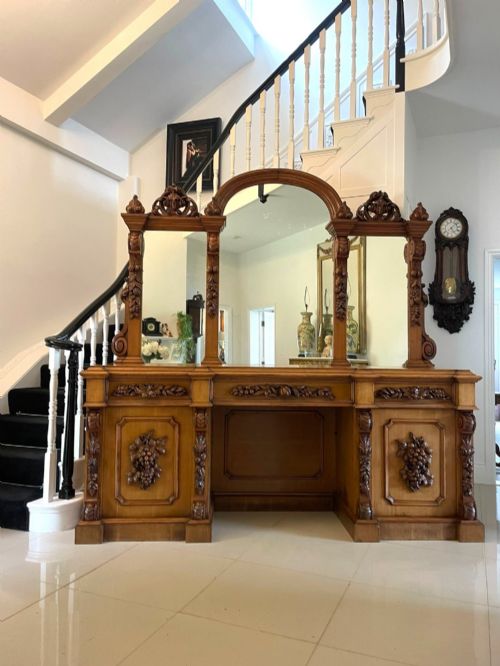
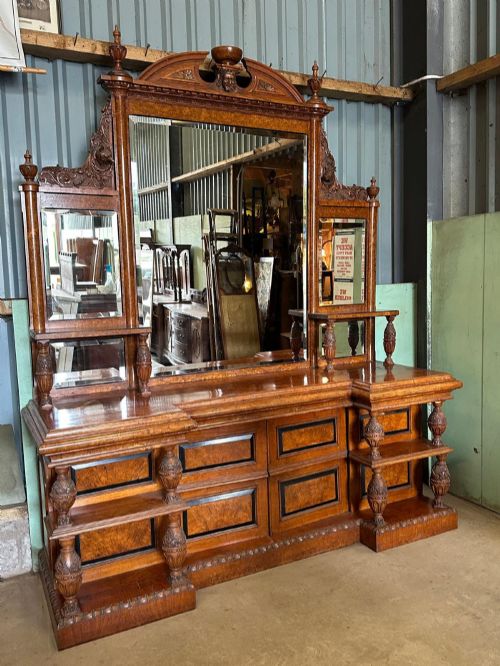
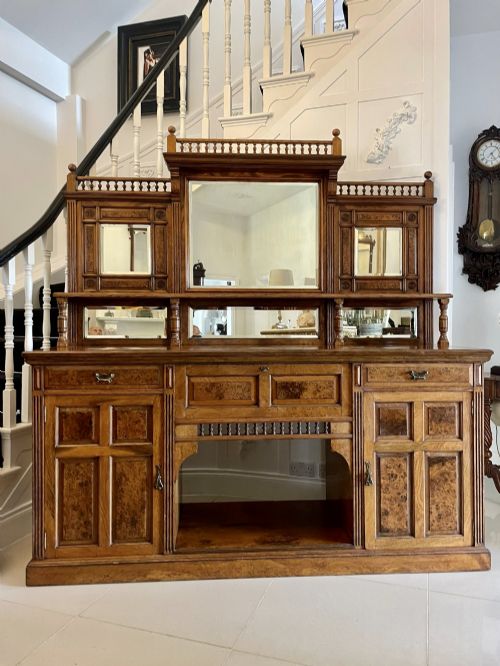
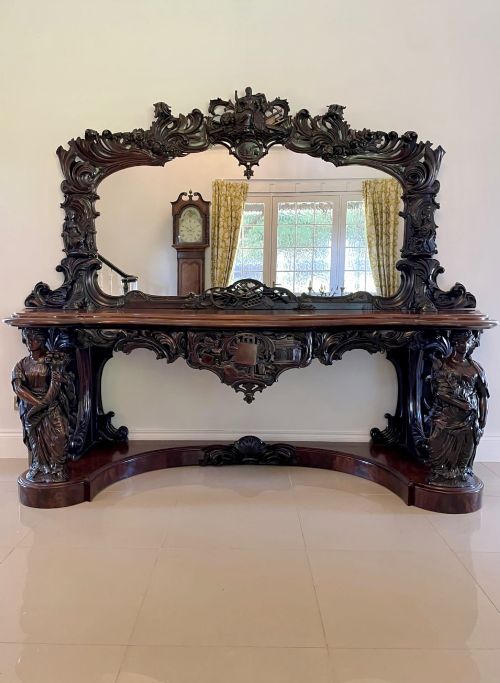
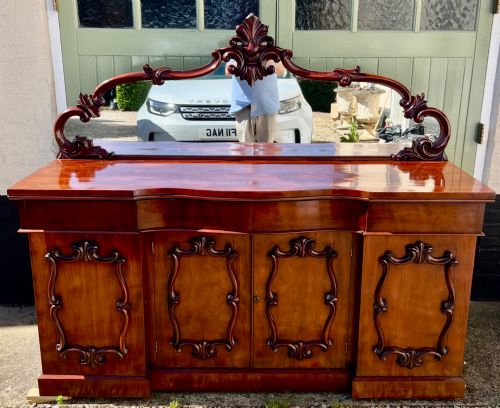
When you search for a large antique mirror sideboard, you encounter substantial dining room and reception furniture designed to anchor a substantial wall. These pieces combine a lower base of cupboards, drawers, or pedestals with an upper tier holding a large mirror plate. The listings show forms spanning Victorian, Edwardian, and nineteenth-century periods, alongside related sideboard, credenza, and chiffonier variants.
The Victorian pieces dominate the selection, often appearing in grand proportions with carved details and architectural pediments. You also meet Edwardian examples that lean towards inlaid rosewood or lighter oak construction. The lower section typically provides deep storage for dining ware, whilst the tall mirror above bounces daylight around the interior.
Makers and retailers such as James Schoolbred, Gillows, Howard and Sons, and Maple & Co produced high-end iterations during the nineteenth century. These workshop-attributed items sit alongside unlabelled pieces of similar scale and ambition. The overall form remains consistent in its heavy timber presence and dominant central mirror.
Materials and construction
Cabinetmakers built these large forms using solid timbers and carefully selected veneers over stable deal or mahogany carcases. Mahogany, pollard oak, burr walnut, and standard oak provide the primary structural and visual surfaces, often enriched with flame mahogany veneers. Ormolu mounts, brass hardware, and intricate carvings add detail to the architectural frameworks.
The mirror plates are substantial bevelled or flat glass inserts secured within heavy wooden frames attached firmly to the rear of the sideboard base. Joinery methods rely on traditional pegged mortise and tenon joints for the structural frames, with hand-dovetailed drawer boxes. Veneers are laid by hand using traditional animal glues, requiring precise matching across large expanses of timber.
A grinning Green Man occasionally peers out from the heavy oak carvings, keeping a watchful eye on the dining room.
Judging quality in large sideboards
Quality reveals itself in the choice of timber and the ambition of the carving. Finely figured pollard oak, burr walnut, or flame mahogany veneers indicate a higher tier of production than plain stock timber. Deep, crisp hand-carving on the mirror frame and pediment separates superior workshop output from simpler commercial pieces.
The integration of the mirror back to the base dictates structural success. Top-tier examples exhibit seamless architectural harmony between the heavy timber sideboard below and the towering glass above, often incorporating maker stamps or exhibition-grade finishing details.
Gillows·Howard and Sons·Maple & Co
The Large Mirror Sideboard Glossary
- Sideboard
- A large piece of dining room furniture used for serving food and storing tableware. These pieces often feature a combination of drawers and cupboards in the lower base.
- Chiffonier
- A compact sideboard variant that frequently includes enclosed shelving beneath a smaller superstructure. They share lineage with the larger mirrored forms found in Victorian interiors.
- Credenza
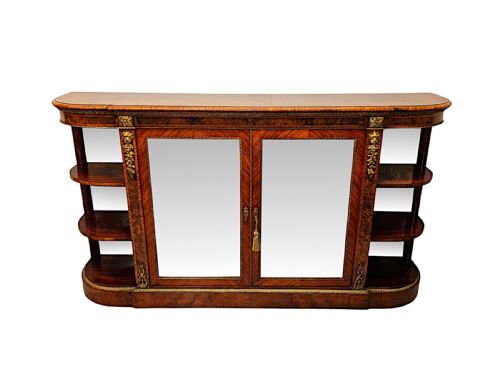
- A sideboard or cabinet originally lacking legs, standing directly on the floor. Victorian iterations often incorporate fine marquetry, amboyna, and ormolu mounts.
- Pedestal sideboard
- A form featuring two distinct columnar pedestals flanking a central section of drawers or cupboards. This heavy architectural arrangement suits grand dining spaces.
- Ormolu
- Gilded bronze ornamentation applied to furniture surfaces. It appears on high-end nineteenth-century credenzas and sideboards as mount details.
- Pollard oak
- Timber taken from trees that have been pollarded, producing a dense, knotty grain pattern prized by Victorian cabinetmakers.
Large Mirror Sideboard: Frequently Asked Questions
Where did these large sideboards stand?
These large sideboards stood principally in formal dining rooms and grand reception spaces of nineteenth-century homes. Their primary domestic function was the storage and serving of heavy dining silver, linens, and porcelain.
The massive mirror above served to reflect candlelight and natural daylight around dark Victorian interiors, visually expanding the room. They were intended as permanent architectural fixtures rather than movable items.
How do I clean the wooden surfaces?
Maintenance requires gentle dusting with a soft, lint-free cloth to prevent the accumulation of grit on the timber and veneer surfaces. Avoid modern aerosol polishes containing silicone, which can penetrate historic finishes.
Apply traditional beeswax sparingly to nourish the aged polish and buff gently to maintain a soft sheen. Keep the timber away from direct heat sources and strong sunlight to prevent veneer lifting.
How are Victorian and Edwardian styles told apart?
Victorian sideboards generally display heavier proportions, darker timbers like pollard oak and burr walnut, and robust carvings such as Green Man motifs or Renaissance Revival details. The construction prioritises heavy architectural presence and grand scale.
Edwardian pieces often utilise lighter timbers such as rosewood or inlaid satinwood, featuring more restrained proportions and refined decorative stringing. The overall aesthetic shifts towards a brighter, less imposing footprint.
Can these heavy sideboards be dismantled?
Most large mirror sideboards separate into distinct components for transport and installation. The upper mirror superstructure typically unbolts from the lower sideboard base, and heavy doors or internal shelves often lift out.
Professional removal is strongly advised due to the substantial weight of the timber carcase and the fragility of the large glass mirror plate. Ensuring stable wall fixings is also essential once reassembled in a new room.