




Large Kilim
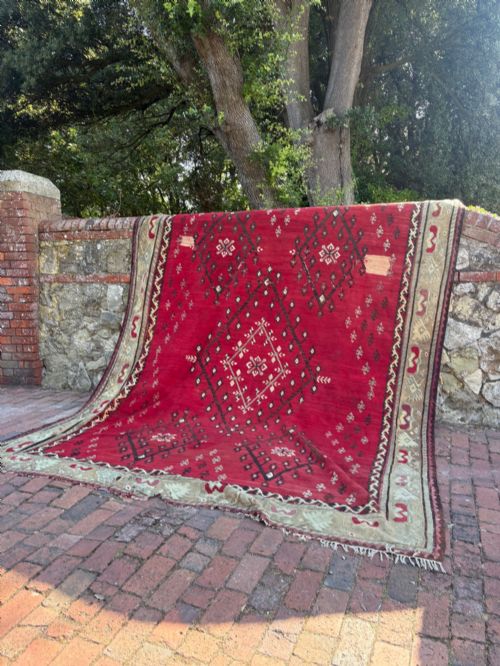
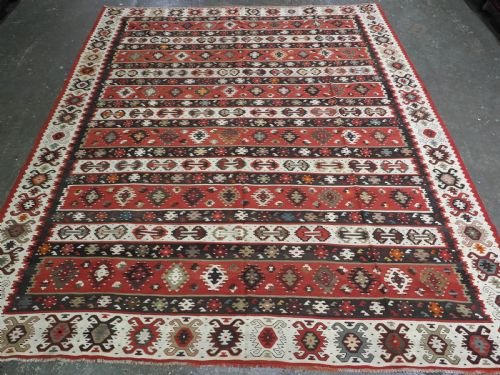
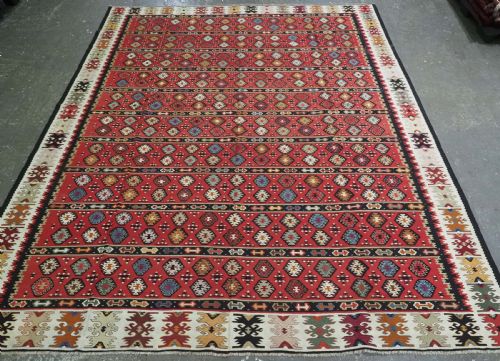
A large antique kilim brings flatwoven tribal geometry and room-scale presence into an interior.
Large Kilim
A large antique kilim is a flatwoven textile produced by tribal and regional weavers across Anatolia, the Caucasus, and Eastern Europe. These substantial floor coverings and carpets were constructed for practical use in domestic spaces rather than as purely decorative items.
The pieces encountered most frequently on this page date from the late nineteenth century through the 1920s. They span diverse regional aesthetics, from Anatolian tribal motifs to Balkan folk compositions and Bessarabian floral designs.
Room-sized examples provide substantial coverage for modern floors while maintaining the lightweight profile characteristic of slit-tapestry weaving. Buyers select them for their graphic impact and historical depth.
Materials and construction
Wool serves as the primary material for the surface pile and structure, frequently paired with cotton foundations for stability in room-scale formats. Hand-spun wool yarns absorb natural dyes with subtle tonal variations that emerge across the broad expanses of these large carpets.
The defining technique relies on flatweaving, specifically slit-tapestry construction where weft threads loop back at the boundary of each colour block. This method produces crisp geometric transitions without adding the heavy pile found in traditional knotted carpets.
Large Kilim Retail Price Guide 2026
Typical asking prices for large kilim among the pieces listed under this phrase on Sellingantiques today, from the lower quarter to the upper quarter. They describe what is for sale here now, not the wider market.
Certain antique pieces preserve the nimble handiwork of nomadic weavers who tucked tiny protective symbols right into the border margins.
Factors of quality
The integrity of the flatweave structure and the balance of the composition govern the standing of an individual piece. Finer weave density allows for crisper execution of complex medallion and banded designs.
The preservation of original dimensions and the condition of the edges contribute significantly to visual harmony. Handling of past repairs and the retention of saturated natural dye palettes also distinguish the finer examples from heavily weathered survivals.
The Large Kilim Glossary
- Kilim
- A flatwoven textile produced without a pile through interlocking or slit-tapestry techniques. This construction creates a smooth, reversible surface suited to floor placement or wall hanging.
- Flatweave
- A general category of textile woven on a loom without knotting individual tufts into the warp. The resulting fabric lies thin and flat on the floor.
- Medallion
- A central ornamental motif positioned in the middle of the field. These focal designs often incorporate geometric or floral elements characteristic of the weaving region.
- Banded design
- A composition arranged in horizontal stripes across the field of the textile. This layout frequently incorporates repeating geometric motifs.
- Slit-tapestry
- A weaving technique where adjacent weft colours turn back on their respective warp threads, leaving a small vertical slit. This method allows weavers to execute sharp geometric patterns.
Large Kilim: Frequently Asked Questions
How were large antique kilims used?
These flatwoven textiles served primarily as floor coverings, tent furnishings, and wall hangings within nomadic and village households. Their lightweight construction made them practical for daily use and seasonal transport.
In contemporary interiors, their generous proportions make them suitable for anchoring living rooms, dining spaces, and large hallways as durable area rugs.
How do I identify the regional origin?
Regional attribution relies on specific combinations of palette, wool quality, and structural motifs. Anatolian and Caucasian pieces tend to favour geometric medallions and tribal symbols, while Bessarabian and Ukrainian examples often display naturalistic floral sprays.
Structural details such as the handling of the selvedge edges and the composition of the cotton or wool foundation further clarify where the textile was woven.
Are these textiles durable for daily foot traffic?
The dense flatweave construction provides strong structural resilience against standard foot traffic in domestic settings. Because they lack a raised pile, they do not crush or shed fibres the way knotted carpets do.
Placing an appropriate underlay beneath the textile prevents slipping and cushions the flat structure against hard floorboards.
How do I care for a vintage flatweave?
Regular gentle vacuuming without a rotating brush roll keeps dust from settling between the tightly packed warp and weft threads. Professional cleaning designed for antique textiles ensures that natural wool fibres and historic dyes remain protected.
Rotating the carpet periodically distributes wear evenly across the surface when exposed to regular foot traffic and direct sunlight.