

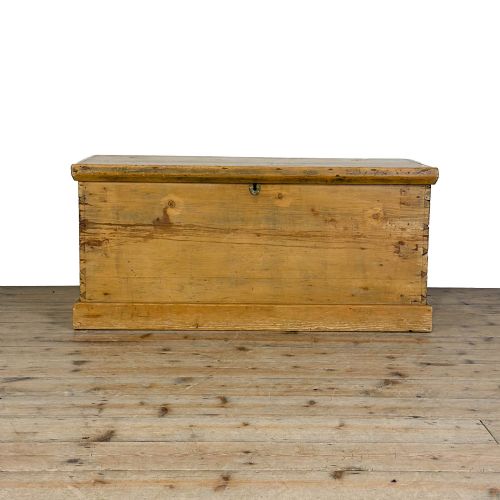
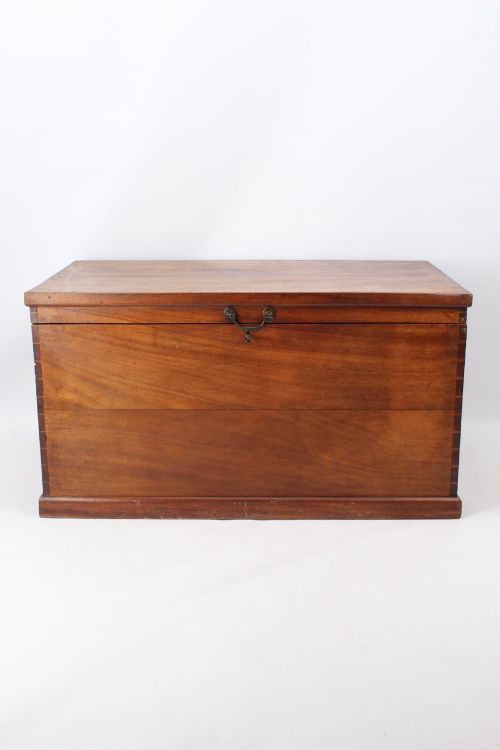
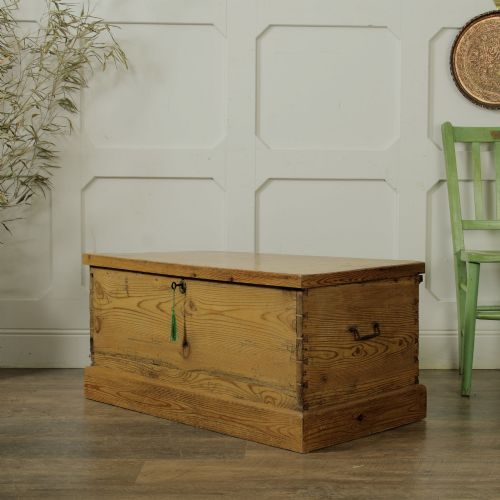
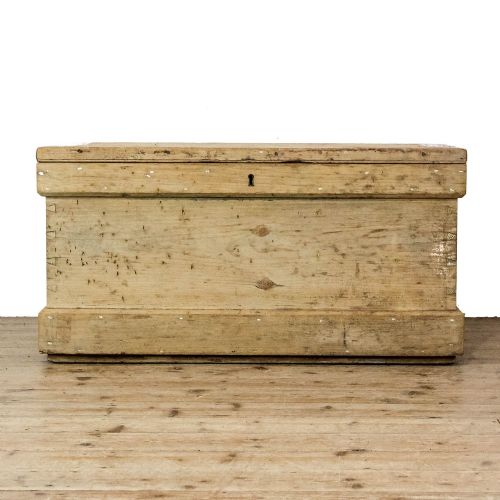
Large Blanket Chest
A large antique blanket chest brings profound history and substantial storage into a room, fashioned from robust timbers like oak and pine.
Large Blanket Chest
A large antique blanket chest serves as a primary storage vessel, encountered frequently in pine and oak across this selection. These substantial pieces span centuries of domestic utility, originating as secure receptacles for household linens and textiles.
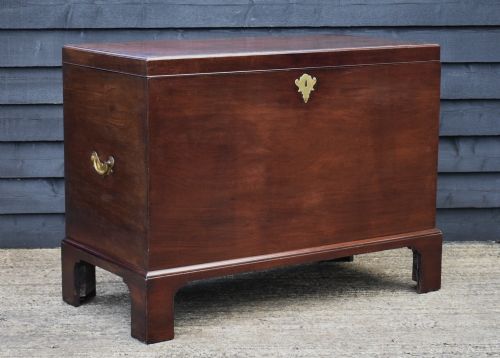
The varieties span vernacular country pieces in stripped or painted pine alongside formal Georgian and Victorian examples in mahogany, walnut, and oak. Buyers often encounter camphor wood and teak variants adapted for travel or colonial trade.
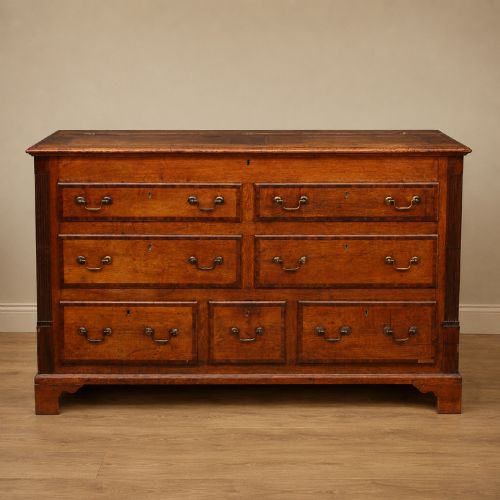
Form follows function across these storage chests, appearing as simple plank construction, panelled coffers, and complex mule chests featuring internal drawers. Each variant reflects the regional materials and domestic demands of its period.
Construction and Materials
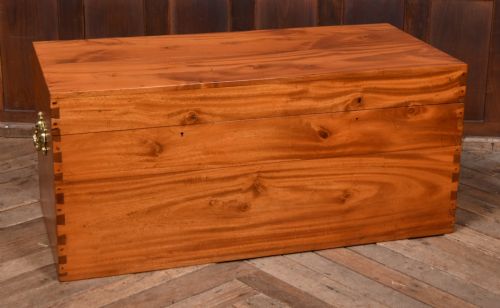
Cabinet makers and vernacular joiners utilised solid hardwoods like oak, mahogany, and walnut alongside utilitarian softwoods such as pine and pitch pine. Joints typically relied on traditional pegging, dovetailing, and sturdy panel construction to withstand heavy domestic use.
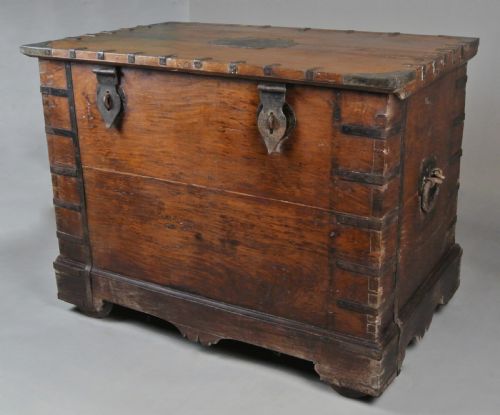
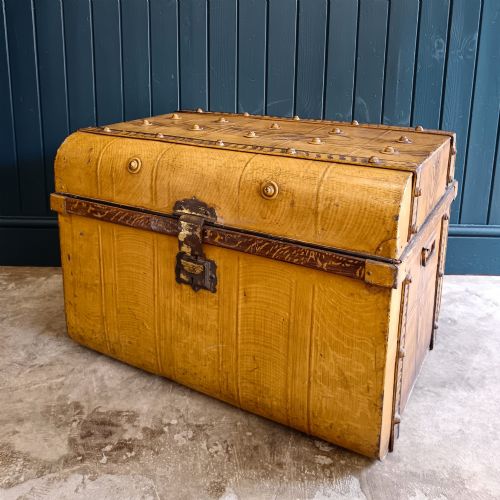
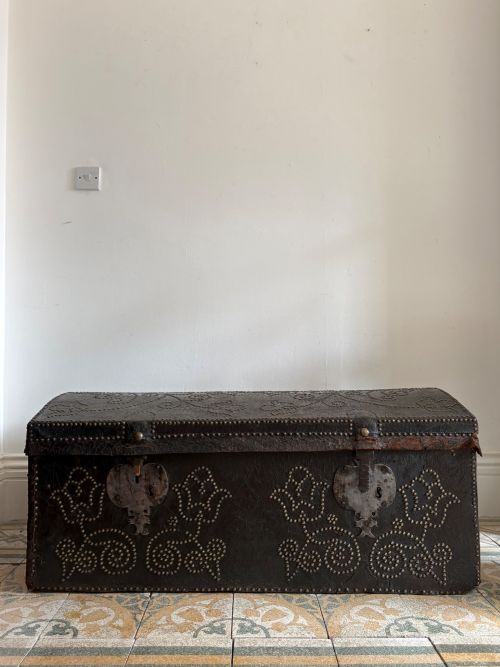
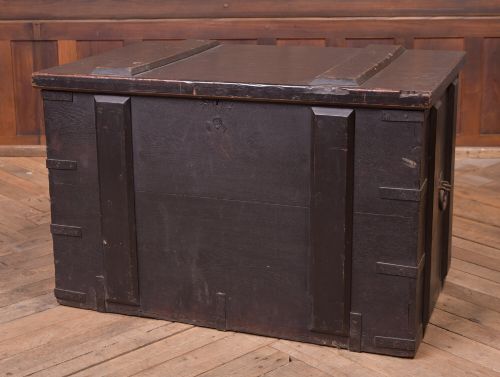
Metal reinforcement frequently supplemented the woodwork, employing brass bindings, iron straps, and leather studding to protect corners and contents during transit. Surfaces received finishes ranging from simple wax and polish to intricate hand-painting and faux-wood effects.
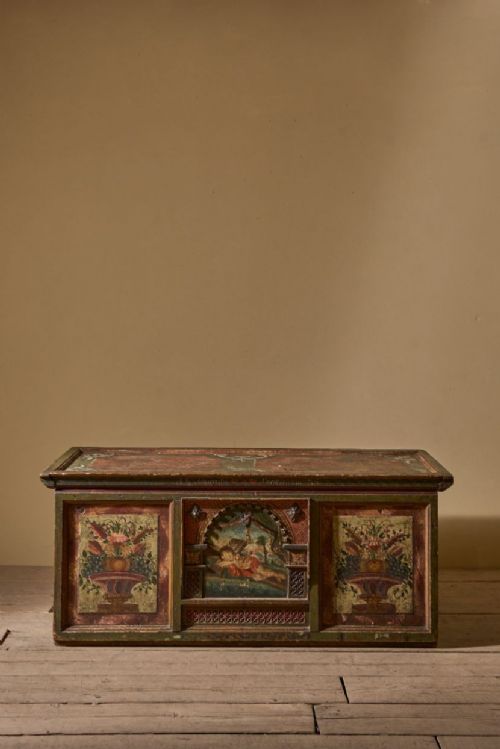
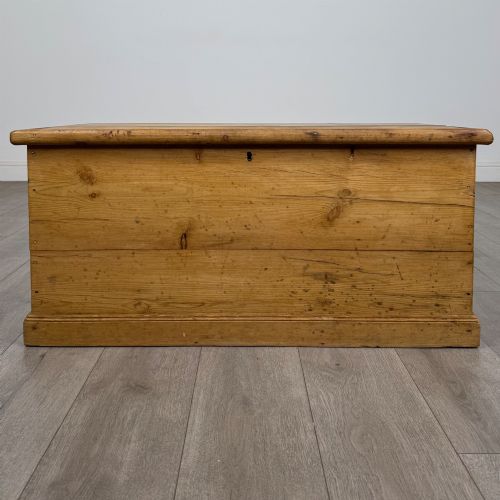
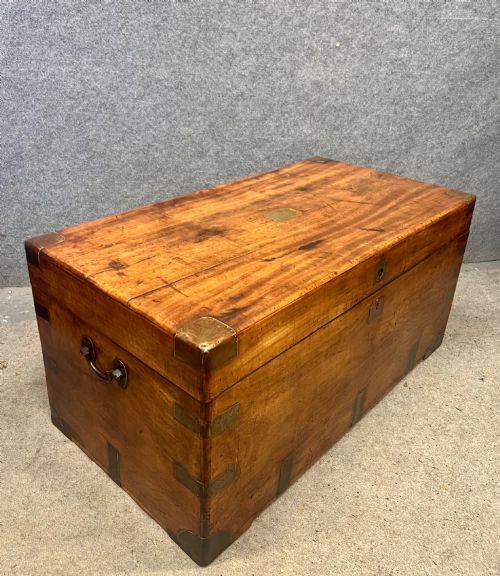
Surface treatments across the inventory include hand-painted marriage motifs, iron bindings, brass campaign hardware, and plain waxed finishes.
Evaluating Quality
The calibre of a large antique blanket chest rests upon the integrity of its primary timber and the skill of its joinery. Thick, stable boards with minimal modern intervention demonstrate superior original craftsmanship.
Hardware integrity elevates certain pieces, distinguishing standard domestic boxes from campaign chests outfitted with quality brass handles, secure locks, and iron bindings.
Hallett And Sons
The Large Blanket Chest Glossary
- Mule chest
- A traditional storage chest featuring one or more drawers built into the base beneath the main compartment. This form evolved during the eighteenth century to provide more accessible storage.
- Coffer
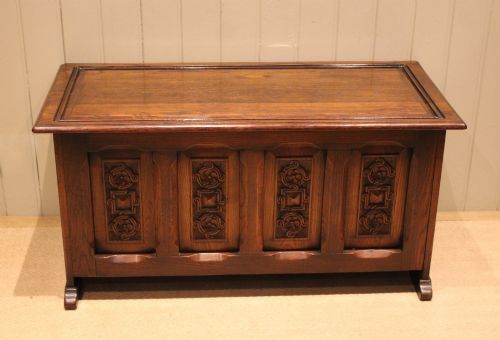
- A heavy, timber-framed storage box with a hinged lid, traditionally utilised for valuables and textiles. Early examples display dense panel construction and hand-carved ornamentation.
- Campaign chest
- A portable storage box designed for military officers, typically constructed in sections with recessed brass handles and corner brackets. These pieces utilise durable timbers like camphor wood and teak.
- Crossbanding
- A decorative technique where thin strips of veneer are laid across the grain of the primary wood around the border of a panel or lid. This practice adds visual contrast on formal Georgian furniture.
- Dowry chest
- A large storage receptacle commissioned or acquired to hold household goods and linens in anticipation of marriage. These pieces frequently exhibit painted decorations or carved initials.
Large Blanket Chest: Frequently Asked Questions
What were large antique blanket chests originally used for?
These vessels stored heavy woolen blankets, household linens, and valuable textiles to protect them from moths and dampness. Their sturdy construction also allowed them to double as seating benches within domestic spaces.
In travelling contexts, such as campaign or steamer trunks, they transported personal belongings across long distances by land and sea.
How do I date an antique blanket chest?
Dating relies on observing construction methods, timber choices, and hardware styles relative to documented periods. Hand-cut dovetails, pegged joints, and regional wood preferences offer reliable chronological indicators.
Stylistic shifts, such as the transition from heavy seventeenth-century oak carving to cleaner Georgian lines and Victorian utilitarian pine, further clarify the timeline.
Where should I place a blanket chest in my home?
A large chest functions naturally at the foot of a bed for supplementary linen storage. They also serve as coffee tables or window seats in living areas while concealing everyday clutter.
Placement should avoid direct heat sources and intense sunlight to protect aged timber, polish, and painted surfaces from drying or cracking.
What is the difference between a coffer and a mule chest?
A coffer consists simply of a deep storage box accessed exclusively from a hinged lid at the top. This form represents the earlier traditional style of trunk construction.
A mule chest incorporates one or more functional drawers beneath the main compartment, combining the deep storage of a coffer with the accessibility of chest-of-drawers design.