


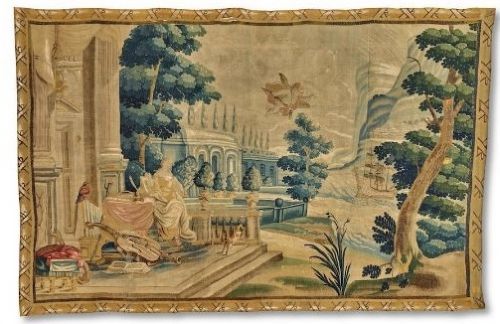


Landscape Wall Textile
These landscape wall textile pieces bring centuries of woven woodland, mythological scenes and pastoral views directly into your rooms.
Landscape Wall Textile
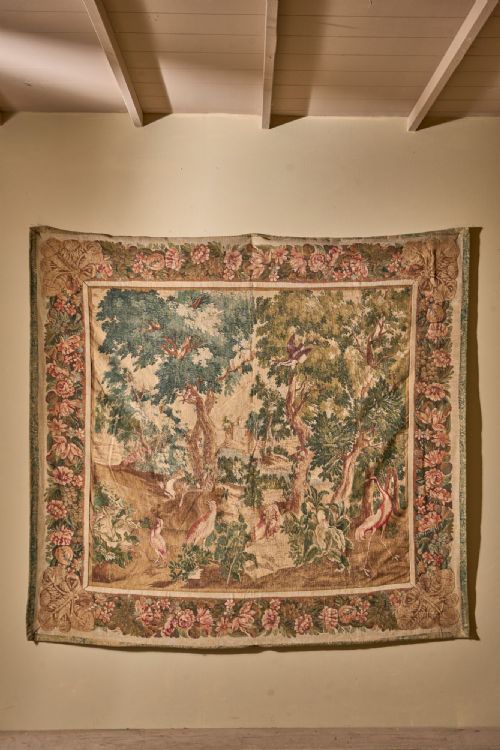
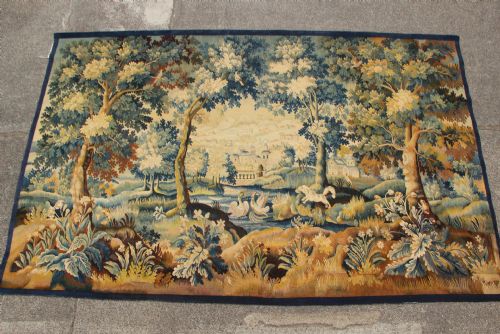
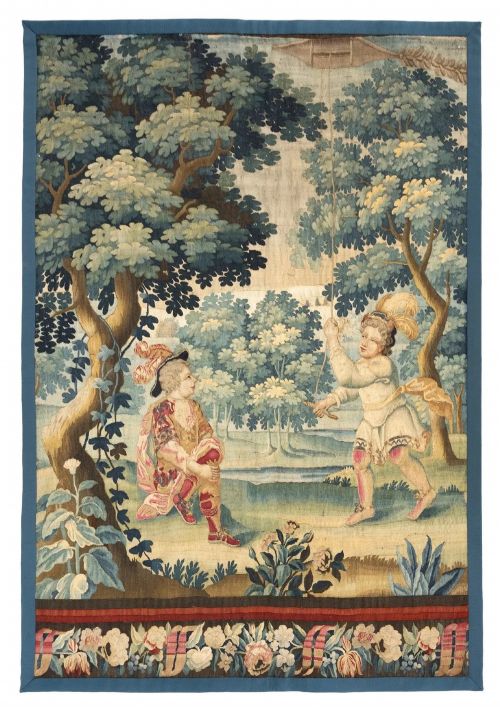
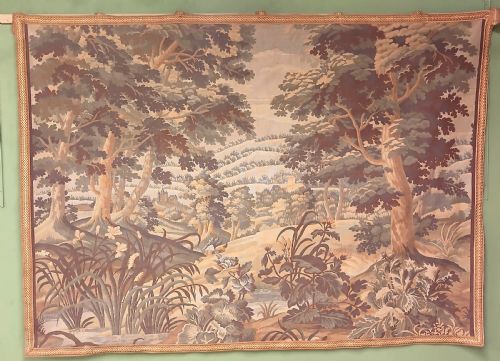
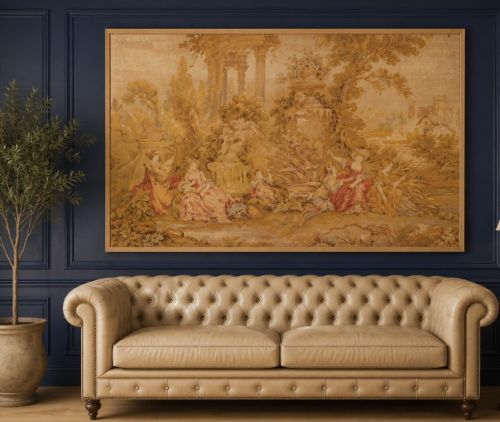
A landscape wall textile encompasses large hanging tapestries, framed tapestry panels, needlework pictures and textile art. When searching for a landscape wall textile, you encounter grand room-scale wall hangings alongside smaller framed examples.
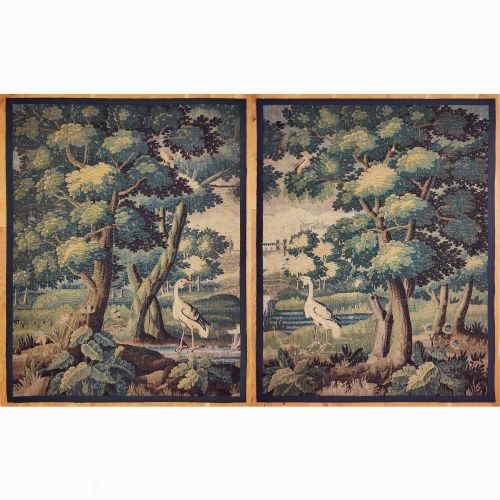
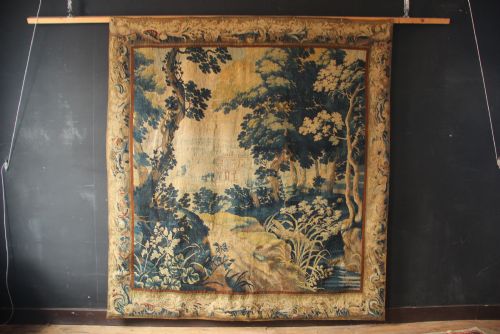
The selections span from the seventeenth century through to the nineteenth century, with strong representation from Flemish Baroque and Aubusson traditions. Verdure scenes dominated by foliage, trees and pastoral landscapes appear frequently among the options.
Origin points cluster around France and Flanders, with specific works attributed to centres such as Aubusson and Audenaarde. Formats range from massive multi-metre wall tapestries to narrower panels and framed wool work pictures.
How they were made
The primary materials recorded are wool, silk, linen and cotton, woven or embroidered on canvas grounds. Many examples utilise fine gros point and petit point needlework techniques.
Frames incorporate wood, including rosewood, and glass to protect delicate textile surfaces. Gilt accents sometimes complement the wooden surrounds of framed wall art.
Recorded styles range from Flemish Baroque and French Chateau to Arts and Crafts needlework pictures and Georgian framed wall art.
What varies in quality
The fineness of the weave and the complexity of the needlework dictate the calibre of each textile. Tightly executed gros and petit point stitching allows for intricate rendering of foliage, figures and architectural details.
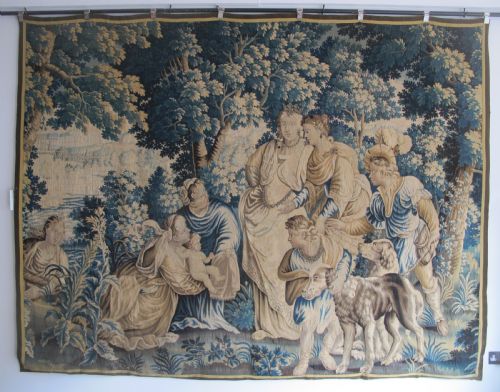
Scale and composition drive distinction, from expansive mythological and biblical narrative scenes down to smaller verdure panels. The survival of rich colour and the integrity of early wooden and gilt frames further separate standard examples from exceptional pieces.
The Landscape Wall Textile Glossary
- Verdure tapestry
- A wall hanging featuring a predominant design of plants, trees, foliage and often birds or animals. These landscape scenes formed a staple of seventeenth and eighteenth century production.
- Aubusson
- A town in France famous for its tapestry weaving tradition. Pieces originating from here often display refined pastoral or floral designs.
- Gros point
- A coarse needlepoint stitch executed on canvas. It provides texture and structure, frequently paired with finer stitching in antique textile works.
- Petit point
- A fine, detailed needlepoint stitch worked on canvas. It allows for subtle shading and intricate detail in historical textile pictures.
- Flemish Baroque
- A dominant artistic style originating in Flanders during the seventeenth century. Tapestries from this tradition combine dramatic movement with lush natural landscapes.
Landscape Wall Textile: Frequently Asked Questions
Where should I hang a large wall tapestry?
These large textiles suit expansive wall spaces in living rooms, hallways or above dining room sideboards where they can be viewed without obstruction.
Ensure the hanging method distributes the weight evenly across the upper edge to prevent distortion of the weave over time.
How do I care for antique textile art?
Keep textile pieces away from direct sunlight to prevent the fading of wool and silk threads. Gentle vacuuming through a mesh screen helps remove dust accumulation.
Avoid hanging them in damp environments such as unheated conservatories or bathrooms where moisture can damage natural fibres.
What is the difference between verdure and biblical tapestries?
Verdure tapestries focus primarily on landscapes, trees, foliage and occasionally animals or distant chateaux. They create a natural, immersive forest canopy effect on the wall.
Biblical or mythological tapestries incorporate specific narrative figures and human histories into the woven landscape setting.
How do I identify a nineteenth century piece?
Nineteenth century works often display revived French Baroque or Arts and Crafts aesthetic influences. The framing materials and canvas backing frequently exhibit nineteenth century manufacturing traits.
Examining the specific wool and silk dye shades alongside the weave density helps distinguish these later interpretations from seventeenth century originals.