
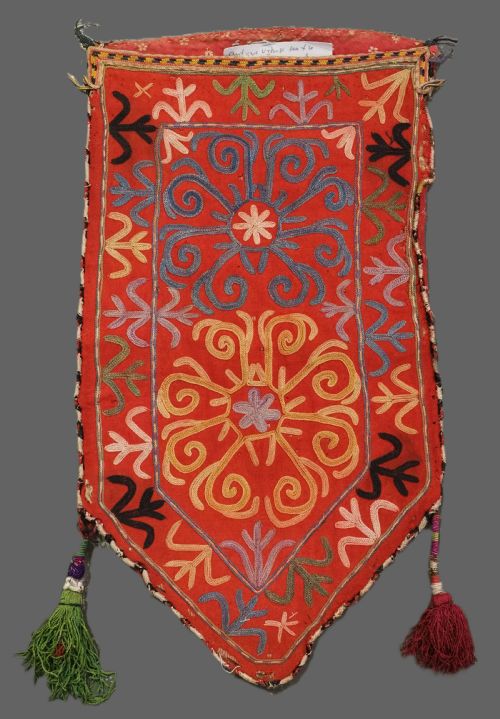
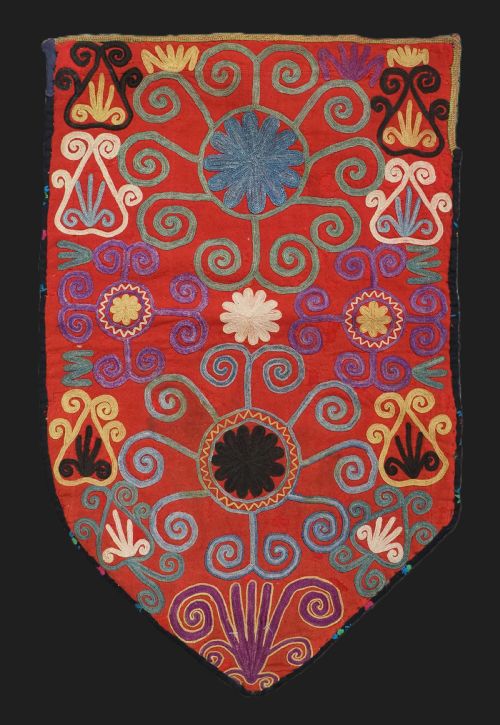
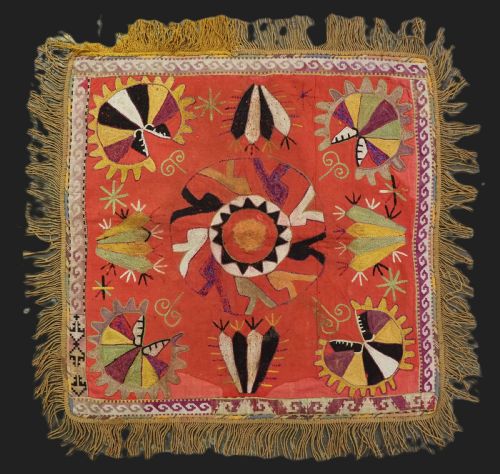
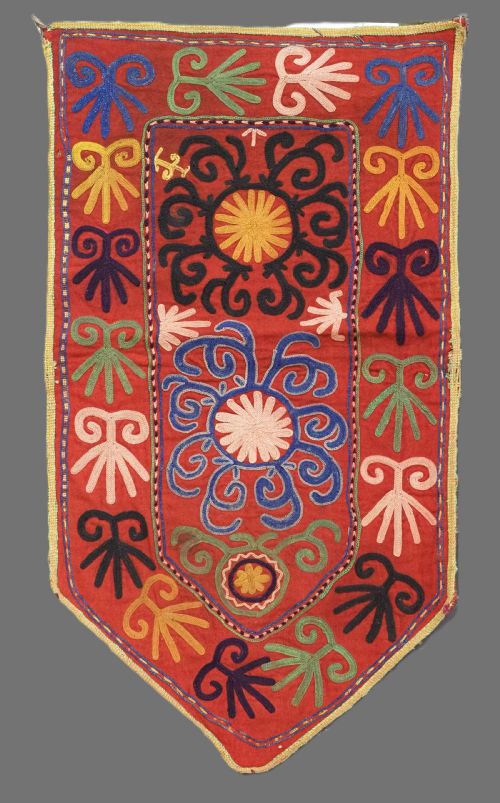
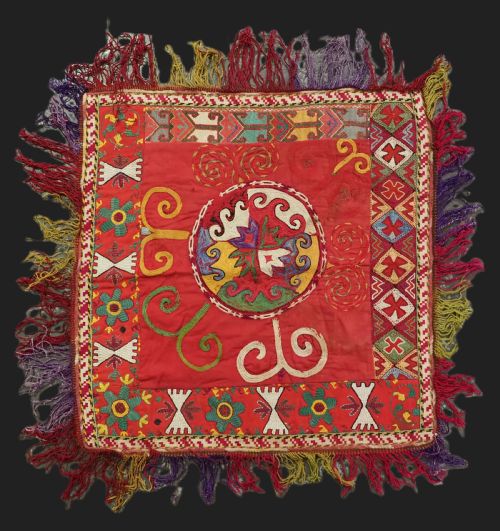


Lakai Tribe Ilgich
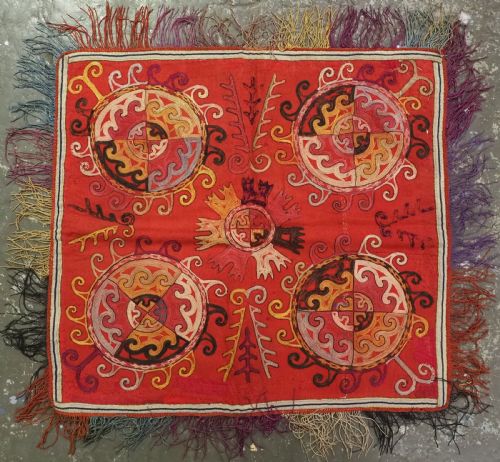
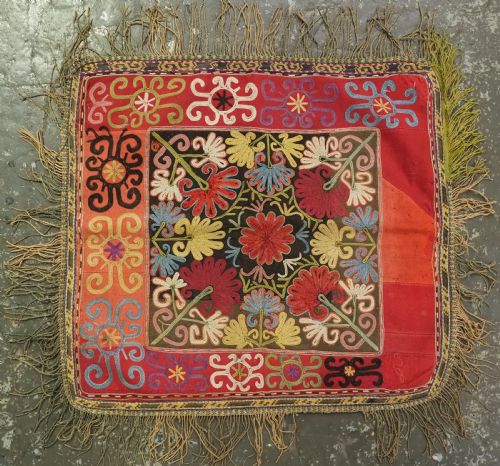
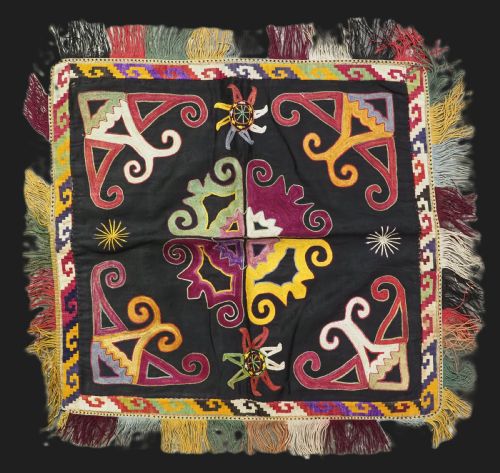
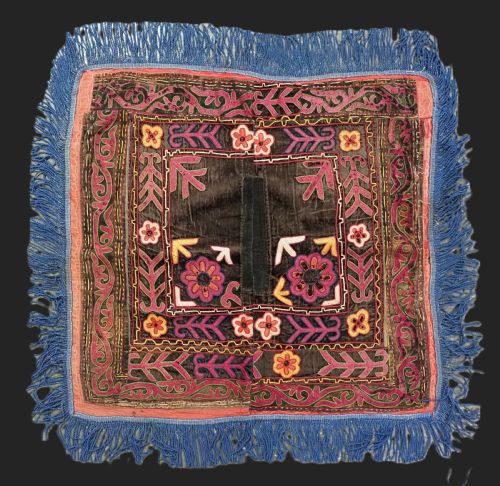
A lakai tribe ilgich is a vibrant Central Asian textile art piece that brings rich tribal history and texture into a room.
Lakai Tribe Ilgich
A lakai tribe ilgich originates from Central Asia, specifically created by Uzbek tribal groups in regions such as Shakrisabz. These pieces function primarily as dowry embroidery and decorative wall hangings, carrying deep cultural resonance from the late nineteenth century.
The most common forms encountered are wall hangings and uut kap ilgich pieces, which sometimes double as talismanic shields. They represent nomadic heritage through bold designs intended for display within traditional dwellings.
What Varies in Quality
The distinction between standard examples and superior pieces rests upon the density of the silk embroidery and the complexity of the tribal motifs. Finer works display exceptional precision in needlework and a more harmonious balance of colour across the textile ground.
The listings span the late nineteenth century, specifically featuring pieces dated from eighteen eighty to nineteen hundred.
The Lakai Tribe Ilgich Glossary
- Uut Kap Ilgich
- A specific form of tribal embroidery associated with yurt storage bags or domestic trappings. They often incorporate protective symbols.
- Torba
- A small hanging bag or utilitarian textile from Central Asian traditions. Examples are frequently linked to specific tribal groups such as the Uzbeks.
- Dowry Embroidery
- Textiles created by women as part of a bride's wedding trousseau. These items demonstrate the maker's skill and family status.
Lakai Tribe Ilgich: Frequently Asked Questions
What is a lakai tribe ilgich?
A lakai tribe ilgich is a hand-embroidered Central Asian textile created by Uzbek nomadic groups during the late nineteenth century. These pieces were made as dowry items and wall hangings.
They feature intricate silk stitching on cotton, wool, or velvet grounds. Collectors value them for their bold tribal geometry and cultural history.
How were these textiles used?
These pieces served primarily as decorative wall hangings and domestic furnishings within traditional Central Asian nomadic tents. Certain forms functioned as specialised bags or protective talismans.
Families displayed them to showcase textile artistry and status during important life events like weddings.
How do I care for an ilgich?
Protect antique textiles from direct sunlight to prevent silk threads and velvet grounds from fading. Mount them professionally using archival methods that do not stress the fabric.
Keep the environment dry and stable to preserve the natural fibres. Avoid harsh cleaning agents entirely.
How can I tell the age?
Dating relies on examining the natural dye palette, the wear on the cotton or wool foundation, and the type of silk used in the embroidery. Late nineteenth-century pieces show distinct characteristics typical of Central Asian tribal production.
Comparing structural elements like the green velvet grounds helps place items in periods around eighteen eighty to nineteen hundred.