


Antique Tribal Textile Art
Antique tribal textile art encompasses nomadic hangings, bags, and ceremonial trappings crafted with rich regional iconography.
Antique Tribal Textile Art
When exploring antique tribal textile art, collectors encounter functional objects created by nomadic and village weavers across Central Asia and Persia. These pieces include utilitarian bags, dowry embroideries, wall hangings, and horse decorations produced during the nineteenth and early twentieth centuries.
How they were made
Maker communities relied on natural materials such as hand-spun wool, cotton, and silk, often enriched with goat hair and leather details. Dyes derived from natural sources yielded deep tones that matured over generations of use.
Weavers employed varied techniques, combining flatweave structures, pile knots, and intricate surface embroidery. Wood elements occasionally supported structural components like spinning wheels.
Antique Tribal Textile Art Retail Price Guide 2026
Typical asking prices for tribal textile art among the pieces listed under this phrase on Sellingantiques today, from the lower quarter to the upper quarter. They describe what is for sale here now, not the wider market.
Listings span periods from the mid-nineteenth century through the 1920s, featuring wool, silk, and natural dyes.
What varies in quality
Quality rests upon the precision of the execution, the saturation and depth of the natural dyes, and the integrity of the surviving materials. Finer examples display meticulous symmetry in tribal motifs and dense, careful stitching.
The handling of secondary fibres and the complexity of the regional design vocabulary further distinguish standard domestic items from exceptional tribal works.
The Antique Tribal Textile Art Glossary
- Asmalyk
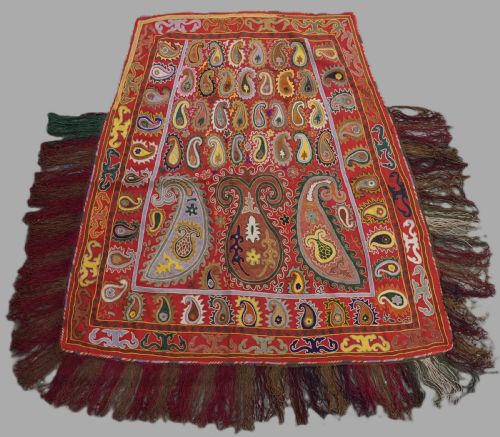
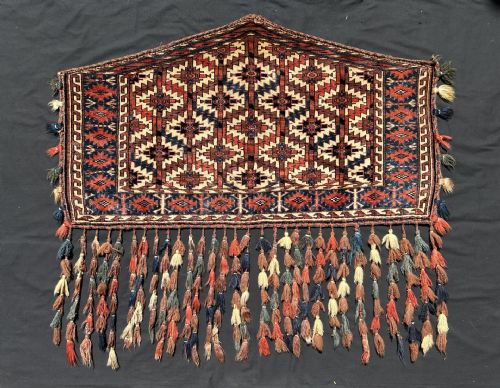
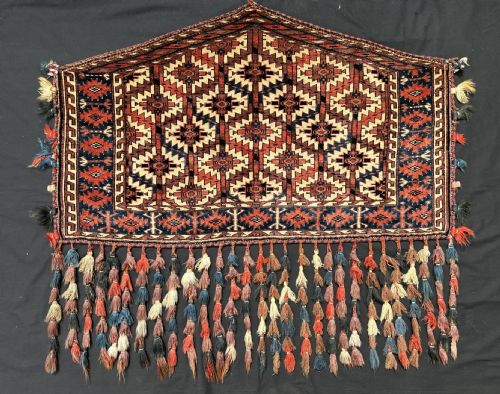
- A large, pentagonal trapping traditionally mounted on the flanks of a bride's camel during Turkmen wedding processions. These decorative pieces display distinct regional gul patterns.
- Torba
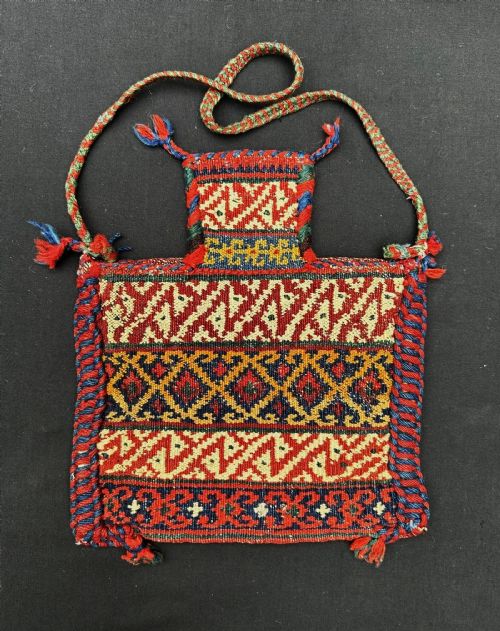
- A small storage bag utilised within nomadic tents for household possessions or provisions. They frequently feature detailed face designs executed in pile or flatweave.
- Ilgich
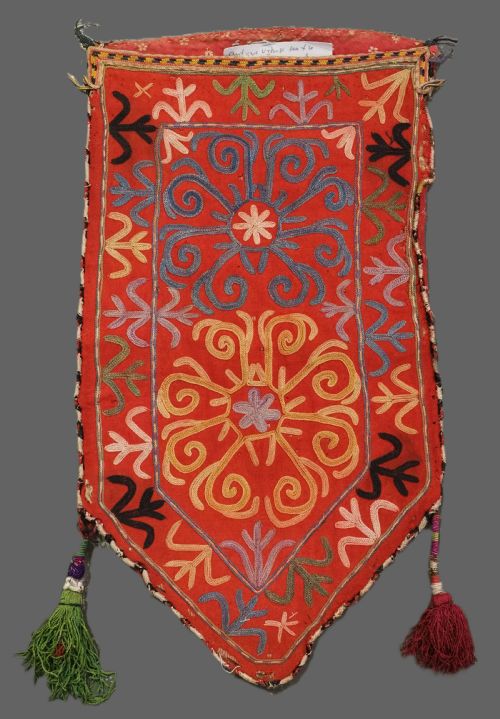
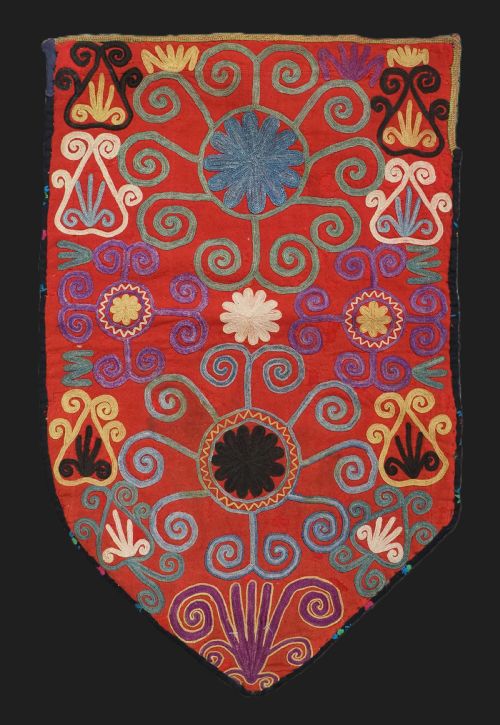
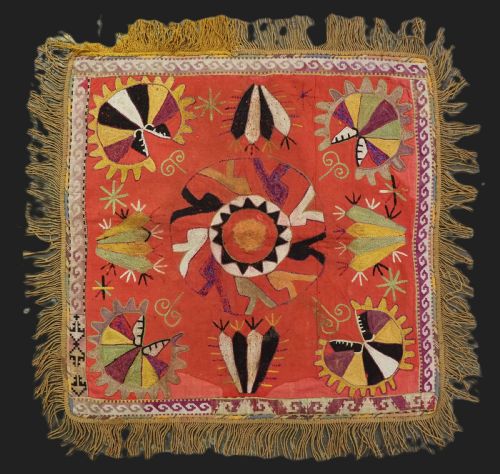
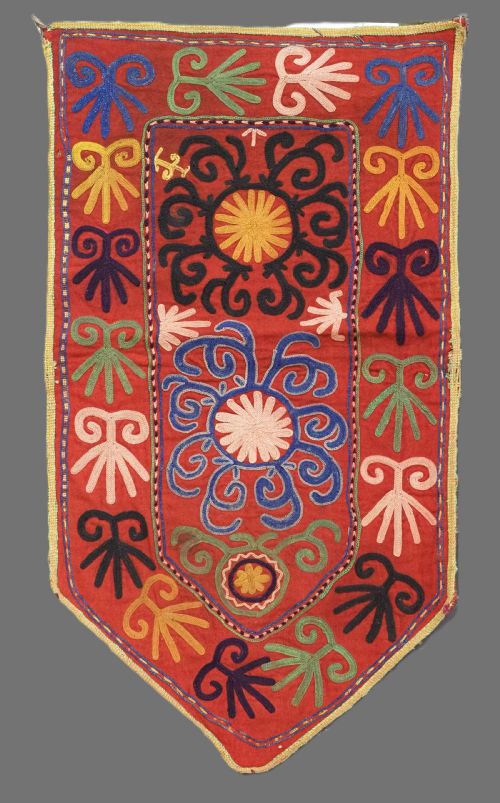
- An embroidered dowry hanging produced by Uzbek Lakai groups, often created for domestic wall display. These panels utilise silk threads on wool or cotton foundations.
- Suzani
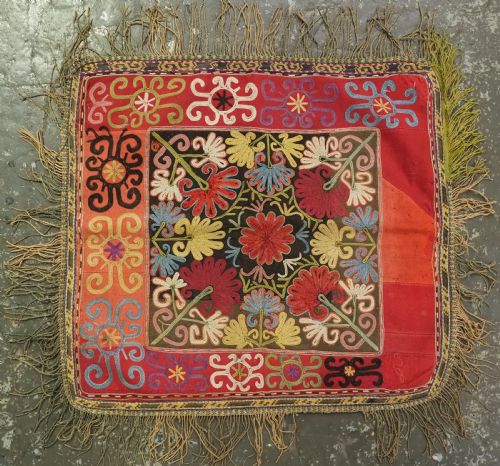
- A large embroidered textile originating from Central Asia, traditionally worked in silk on a cotton ground. Families prepared these decorative panels as part of a bride's dowry.
- Chanteh
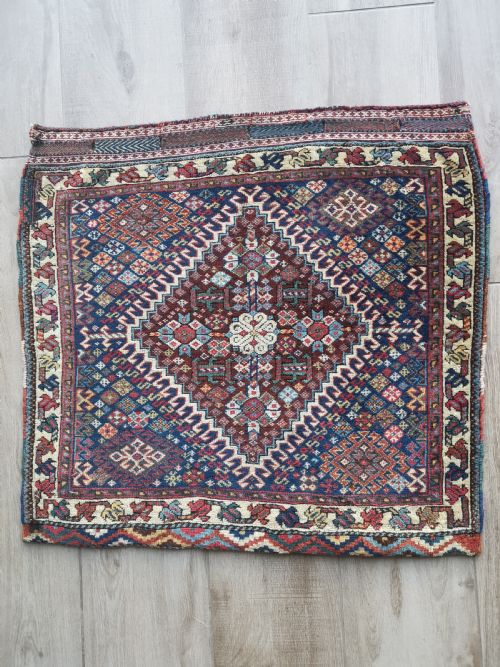
- A small personal carrier or vanity bag woven by Persian nomads for everyday transport. They demonstrate the dense geometric iconography typical of southern tribal groups.
Antique Tribal Textile Art: Frequently Asked Questions
What is an asmalyk?
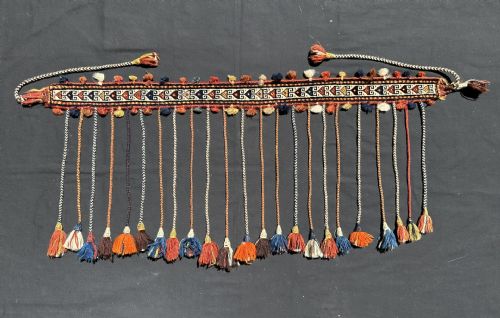
An asmalyk is a decorative tribal trapping traditionally used during wedding ceremonies in Central Asia. Yomut and other Turkmen groups created these pentagonal hangings to adorn bridal transport.
Over time, collectors removed them from camels to preserve their intricate geometric designs as wall art.
How were salt-bags used?
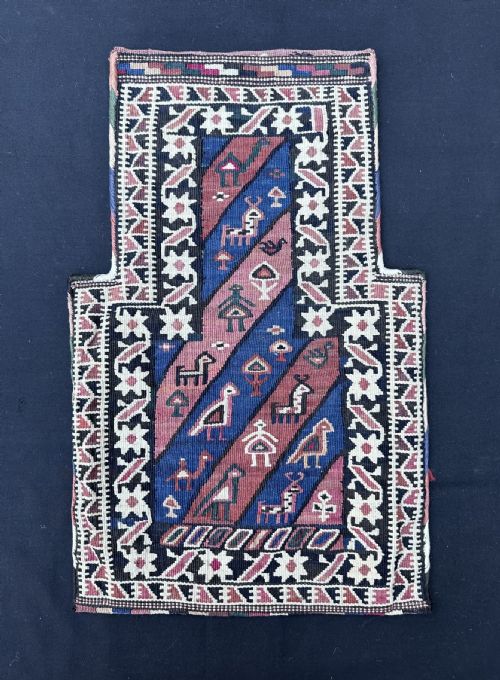
Salt-bags served as utilitarian containers within nomadic households for storing coarse rock salt. Tribes such as the Kordi hung these woven pouches inside their tents away from damp earth.
Their compact formats and robust flatweave construction allowed them to withstand heavy daily handling.
What distinguishes a suzani?
A suzani is a large, needle-worked panel embroidered primarily in silk on a cotton or linen foundation. Uzbek and Bokhara makers stitched floral vines and sunburst medallions to mark significant family milestones.
These textiles functioned as wall decorations, bed covers, or ceremonial wraps within the household.
Where did Lakai embroideries originate?
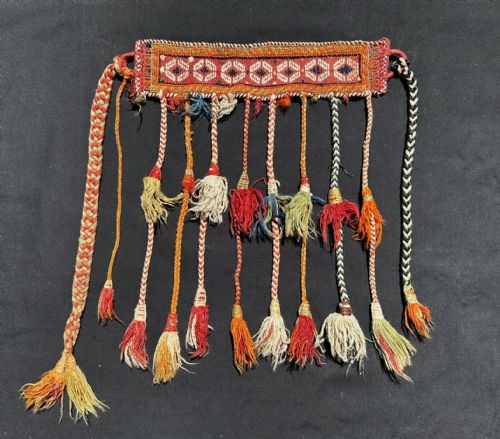
Lakai embroideries emerged from Uzbek tribal groups residing in Central Asia during the late nineteenth and early twentieth centuries. Women stitched dynamic motifs onto felt and cloth grounds using vibrant silk threads.
These pieces frequently decorated horses, tent interiors, and dowry displays.