


Lacquered Tray Table
A lacquered tray table brings portable serving surfaces into domestic rooms, combining hand-painted decoration with folding or fixed stands for everyday utility.
Lacquered Tray Table
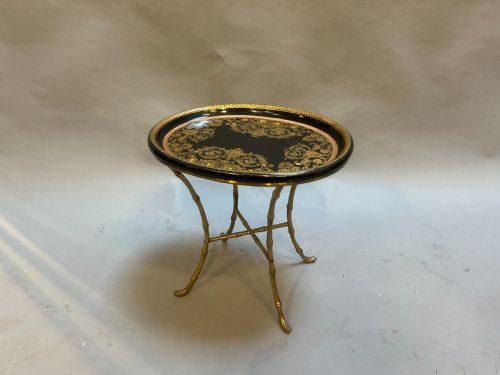
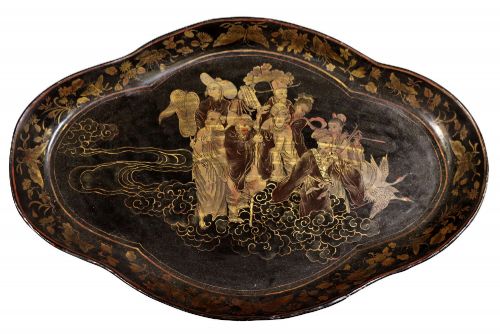
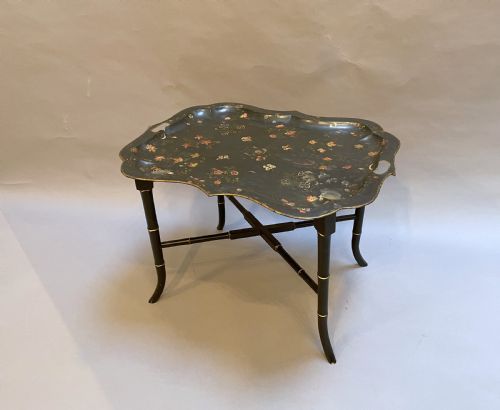
A lacquered tray table unites a portable serving tray with a supporting stand, creating a versatile surface for drinks or display. These pieces frequently pair deep dark finishes with hand-painted ornament, shifting function between serving utensil and occasional furniture.
Most examples encountered here date from the nineteenth century into the early twentieth century, spanning Regency, Victorian, and Edwardian periods. Papier-mâché and wood form the primary bases for these tops, often mounted on later stands or folding bamboo bases.
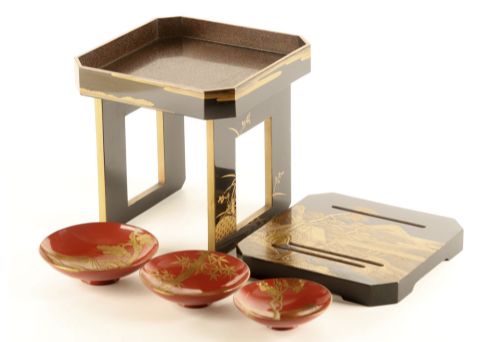
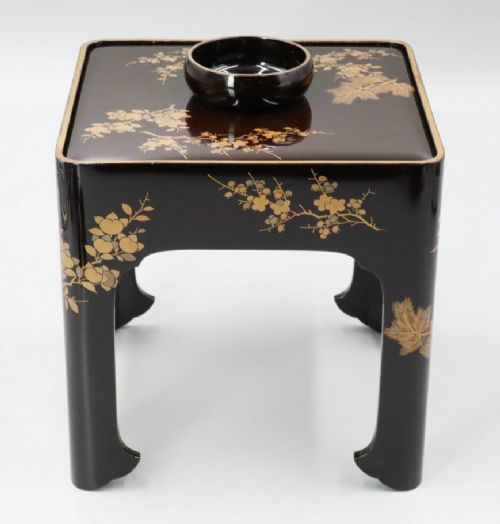
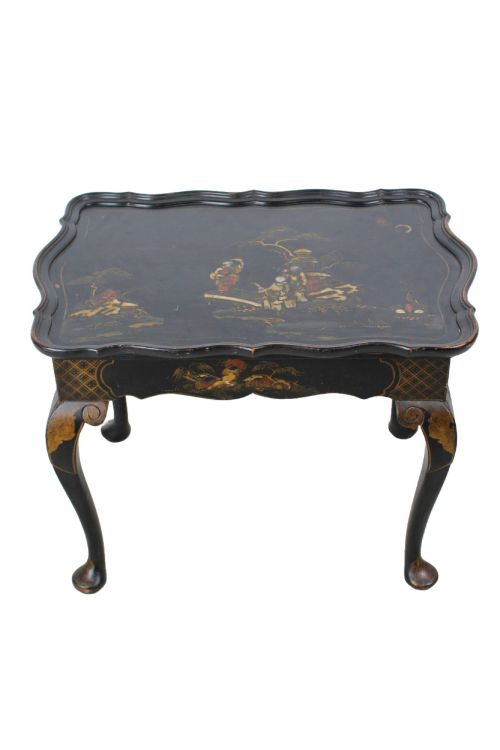
Chinoiserie motifs dominate the decorative vocabulary, showing gilded landscapes and figures across black grounds. Alongside English interpretations, Japanese Meiji and Taisho period pieces contribute distinct lacquerware and sake sets to the forms available.
How they were made
Papier-mâché construction involves building up layers of paper pulp and glue pressed in moulds, then drying and hardening the material to form a rigid tray. Wood and ebonised bases provide alternative structural foundations that receive multiple coats of lacquer.
Finishing relies on layers of dark lacquer polished to a smooth sheen, onto which artists applied gold leaf and gilt paint. Brass fittings and iron stands occasionally secure the tray tops, while Japanese workshops utilised traditional lacquer techniques on wood.
Materials across these listings span traditional papier-mâché, ebonised wood, and lacquered wood paired with gold leaf and brass.
What varies in quality
The clarity and depth of the hand-painted Chinoiserie decoration distinguish finer examples, where gold leaf and fine brushwork create intricate architectural and botanical details. Maker attribution, such as work by Jennens and Bettridge or Henry Clay, elevates historical standing.
The relationship between the tray and its stand affects integrity, with period stands designed specifically for the tray differing from later adaptations. The preservation of the original lacquer surface without extensive repainting determines the enduring character of each piece.
Jennens & Bettridge·Henry Clay
The Lacquered Tray Table Glossary
- Papier-mâché
- A composite material made from paper pulp or layers of paper reinforced with glue, moulded and baked to form rigid objects. This medium allows for smooth surfaces suited to fine lacquer finishes.
- Toleware
- Metalware, usually iron or tin, coated with lacquer or enamel and painted by hand. These trays provide durable surfaces often mounted onto folding wooden stands.
- Ebonised wood
- Timber treated with stain or finish to imitate ebony. This dark ground creates high contrast for gold leaf and painted decoration.
- Lacquer
- A protective and decorative coating derived from tree sap or synthetic resins applied in successive layers. It dries to a hard, durable finish capable of taking a high polish.
Lacquered Tray Table: Frequently Asked Questions
Are the trays detachable from the stands?
Many trays lift off their stands entirely, reflecting their original purpose as portable serving vessels before being placed on bases to function as tables.
Some later or rigid configurations secure the tray more permanently to the frame, altering how the piece is moved and used within a room.
How do I care for a papier-mâché surface?
Keep these surfaces away from direct sunlight and excessive moisture to prevent the lacquer from cracking or lifting away from the paper base.
Dust gently with a soft dry cloth and avoid chemical polishes that can damage the historical varnish layers.
What distinguishes Regency from Victorian examples?
Regency trays often display crisper classical or early Chinoiserie detailing with shallow papier-mâché rims and distinct maker stamps.
Victorian pieces frequently expand into larger proportions with heavier floral borders and richer gilt work across ebonised wood or composite trays.
Can these tables be used for serving drinks?
While originally designed to carry porcelain and glassware, antique lacquer surfaces react to standing water and alcohol.
Using coasters and protective cloths preserves the hand-painted decoration while maintaining the functional display of the table.