


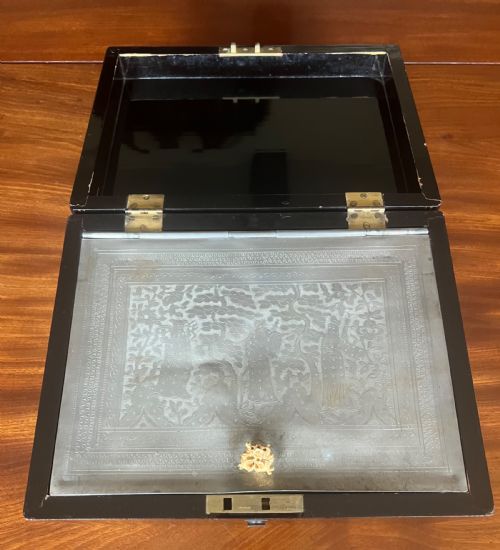


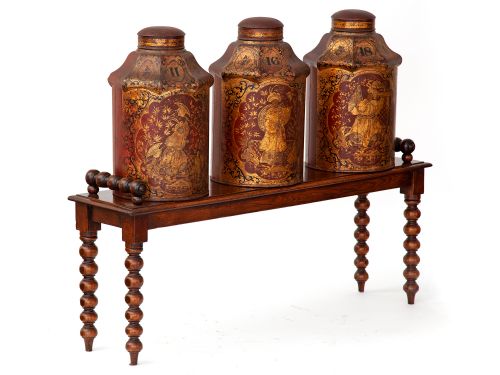


Lacquered Tea Caddy
A lacquered tea caddy is a small storage box for loose leaf tea, prized for its decorative surfaces and historic charm.
Lacquered Tea Caddy
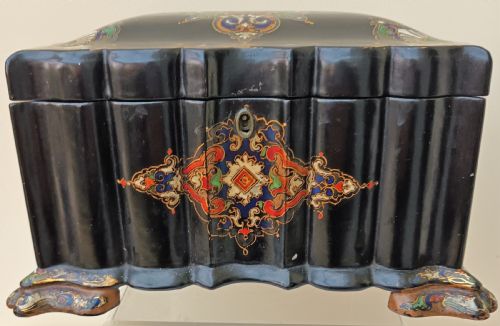
A lacquered tea caddy is a specialised container designed to keep precious leaves fresh while sitting in a prominent place in a period room. When searching for a lacquered tea caddy, you encounter pieces originating from Georgian, Regency, and Victorian periods.
The selections span English interpretations of Eastern aesthetics as well as direct imports from China. Forms range from traditional tea caddies and decorative boxes to adapted table lamps and canister sets.
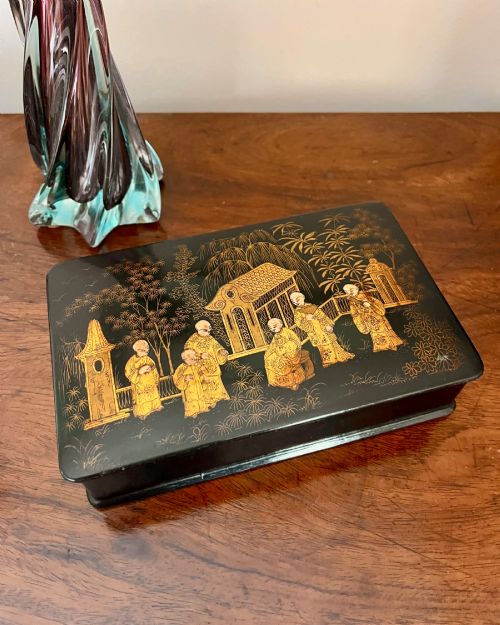
Chinoiserie and penwork decoration dominate the aesthetic, frequently depicting oriental landscapes, figures, and architectural motifs in gold leaf or paint upon dark backgrounds.
How they were made
Artisans built the structural carcases using wood or pressed papier-mâché, applying successive layers of lacquer to achieve a smooth, glossy foundation. Many examples incorporate delicate penwork, intricate paint, and applied gold leaf to render detailed pictorial scenes.
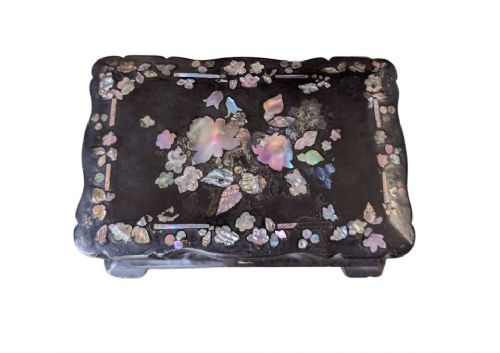
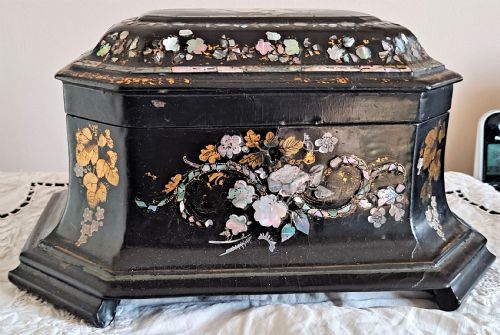
Interiors often feature fitted compartments lined with materials like bone or metal, sometimes retaining paktong canisters for dry storage. Details such as mother-of-pearl inlay and brass hardware finish the construction of these decorative boxes.
Materials appearing across current listings include lacquer, wood, gold leaf, brass, papier-mâché, bone, paint, and metal.
What varies in quality
Quality rests in the crispness of the painted or penwork detail and the depth of the lacquer finish. Pieces with finely rendered Chinoiserie figures and intact gold leaf display superior handwork compared to simpler, cruder surfaces.
The integrity of the underlying papier-mâché or wood carcase and the survival of original interior fittings, such as metal canisters and bone elements, elevate the standing of a tea caddy.
The Lacquered Tea Caddy Glossary
- Chinoiserie
- European decorative art reflecting Chinese artistic influences, commonly featuring pagodas, figures, and exotic landscapes rendered in paint and gold leaf.
- Penwork
- A meticulous surface decoration technique using India ink applied with a fine pen to create intricate monochrome or tinted illustrative designs on wood.
- Papier-mâché
- A composite material made from paper pulp or reinforced paper sheets mixed with adhesive, pressed into moulds and lacquered to form durable boxes.
- Paktong
- A traditional Chinese copper-nickel-zinc alloy resembling silver, utilised for interior canisters and decorative mounts within fine antique tea containers.
- Tea caddy
- A small lidded container originally built with interior compartments to hold and preserve loose tea leaves securely.
Lacquered Tea Caddy: Frequently Asked Questions
How were antique tea caddies used?
Tea was an expensive commodity during the Georgian and Regency eras, kept under lock and key by the mistress of the house. Servants brought the caddy to the parlour, where the host measured out the leaves for each brew.
The internal compartments separated different varieties of black and green tea, allowing blends to be mixed to personal taste before steeping in a ceramic teapot.
Where should I place a tea caddy at home?
These decorative boxes suit living rooms, studies, and hall tables where their painted or lacquered surfaces can be appreciated up close. Placing them away from direct sunlight and heat sources protects the fragile lacquer and gold leaf.
Many collectors display them on surface tops alongside other small antiques, utilising their compartments to store modern trinkets or keepsakes.
How do I identify a Regency penwork caddy?
Regency penwork pieces feature fine, ink-drawn illustrations applied directly to a prepared wooden surface, often depicting classical ruins, figures, or Chinoiserie motifs. The linework resembles a detailed etching rendered entirely by hand.
These boxes typically date from around eighteen hundred to eighteen thirty and exhibit pale straw-coloured or light wood backgrounds beneath the ink work.
What is papier-mâché furniture and decor?
Papier-mâché involved layering paper pulp or bonded sheets over wooden moulds, baking the mixture, and finishing it with thick black lacquer. This technique allowed makers to form smooth, seamless boxes with curved contours.
Victorian craftsmen frequently embellished these surfaces with inlaid mother-of-pearl and painted floral details that caught the gaslight in nineteenth-century drawing rooms.