






Kurdish Medallion Rug
These heavy-wearing tribal carpets bring geometric strength and saturated colour directly from West Persia into modern interiors.
Kurdish Medallion Rug
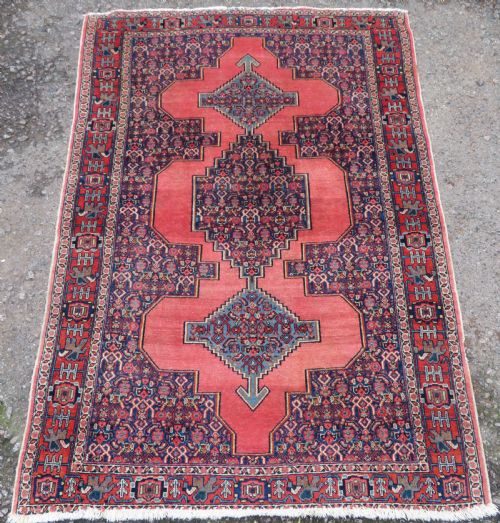
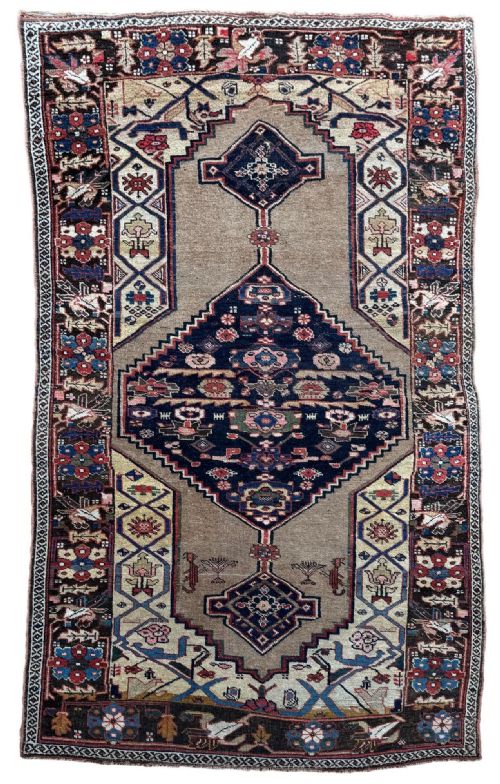
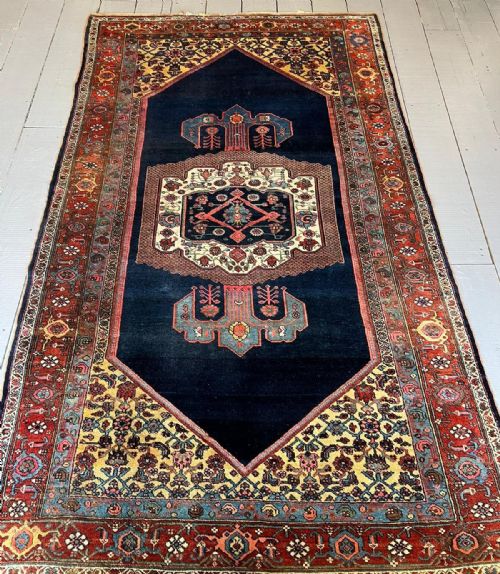
A kurdish medallion rug is a heavy village-woven floor covering originating predominantly from the valleys and towns of West Persia, Anatolia, and the Caucasus during the nineteenth and early twentieth centuries. These pieces typically display central geometric motifs, latch-hook borders, and repeated guls woven by tribal and village makers working within long-established regional traditions.
Buyers encountering this phrase most frequently meet sturdy area rugs, long runners for hallways, and smaller village carpets dating from the late nineteenth century up to the 1930s. The selection includes specific regional subtypes such as Bidjar, Senneh, Hamadan, and Quchan pieces that share robust village construction and distinctive repeating medallion layouts.
The aesthetic sits firmly in the realm of tribal and nomadic design, valuing dense geometric structures and rich primary palettes over courtly symmetry. Such textiles serve practically as durable floor coverings while functioning visually as focal points in contemporary or traditional rooms.
Materials and construction
Weavers relied heavily on wool for both the pile and the foundation, frequently utilising hand-spun wool that accepted natural dye stuffs with mottled, deep variations in tone. Cotton foundations appear commonly in town-influenced pieces from regions like Bidjar, providing a crisp, stable grid for intricate geometric medallions.
The structures are distinctly dense and tightly packed, resulting in a heavy handle that allows the carpets to lie flat and endure decades of foot traffic. Knotting techniques and pile heights vary according to whether the piece originated in a nomadic tent, a Kurdish village, or a larger regional weaving centre.
Kurdish Medallion Rug Retail Price Guide 2026
Typical asking prices for kurdish medallion rug among the pieces listed under this phrase on Sellingantiques today, from the lower quarter to the upper quarter. They describe what is for sale here now, not the wider market.
Keep an eye out for narrow runners featuring unexpected birds perched happily on trees alongside the traditional geometric medallions.
Judging quality in tribal weaves
Quality rests significantly in the handling of the wool and the clarity of the dye palette, where rich saturation and subtle abrash indicate skilled material preparation. Tighter knot density and firmer packing distinguish superior village or town pieces from looser nomadic iterations.
Proportion and the execution of the central medallion scheme reveal the weaver's mastery of traditional geometry, separating standard utility rugs from more striking collector examples.
The Kurdish Medallion Rug Glossary
- Abrash
- Natural variations in wool colour caused by changes in dye batches or hand-spun yarns over time. This characteristic adds subtle horizontal shading to the field of the rug.
- Gul
- A repeating medallion or floral-derived octagonal motif used extensively in tribal weaving traditions. These symbols often identify the specific weaving group or region.
- Latch hook
- A stepped, geometric motif projecting from the edges of medallions or borders. It forms a staple design element in Kurdish and Caucasian tribal textiles.
- Kelleh
- A specific format of long rug, typically narrower than a standard carpet but wider than a runner. These pieces were traditionally designed for the long sides of a Persian room.
Kurdish Medallion Rug: Frequently Asked Questions
Where were these rugs made?
These textiles were produced by Kurdish tribes and villagers across West Persia, Anatolia, and parts of the Caucasus. Major production hubs include regions such as Bidjar, Senneh, Hamadan, and Quchan.
Weavers worked within local households or small village workshops, passing down specific geometric motifs and dyeing techniques through generations.
How do I care for an old rug?
Protect the piece by placing a quality underlay beneath it to prevent slipping and reduce friction against hard floors. Vacuum gently without using a rotating brush bar that might pull at the wool pile.
Rotate the rug periodically to ensure even wear from foot traffic and sunlight exposure. Professional cleaning by a specialist familiar with antique vegetable-dyed wool is essential when washing is required.
Are these rugs durable enough for hallways?
Many of these pieces, particularly long runners and Bidjar-region carpets, were constructed specifically to withstand heavy daily use. Their dense wool pile and tight foundation packing make them exceptionally resilient.
Placing a breathable non-slip pad underneath will further protect the structure in high-traffic corridors like hallways and entryways.
How can I tell the age of a piece?
Age is determined by assessing the materials, dye types, knotting style, and overall wear patterns present on the rug. Pieces utilising hand-spun wool and natural dyestuffs typically point towards production in the nineteenth or early twentieth century.
Structural traits like end finishes and selvages also offer vital clues to the historical period and specific village origin of the weaving.