
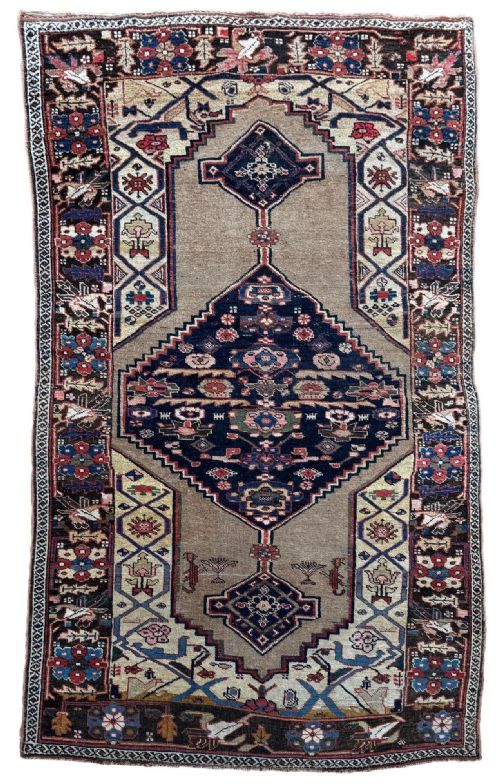
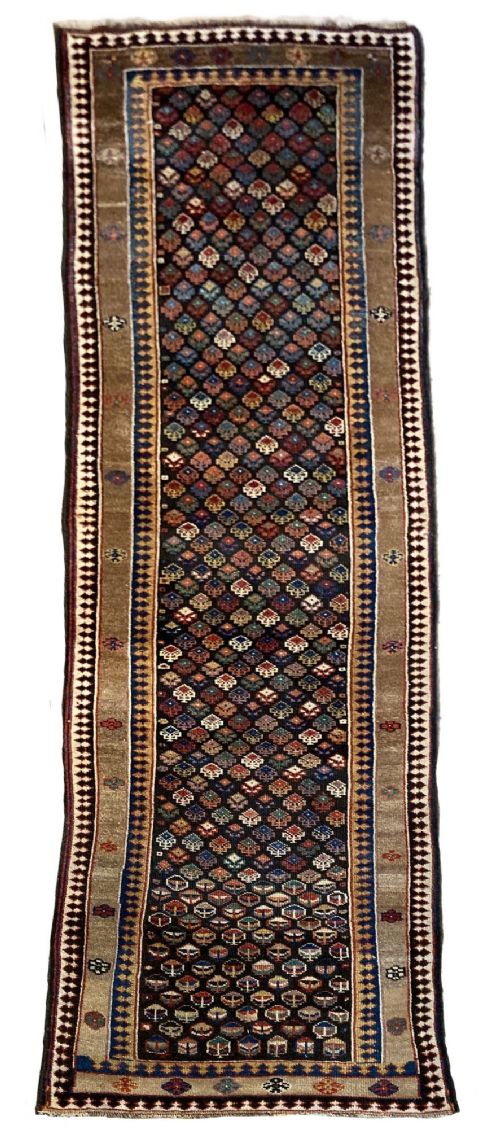


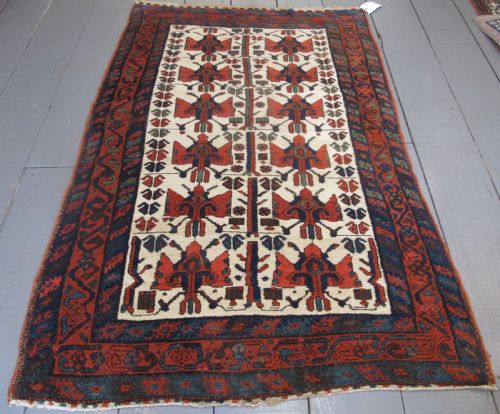


Kurdish Handwoven Carpet
These Kurdish handwoven carpet pieces bring robust tribal character and rich geometric motifs into a room.
Kurdish Handwoven Carpet
A kurdish handwoven carpet offers traditional village and nomadic weaving originating from tribal groups across Persia, Anatolia and the Caucasus. These floor coverings arrive in forms ranging from compact area rugs to long runners and flatweave kilims.
The pieces seen here date from the late nineteenth century through to the early decades of the twentieth century. Buyers encounter designations linking them to regions such as Bidjar, Senneh, Hamadan and East Anatolia.
Materials and construction
These textiles utilise wool for the pile and foundation yarns, often combined with cotton for structural warps and wefts. The natural resilience of the wool provides a dense, durable surface designed for heavy everyday use.
Weavers employ traditional knotting techniques alongside flatweave and soumak methods to create both pile rugs and reversible kilims. Vegetable and natural dyes impart deep blue, red and earthy ground colours that mature gracefully over decades.
Listings feature wool and cotton materials across rugs, runners and kilims spanning the nineteenth and twentieth centuries.
Judging quality in tribal weaves
Quality rests upon the tightness of the weave and the precision of the geometric or boteh design execution. Finer knotting allows intricate medallion and floral or tribal motifs to appear with sharper definition.
The preservation of the original outer borders and selvedges determines the structural integrity of older pieces. Even wear across the wool pile indicates balanced handling throughout the life of the textile.
The Kurdish Handwoven Carpet Glossary
- Boteh
- A stylised almond or pear-shaped motif representing a sprout or palm leaf, frequently seen across these tribal designs.
- Runner
- A long, narrow carpet format traditionally suited for hallways, corridors or bedside placement.
- Kilim
- A flatwoven textile produced without a pile, created by tightly interweaving warp and weft threads.
- Soumak
- A wrapping technique that creates a durable structure with raised surface patterns resembling brocade on the face.
- Warp
- The vertical foundation threads stretched lengthwise on the loom upon which the knots are tied.
Kurdish Handwoven Carpet: Frequently Asked Questions
Where were these carpets made?
The pieces originate from tribal and village communities across Western Persia, East Anatolia, and the Caucasus.
Weavers working within these historical regions maintained distinct regional patterns and colour palettes.
How do I clean an antique rug?
Gentle surface brushing and professional specialist cleaning suited for antique wool textiles help maintain the fibres.
Avoid immersion washing or harsh chemical treatments that can damage natural dyes and cotton foundations.
Can these rugs handle hallway traffic?
The dense wool construction and sturdy foundations make runner formats suitable for moderate hallway use.
Using a quality underlay prevents slipping and cushions the textile against hard flooring.
How do I identify a Kurdish tribal rug?
Look for characteristic geometric medallions, boteh motifs, and saturated blue or red wool grounds.
Inscriptions and regional attributions often point towards specific weaving groups like the Bidjar or Kolyai.