




Knopped Stem Glasses
These knopped stem glasses bring tangible weight and historical form to the table, offering a tactile connection to centuries of drinking culture.
Knopped Stem Glasses
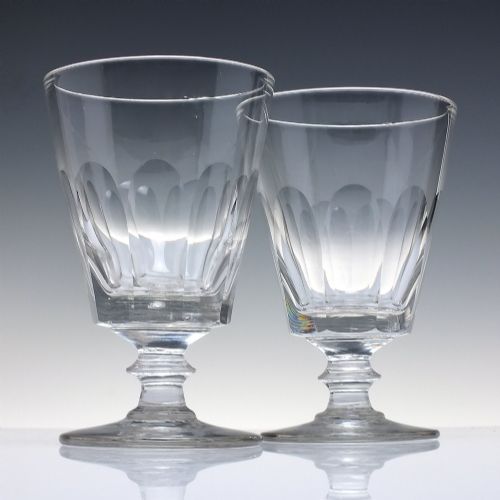
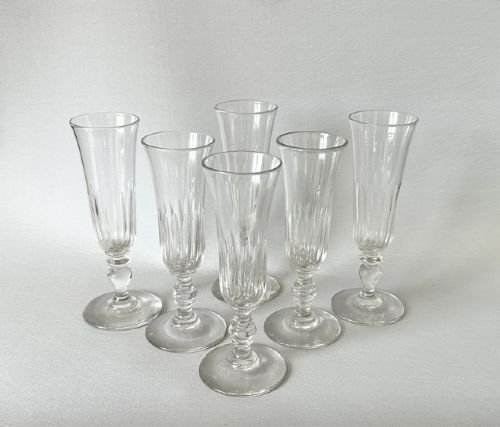
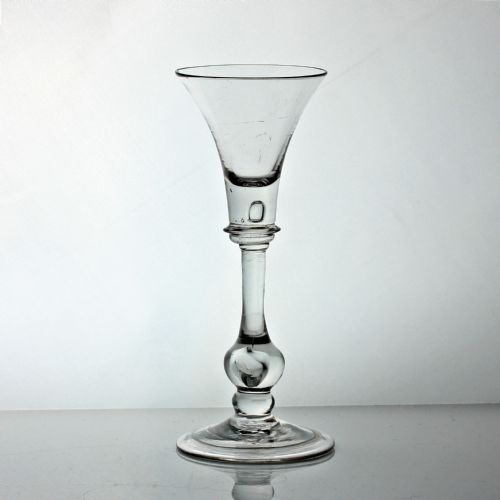
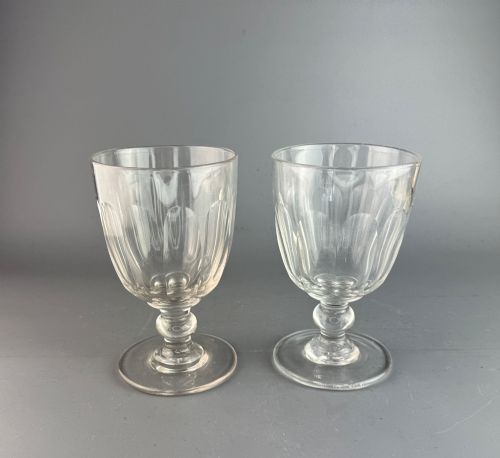
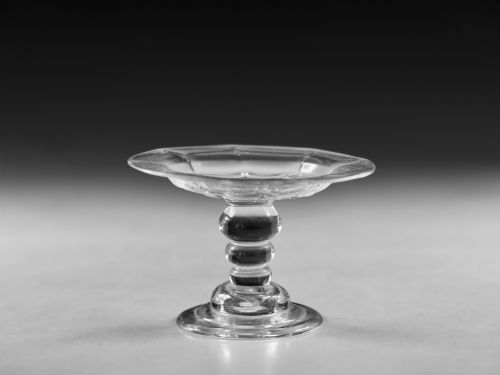
When searching for knopped stem glasses, collectors encounter drinking vessels shaped by thickened nodes or swellings along the stem, with the 18th century yielding the most prominent examples. These forms range from early baluster and balustroid silhouettes to later Victorian variations, serving primarily as wine glasses, rummers, and flutes. The pieces appearing here span Georgian elegance and later revivals, grounded in lead glass and clear crystal.
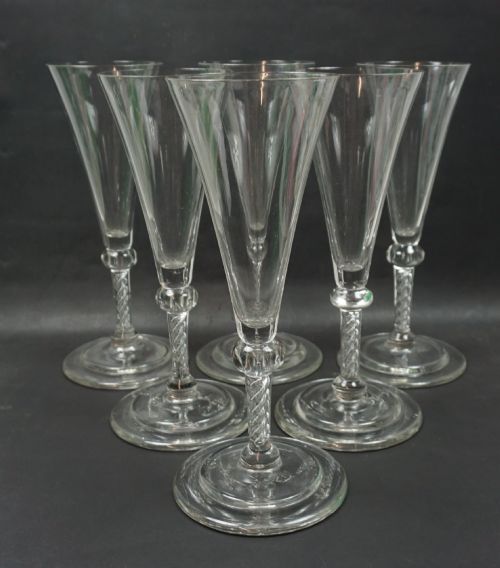
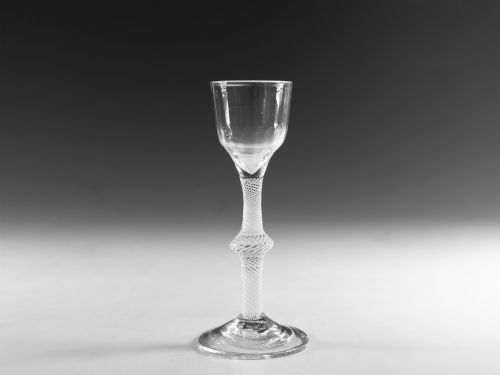
The most common versions met on this page belong to the Georgian era, characterised by heavy lead metal and pronounced multiple knops, alongside later Victorian coloured and cut glass interpretations. Makers from these periods employed distinct stem formations, incorporating air twists, opaque twists, and terraced feet. Each piece reflects the functional shifts of its decade, moving from formal tavern and dining table usage to decorative display.
How they were made
Glassmakers utilised heavy lead glass and flint glass, compositions that imparted a resonant ring and a soft, lustrous sheen to the metal. The material allowed artisans to draw stems and shape prominent swellings while hot, ensuring structural integrity beneath heavy bowls.
Techniques involved moulding, ribbing, and optical blowing, often combined with hand-tooling to form complex multi-knop structures. Craftsmen captured air bubbles inside the metal to create delicate twists, or applied white enamel threads to form opaque spiral patterns within the stem.
Some glasses survived centuries of toasts simply because their hefty knops made them nearly impossible to knock over.
What varies in quality
Quality rests in the balance of the vessel, the clarity of the metal, and the precision with which the knops are drawn from the molten material. Superior examples display symmetrical node placement and clean, sharp moulding without excessive surface distortion.
Engraving depth and polish differentiate standard utility wares from exhibition pieces, where armorial designs or armorial motifs are rendered with crisp linework. The brilliance of the lead crystal and the absence of heavy clouding further separate finer items from everyday tavern glass.
The Knopped Stem Glasses Glossary
- Knop
- A protruding swelling or knob on the stem of a glass. It provides both a secure grip for the hand and a decorative transition between the foot and the bowl.
- Baluster
- A heavy, heavy-stemmed form derived from architectural pillars. These stems often feature knops, collars, and substantial weight characteristic of early pieces.
- Lead glass
- Glass containing lead oxide, which increases density and brilliance. This material permits deeper cutting and sharper optical effects.
- Air twist
- A spiral of elongated air bubbles trapped within the stem. Artisans achieved this effect by drawing out glass rods containing air channels.
Knopped Stem Glasses: Frequently Asked Questions
What is a knop?
A knop is the thickened node or swelling positioned along the stem of a drinking glass. It serves both a functional purpose for holding the vessel and an aesthetic role in defining the silhouette.
Different periods favoured varying numbers and shapes of these nodes, ranging from simple single buttons to complex multi-knop configurations.
How do I date these glasses?
Dating relies on observing the form of the bowl, the construction of the stem, and the characteristics of the foot. Early 18th-century pieces often feature heavy baluster stems and folded feet, while later Victorian items show moulded patterns and brighter colours.
Material composition and pontil marks on the underside further help establish the manufacturing era.
What colours do they come in?
While many early examples appear in clear lead crystal, subsequent Victorian periods introduced rich hues such as Bristol green and turquoise blue. These coloured varieties often manifested in rummers, celery vases, and wine glasses.
The tints derived from metallic oxides added to the molten batch during production.