
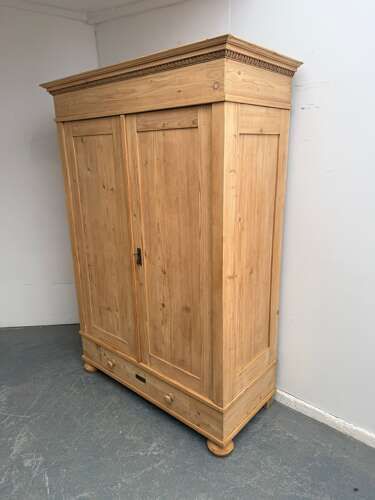
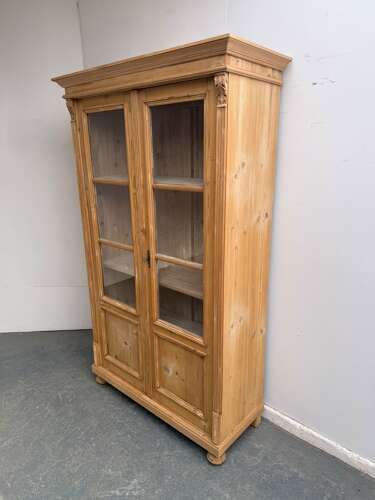
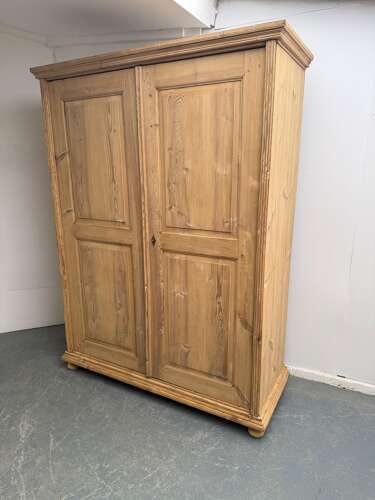
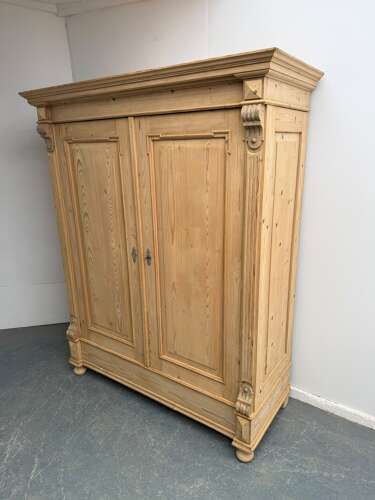
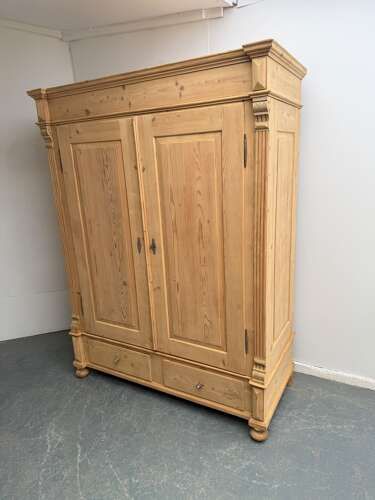
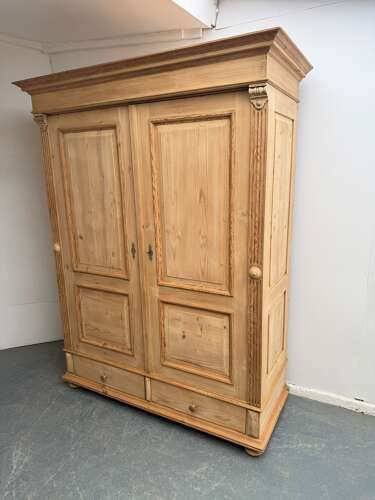
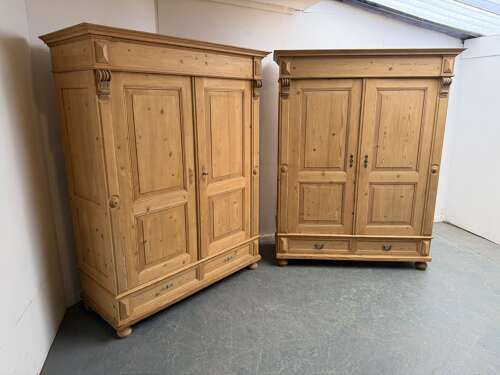
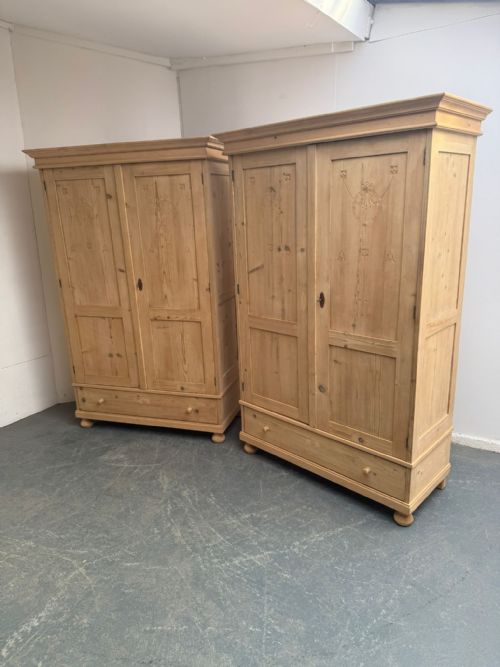
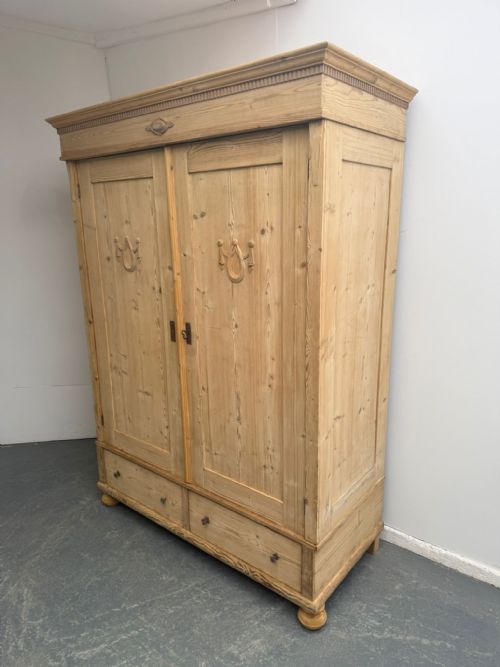
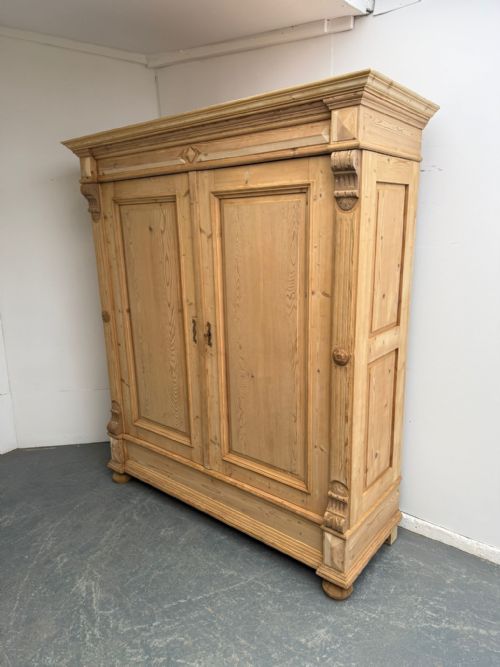
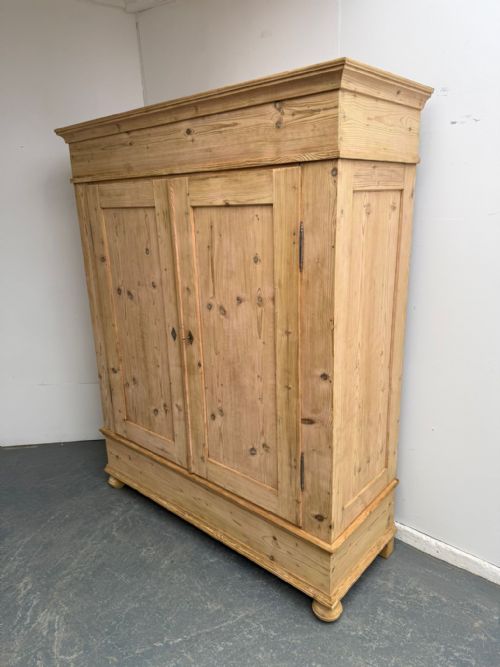

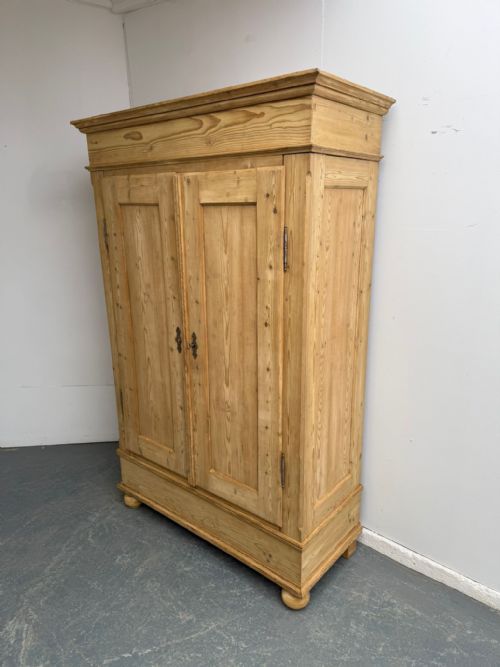


Knockdown Pine Cupboard
These knockdown pine cupboard pieces are large modular storage units designed for easy transport and daily utility in homes.
Knockdown Pine Cupboard
A knockdown pine cupboard search brings up substantial timber storage items engineered to dismantle into manageable sections for moving through tight spaces. Most examples you will encounter take the form of large wardrobes and bookcases dating from the Victorian and Georgian periods, alongside Arts & Crafts interpretations.
The practical genius of these pieces lies in their demountable construction, allowing historical owners to transport heavy furniture between rooms or properties with relative ease. You will find configurations ranging from tall two-door wardrobes and linen presses to shelved bookcases and multi-piece combinations.
Materials and construction methods
Makers built these pieces primarily from solid pine, utilising iron and metal for internal fixings, brackets, and functional hardware. Many examples feature glazed doors or are finished with a protective waxed coating that enhances the natural grain of the timber.
The knockdown design relies on clever interlocking joints, pegs, and iron bolts that secure the sides, top, and base without permanent glue bonds. This modular approach required precise carpentry so the heavy timber sections aligned correctly upon reassembly.
Some historical owners clearly struggled with assembly, leaving mysterious pencil marks inside the panels to guide future moves.
Judging the quality of knockdown pine cupboard items
Quality in these pieces rests upon the crispness of the architectural mouldings, the thickness of the pine used in the panels, and the survival of original knockdown fixings. Better examples display careful attention to proportion, particularly on tall or wide wardrobe formats.
The integrity of the timber joints and the alignment of the doors also distinguish finer items from simpler utilitarian versions. Pieces that retain their original iron hardware and dismantle smoothly demonstrate superior original craftsmanship.
The Knockdown Pine Cupboard Glossary
- Knockdown
- Furniture designed to be easily disassembled and reassembled using mechanical joints rather than permanent glue. This method facilitated transport up narrow staircases and between houses.
- Pine
- A soft timber extensively used for utilitarian and country furniture throughout the Georgian and Victorian eras. It accepts wax and paint finishes readily.
- Georgian
- A design period spanning the eighteenth and early nineteenth centuries, characterised by balanced proportions and classic architectural details. Pieces from this era often display restrained decoration.
- Victorian
- The period of British design corresponding to the reign of Queen Victoria, marked by diverse revivals and robust construction. Wardrobes and bookcases from this time are frequently substantial in scale.
- Arts & Crafts
- A movement originating in the late nineteenth century that emphasised honest construction and materials. Items from this tradition often showcase simplified forms and hand-finished details.
Knockdown Pine Cupboard: Frequently Asked Questions
How do knockdown pine cupboards come apart?
These pieces utilise internal metal bolts, wooden pegs, and slot-in joints that connect the cornice, base, sides, and doors. The clever engineering allows the entire structure to separate into flat panels and sections.
Reassembly simply requires reversing the process, aligning the tongue-and-groove boards, and tightening the internal fixings. This modular system was essential for moving bulky furniture through narrow historical doorways.
Are these pieces difficult to assemble?
Putting a knockdown cupboard together requires two people to support the heavy pine side panels while the top and bottom sections are secured. Patience is needed to ensure the frame remains square during the process.
Once the main carcass is locked into place, the doors and internal shelves drop easily into their designated positions. The weight of the solid pine provides stability once fully assembled.
What is the difference between Georgian and Victorian examples?
Georgian pieces generally exhibit simpler, cleaner lines and earlier construction traits such as pegged joints and fielded panels. Their proportions tend to reflect classical architectural rules.
Victorian versions frequently incorporate heavier moulded cornices, panelled doors, and sometimes added drawer units or combination layouts. The scale during the Victorian era also tended toward massive proportions.
Can I paint a waxed pine cupboard?
Many examples on the market retain a traditional wax finish that nourishes the timber over decades of use. Waxed surfaces can be painted, but the existing wax must be thoroughly cleaned and prepared so new paint adheres properly.
Alternatively, many buyers choose to maintain the warm golden tones of the waxed pine. The timber responds well to both traditional paint finishes and natural wax maintenance.