
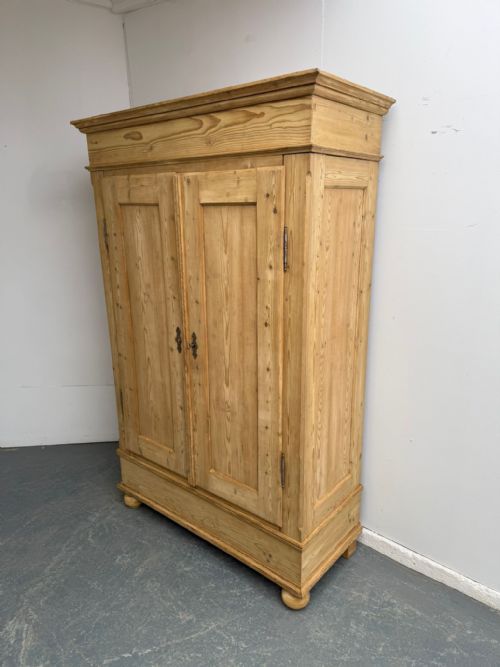


Natural Pine Bedroom Armoire
A natural pine bedroom armoire brings honest utility and warm timber grain to a room, offering generous storage for garments and linens.
Natural Pine Bedroom Armoire
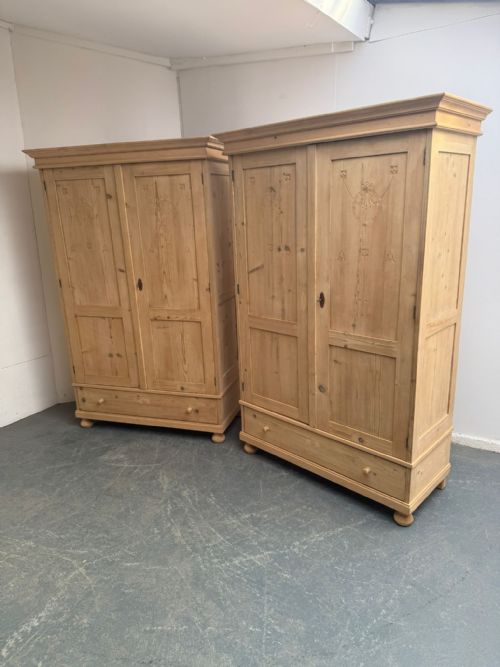
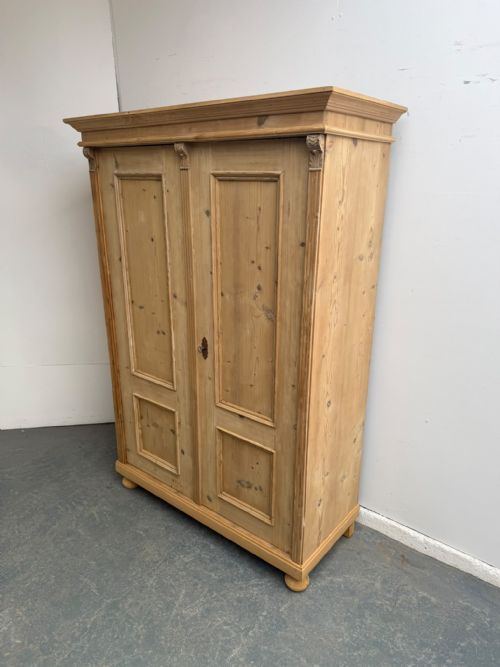
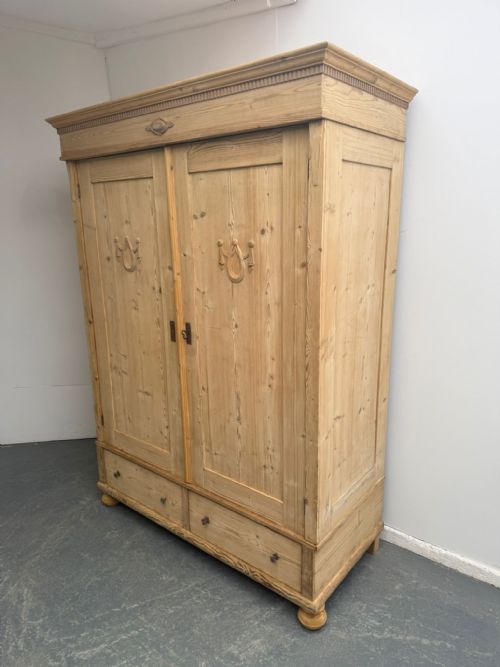
A natural pine bedroom armoire provides substantial storage capacity through wardrobes, cupboards, linen presses, and compactums designed for domestic organisation. These pieces span periods from the Georgian era through Victorian times, the Arts and Crafts movement, and into the 1930s.
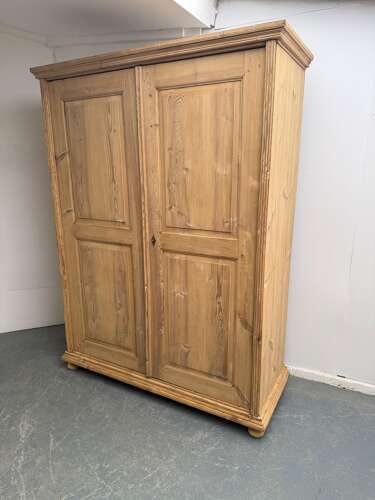
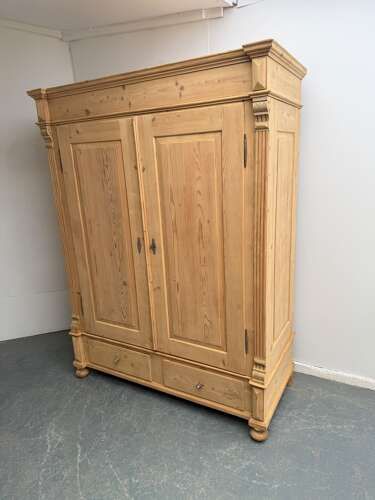
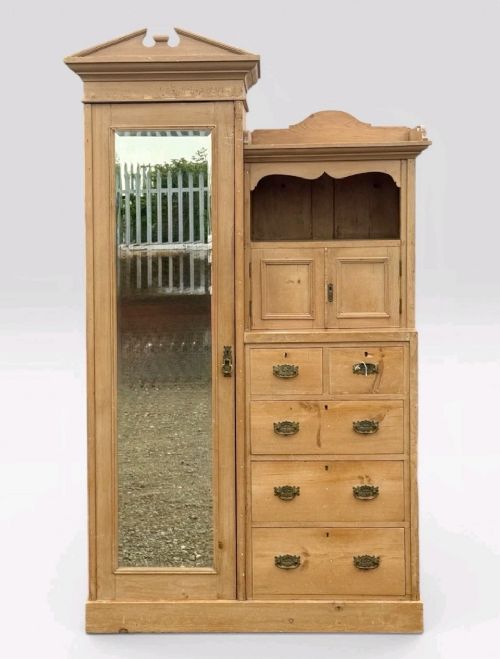
You will frequently encounter knockdown wardrobes and two-door storage cupboards that were built to dismantle for transport between rooms. Regional influences emerge in items labelled as Dutch Country or Victorian Country, alongside functional chifferobes and fitted drawer units.
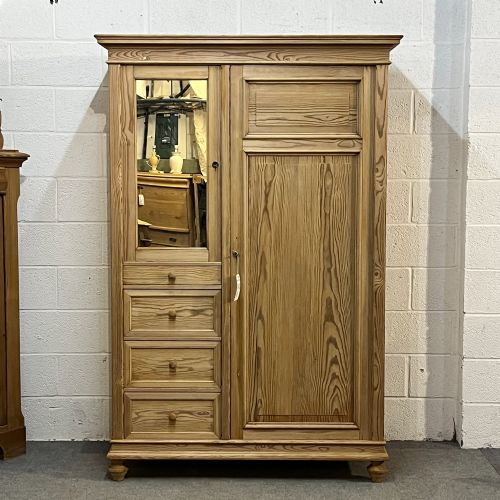
The scale ranges from small bedroom wardrobes and child's cupboards to massive hall wardrobes with mirrored doors. Many examples are offered in bare timber, ready for traditional waxing or painting according to personal preference.
Factors of quality and construction
The refinement of the timber joinery and the integrity of the original panels define the standard of a piece. Finer examples maintain structural balance across large two-door frames and knockdown mechanisms without warping.
Hardware preservation and the survival of internal components, such as original drawers, shelves, and hanging rails, distinguish better-surviving specimens from heavily altered pieces.
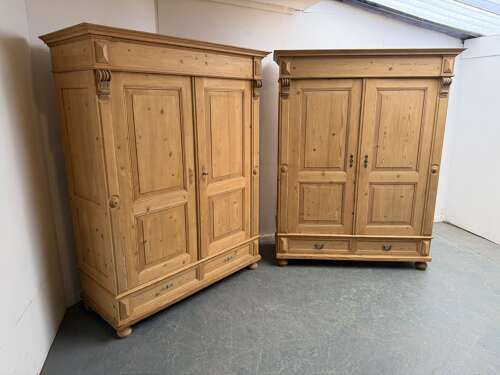
A delightfully small child's wardrobe exists alongside massive knockdown armoires, proving that even historic pine furniture came in miniature.
The Natural Pine Bedroom Armoire Glossary
- Knockdown wardrobe
- A large piece of furniture designed to be dismantled into manageable sections for transport and reassembly. This clever construction method allowed bulky bedroom storage to be moved up narrow staircases.
- Compactum
- A fitted wardrobe that combines hanging space with internal drawers, shelves, and sometimes shoe compartments. It represents an efficient all-in-one storage solution for a bedroom.
- Chifferobe
- A hybrid piece of furniture combining the vertical hanging space of a wardrobe with the horizontal drawer storage of a chest. It offers versatile organisation for varied garments.
- Linen press
- A tall cupboard traditionally used for storing folded sheets, tablecloths and garments, typically featuring internal sliding trays or shelves behind doors. These pieces often incorporate deep drawers at the base.
- Arts and Crafts
- A design movement prioritising traditional craftsmanship and simple, honest construction over ornate industrial decoration. Pieces from this period display clean lines and functional integrity.
Natural Pine Bedroom Armoire: Frequently Asked Questions
How do I assemble a knockdown pine wardrobe?
Knockdown wardrobes utilise interlocking timber joints, wooden pegs, or metal bolts to connect the top, base, sides, and doors without permanent glue. You typically assemble the base, slot the side panels into place, secure the top cornice, and hang the doors last.
Having two people for the assembly ensures the panels remain square and stable while the fixings are secured.
Can I paint or wax these pine armoires?
Many examples are offered in bare timber specifically prepared for finishing with traditional beeswax or a coat of paint. Waxing nourishes the grain and deepens the natural colour over time, while paint allows you to match existing room decor.
Preparation involves lightly sanding the surface to remove any residual marks before applying your chosen finish.
What is the difference between an armoire and a compactum?
An armoire generally provides open hanging space or simple shelving behind large doors for general garment storage. A compactum is a more complex multi-functional unit that divides the interior space to include dedicated drawers, pigeonholes, and smaller compartments alongside the wardrobe section.
Both serve the bedroom but the compactum offers greater internal division for smaller items.
How do I date an antique pine wardrobe?
Dating relies on construction methods, hardware types, and stylistic details such as Georgian panel proportions or Arts and Crafts simplicity. Hand-cut joints, original brass or iron hinges, and the character of the pine planks provide clear clues to the era of manufacture.
Comparing the moulding profiles to established period styles helps narrow down the decade.