



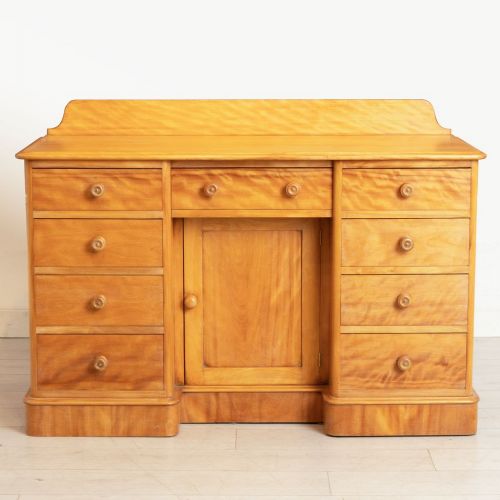


Kneehole Desk Cabinet
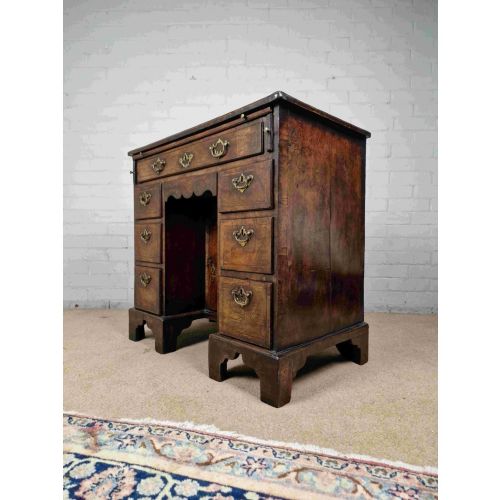
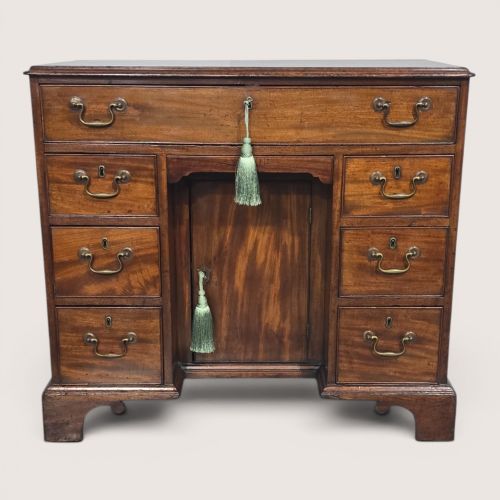
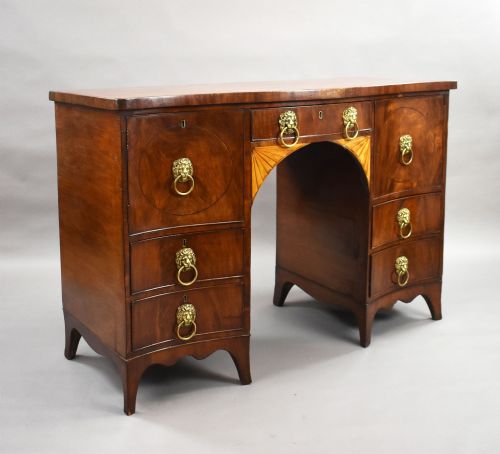
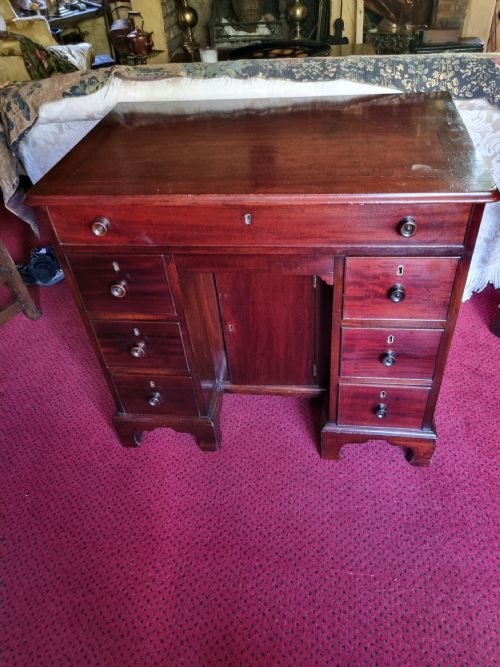
A kneehole desk cabinet brings together fitted writing drawers and concealed central cupboards, offering a compact and refined workstation from past centuries.
Kneehole Desk Cabinet
When you search for a kneehole desk cabinet, you encounter formal writing furniture characterised by a central recess flanked by banks of small drawers, often topped by a cupboard or superstructure. The pieces on this page span the eighteenth century, the Victorian era, and the early twentieth century, showing both full-sized library examples and diminutive or miniature proportions.
The prevailing woods in this selection are mahogany and walnut, alongside oak, satin birch, and yew wood. Styles range from early Georgian and George II through to Queen Anne revivals, Regency, and Edwardian interpretations.
Buyers frequently find these pieces listed under related forms such as desks, writing tables, bureaus, and sideboards. The defining architectural feature remains the kneehole space, which separates the pedestal drawers beneath a main writing surface.
Materials and construction
Cabinet makers utilised dense hardwoods such as mahogany and walnut, frequently applying figured veneers like burr walnut to primary display surfaces. Solid oak and pine served as secondary timbers for drawer linings and internal carcases.
Brass hardware, including drop handles and escutcheons, punctuate the drawer fronts, while decorative stringing utilises lighter woods like boxwood. Construction methods rely on hand-cut dovetailing for drawers and mortise and tenon joints for the structural frames.
Assessing quality
Quality rests upon the selection of timber veneers and the crispness of any carved detailing or inlay. Finer examples display symmetrical grain patterns across the drawer fronts and retention of original brass furniture.
Proportion and scale also dictate distinction, particularly in diminutive or miniature formats where the reduction requires precise miniature joinery. The integrity of the internal drawer construction and the survival of original secondary woods separate standard production from superior cabinet work.
Grendy
The Kneehole Desk Cabinet Glossary
- Kneehole
- A recessed space beneath the central part of a desk or table designed to accommodate the sitter's legs. This architectural void separates the pedestal drawers.
- Pedestal
- An upright support containing a vertical column of drawers on either side of the central kneehole recess. These structures form the main body of the desk.
- Secretaire
- A desk or cabinet containing a pull-down writing flap that conceals a series of small drawers and pigeonholes. It combines storage with a dedicated writing surface.
- Diminutive
- Describing an antique made in a smaller scale than standard furniture of its type. These scaled-down pieces were often masterworks or made for smaller rooms.
- Escutcheon
- A protective plate surrounding a keyhole, usually cast in brass. It prevents the wood surrounding the lock from wearing away.
Kneehole Desk Cabinet: Frequently Asked Questions
What is a kneehole desk cabinet?
A kneehole desk cabinet is a traditional form of writing furniture featuring a central recessed opening beneath the top surface, flanked by vertical banks of drawers and often surmounted by a cabinet or bookcase structure.
These pieces provide both a writing surface and concealed storage, making them suitable for studies and living spaces where space is at a premium.
How do I date a kneehole desk?
Dating relies on examining the timber species, construction techniques such as dovetailing, and stylistic details like bracket feet or handles. Eighteenth-century examples often feature solid walnut or mahogany with hand-cut joints.
Later revival pieces from the Victorian and Edwardian periods incorporate machine assistance or stylistic nods to earlier reigns like Queen Anne and George II.
Where were kneehole desks used?
Historically, these desks served in private libraries, gentleman's chambers, and withdrawing rooms for correspondence and the management of personal accounts. Their compact footprints allowed placement against walls or within smaller rooms.
Today, they function effectively as writing tables or dressing furniture in domestic interiors.
What woods were used in these cabinets?
Cabinet makers predominantly used mahogany and walnut, including burr walnut veneers for decorative impact. Oak, satin birch, yew wood, and rosewood also appear across different periods and styles.
Secondary timbers inside drawers typically include oak or pine.