
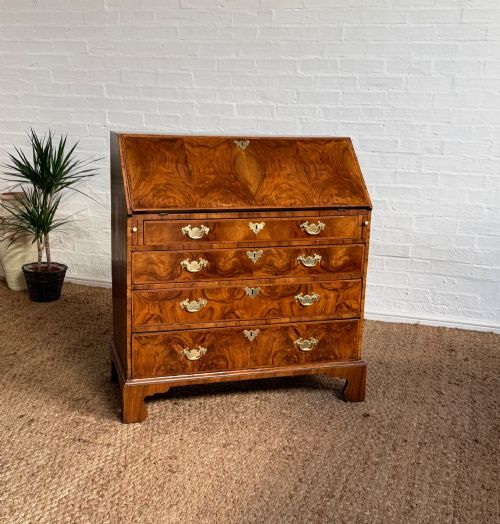
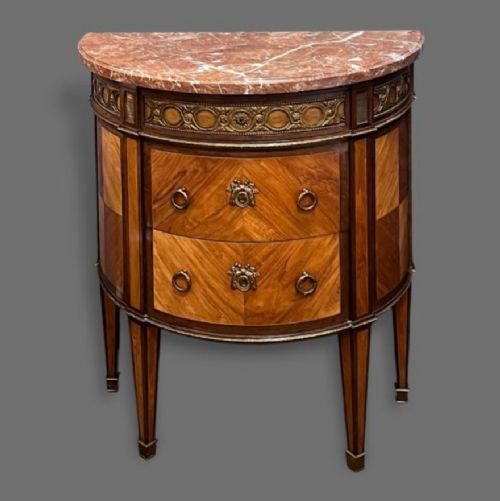


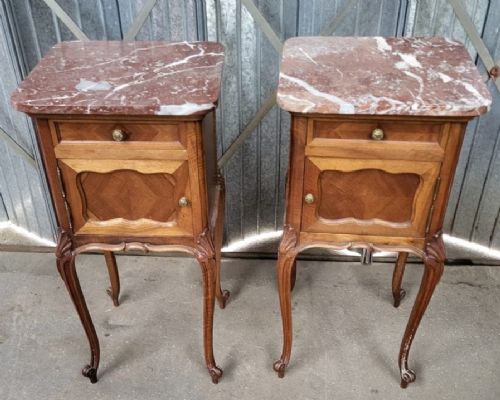


Red Walnut Cabinet
These red walnut cabinet pieces bring rich tone and historic form to any room, offering deep grain and practical storage.
Red Walnut Cabinet
A red walnut cabinet brings together dense cabinet timber and practical storage forms spanning the Georgian period and the eighteenth century. Buyers seeking this phrase encounter corner cupboards, bureau bookcases, and gentleman's library pieces alongside side cupboards.
The material identity shifts between rich red walnut, fruitwood, and figured timber, often paired with brass hardware or leather writing surfaces. Pieces range from diminutive proportions to tall library forms.
Georgian and George II examples dominate the early range, while later centuries contribute bedside cabinets and display pieces. The form serves primarily as a repository for collections, books, or personal items.
Materials and Construction
Cabinet makers utilised solid walnut, red walnut, and fruitwood timbers, often applied as fine veneers over secondary woods to display rich grain patterns. Brass fittings, leather inserts, and marble tops completed the structural composition.
Joinery techniques relied on traditional carcase construction, dovetailing for drawers, and panelled doors to accommodate timber movement over centuries. Carved detailing appeared on select mouldings and bracket feet.
Materials recorded across these pieces include walnut, red walnut, fruitwood, marble, brass, leather, and tulipwood.
Factors of Quality
Quality rests in the selection of the timber grain, where highly figured red walnut or burr surfaces elevate a piece above plain stock. The crispness of carved mouldings and the retention of original brass hardware mark superior workshops.
Proportion and scale dictate distinction, particularly in diminutive library chests and corner cupboards where balanced lines matter most. Original surfaces and minimal timber replacement preserve the integrity valued by collectors.
Druce & Co·Shoolbred
The Red Walnut Cabinet Glossary
- Red walnut
- A rich, warm variant of Juglans regia timber prized by eighteenth-century cabinet makers for its deep colour and pronounced grain figures.
- Bureau bookcase
- A dual-purpose piece featuring a sloping writing flap above drawers, surmounted by glazed or panelled shelving doors.
- Corner cupboard
- A space-saving cabinet built with a triangular cross-section designed to fit snugly into room angles.
- Chest-on-chest
- A tall storage unit comprising one smaller chest stacked directly upon a larger base chest.
- Veneer
- A thin layer of figured timber applied over a sound secondary wood base to present a decorative surface.
Red Walnut Cabinet: Frequently Asked Questions
How do I date a red walnut cabinet?
Dating relies on examining construction methods, timber choice, and hardware styles. Georgian pieces often display fine dovetailing, bracket feet, and distinct red walnut grain.
Later nineteenth-century examples incorporate different proportions, applied veneers, and alternative internal fittings that reflect the tastes of their period.
Where should I place a corner cabinet?
A corner cabinet is designed specifically to utilise awkward room angles, making it ideal for dining rooms or studies where floor space is limited.
Its triangular footprint allows it to anchor an empty corner while displaying books or treasured objects behind panelled doors.
How do I care for antique walnut?
Antique walnut requires stable indoor humidity away from direct sunlight and heat sources to prevent timber drying and veneer lifting.
Gentle dusting with a soft, dry cloth maintains the finish, avoiding modern silicone sprays that can damage historic polishes.