
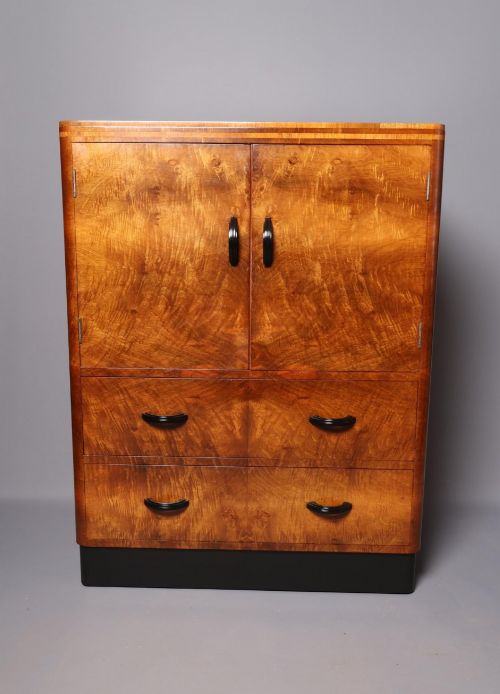

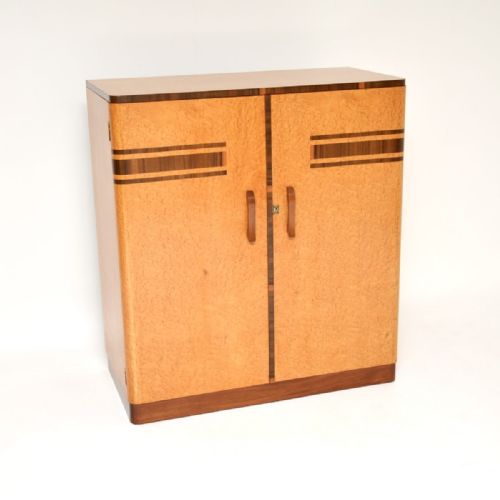
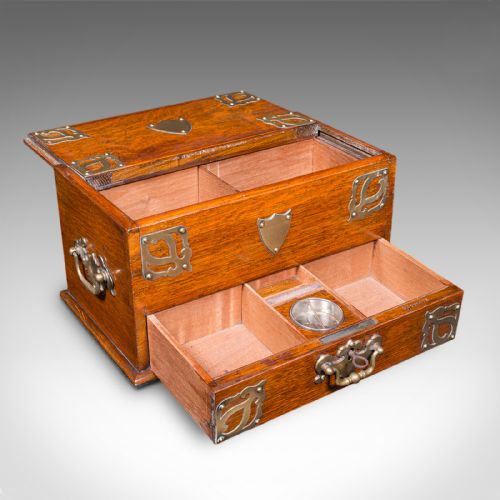


Gentlemans Fitted Cabinet
A gentlemans fitted cabinet organises your daily essentials with tailored compartments, offering substantial storage and classic proportion.
Gentlemans Fitted Cabinet
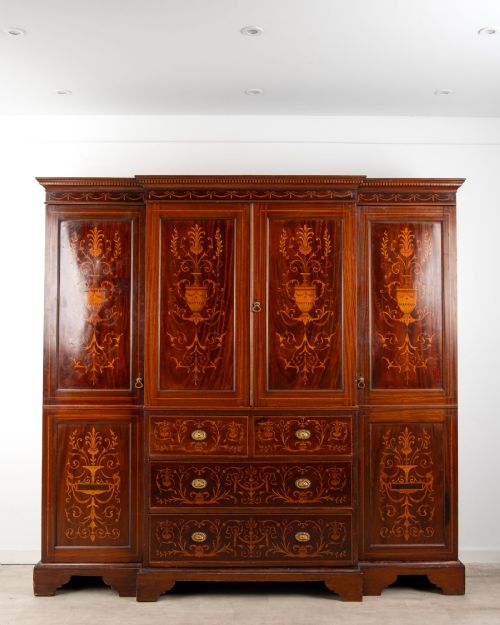
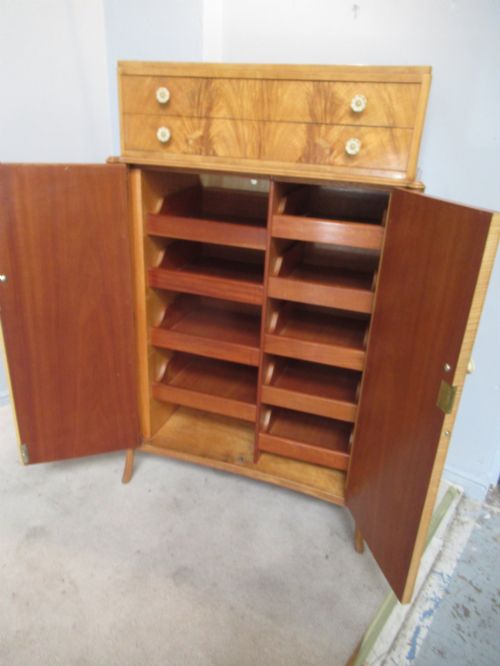
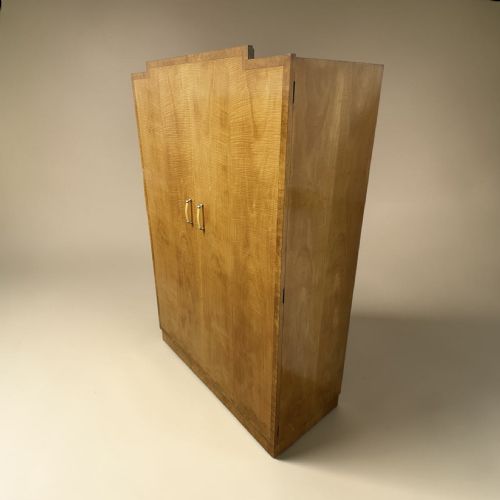
A gentlemans fitted cabinet comprises versatile storage furniture designed for personal organisation, appearing across periods from the eighteenth century through the Art Deco era. These pieces combine hanging space, internal drawers, and compartmentalised shelving within forms such as compactums, tallboys, and wardrobes. Edwardian and 1930 examples dominate the selection, often rendered in rich timbers with clever internal configurations.
Buyers encounter various iterations ranging from compact Georgian library cabinets to expansive Edwardian mahogany wardrobes and twentieth-century walnut compactums. The primary function centres on housing garments, grooming gear, or papers behind panelled doors and fitted interiors. Each piece reflects the specific organisational demands of its era, utilising custom drawers and specialised pigeonholes.
How they were made
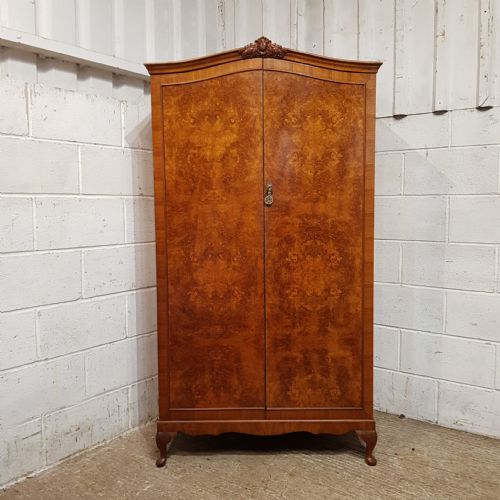
Cabinet makers utilised foundational hardwoods like mahogany, oak, and walnut, frequently applying decorative veneers such as burr walnut and birds-eye maple to primary surfaces. Construction methods relied on traditional joinery techniques, ensuring structural stability for heavy internal fittings and doors. Timber selection dictated the visual weight of the furniture, balancing durability with refined surface grain.
Hardware elements like brass hinges, locks, and handles complemented the structural woodwork, alongside occasional glass panels or leather inserts. Surface finishing involved polishing to accentuate natural wood figures without obscuring the grain. These material combinations sustained intensive daily use while maintaining decorative integrity.
Listings feature periods from the 18th century to 1940, with materials including mahogany, walnut, burr walnut, oak, brass, and glass.
What varies in quality
Construction fidelity distinguishes superior cabinets, particularly in the precision of internal drawer dovetails, drawer runners, and door alignment. High-tier examples feature seamless veneer matching and substantial timber thickness rather than thin surface laminates. The complexity and cleverness of the internal fittings also indicate the original maker's investment of labour and skill.
Material selection significantly influences overall standard, with figured woods like burr walnut and meticulous mahogany cross-banding denoting higher grade output. Maker attribution, such as documented pieces from firms like Maple and Co, adds archival weight to the physical build. Preservation of original brasswork and fitted interior compartments further elevates the standing of individual cabinets.
Maple and Co
The Gentlemans Fitted Cabinet Glossary
- Compactum
- A multi-functional wardrobe featuring a central tower of internal drawers flanked by hanging compartments. This form maximises vertical storage capacity within a unified carcass.
- Veneer
- A thin layer of finely figured wood applied over a secondary timber base to create decorative surface patterns. Master craftsmen matched these slices symmetrically across door panels.
- Library Cabinet
- A specialised storage unit designed to hold books, papers, or small collectables behind glazed or solid doors. These pieces often feature diminutive proportions and refined joinery.
- Inlay
- The technique of inserting contrasting strips of wood or metal into hollowed spaces on the furniture surface. This ornament frames panels and defines structural edges.
Gentlemans Fitted Cabinet: Frequently Asked Questions
What is a gentlemans fitted cabinet?
A gentlemans fitted cabinet is a specialised storage piece designed with internal drawers, compartments, and hanging space for personal garments and accessories.
These units range from compact nineteenth-century chests to large Edwardian wardrobes and Art Deco compactums.
How do I date a cabinet?
Dating relies on identifying characteristic construction techniques, timber choices, and stylistic details associated with periods like George II, Edwardian, or Art Deco.
Hardware styles and internal layout configurations also provide reliable clues to the decade of manufacture.
Where should I place one?
These cabinets suit bedrooms, dressing rooms, or studies where their internal organisation serves practical storage needs.
Ensure adequate clearance for doors to open fully and reveal the fitted compartments inside.
How do I maintain the wood?
Maintain timber surfaces by dusting regularly with a soft cloth and applying appropriate beeswax periodically to nourish the grain.
Avoid placing the cabinet in direct sunlight or near heat sources to prevent veneer lifting.