

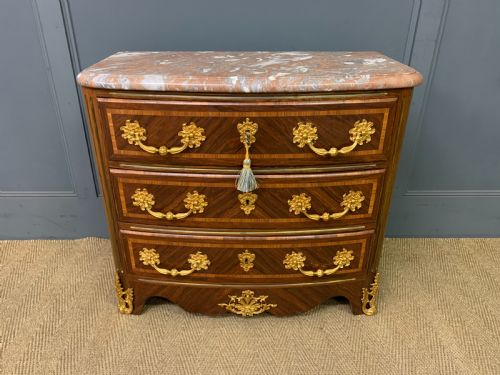


Kingwood Marble Sideboard
A kingwood marble sideboard brings together rich exotic timber and heavy stone, uniting French cabinet-making traditions from the eighteenth and nineteenth centuries.
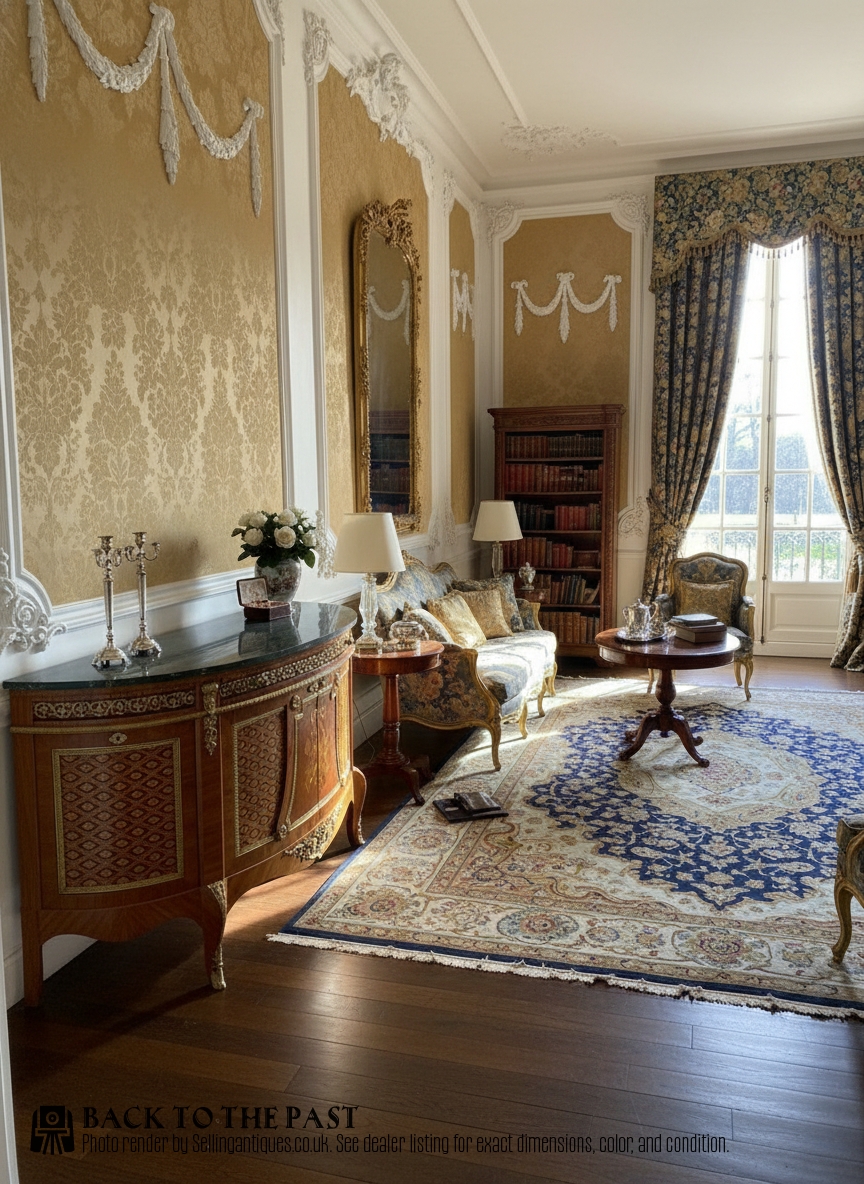
Kingwood Marble Sideboard
A kingwood marble sideboard encompasses sophisticated French storage forms, frequently catalogued as commodes, side cabinets, and credenzas. These heavy statement pieces combine timber carcases with fitted stone tops, originating across the eighteenth and nineteenth centuries.
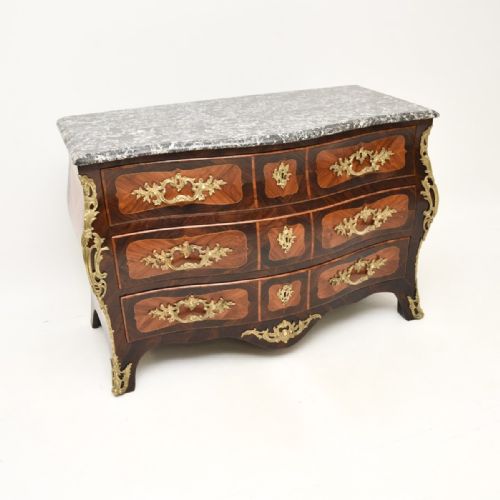
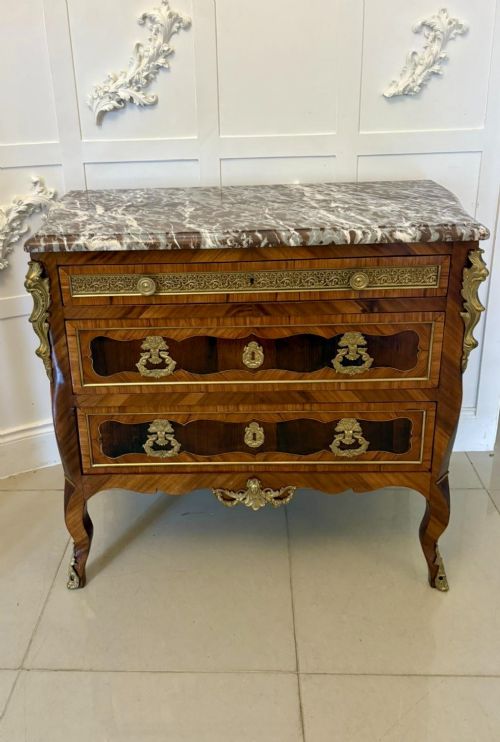
The selection here draws heavily on revival aesthetics, notably Louis XV and Louis XVI styles alongside French Rococo interpretations. Buyers encounter commodes with doors, bombé profiles, and marquetry chests that echo historical palace workshops.
How they were made
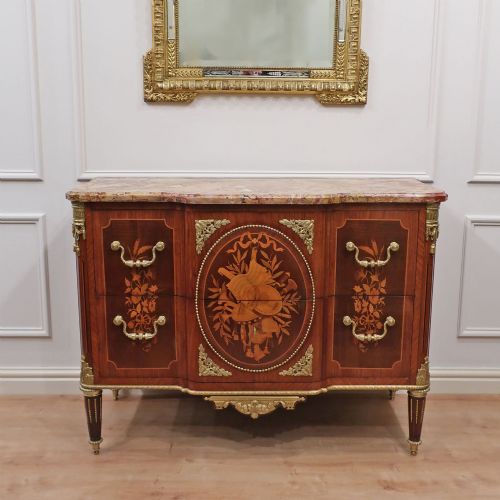
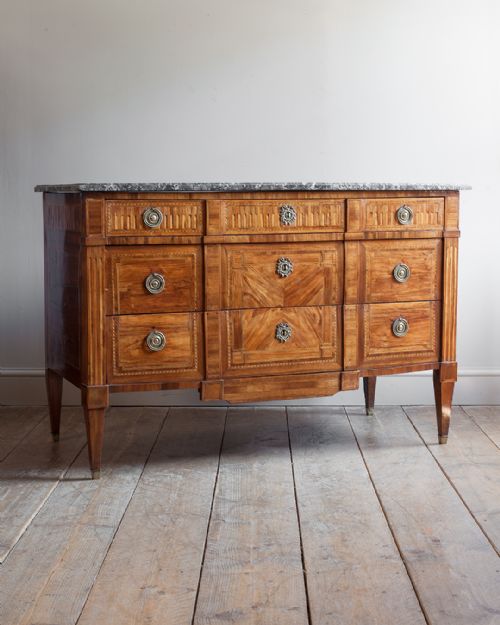
Cabinet-makers laid down complex kingwood veneers in geometric parquetry and pictorial marquetry patterns over sturdy carcases. Artisans selected dense tropical hardwoods for their rich grain contrast before applying the final surface finishes.
Foundries cast ormolu, gilt bronze, and brass mounts to frame corners, aprons, and handles, securing them directly to the timber. Stonemasons then shaped and polished thick marble slabs to sit precisely upon the finished wooden tops.
The listings span from the eighteenth century through the nineteen-twenties, uniting eighteenth-century originals with later revival pieces.
What varies in quality
The crispness of the gilt bronze and ormolu mounts dictates much of the upper tier, separating sharp, hand-chased metalwork from softer, more repetitive casting. Master workshops employed chisels to refine every leaf and scroll after it left the sand-mold.
Veneer selection and the precision of the marquetry cutting create further divisions across the examples. Tighter grain matching and more intricate floral or geometric patterns denote higher labour investment by the cabinet-maker.
Jacques Bircklé·Paul Sormani·Mercier Frères·Germain Landrin
The Kingwood Marble Sideboard Glossary
- Kingwood
- A dense Brazilian timber featuring dark violet and brown striping, prized by eighteenth-century Parisian cabinet-makers. It appears extensively as a quarter-sawn veneer on high-status commodes.
- Ormolu
- Gilded bronze mounts applied to furniture to accent corners and handles. The technique involves treating copper alloys with a mercury and gold amalgam before firing.
- Bombé
- A swelling, outward-curving profile found on commodes and cabinets. This voluptuous shape demands advanced woodworking skill to fit drawers and veneers to curved surfaces.
- Marquetry
- The art of arranging thin slices of coloured wood veneers into pictorial scenes or geometric designs. Craftsmen cut these patterns from templates before pressing them into the carcase.
- Commode
- A low chest of drawers or cabinet developed in France during the late seventeenth century. It remains one of the primary forms associated with marble-topped decorative storage.
Kingwood Marble Sideboard: Frequently Asked Questions
How do I clean the marble top?
Wipe the stone surface gently using a soft cloth dampened with warm water and mild, neutral soap. Avoid acidic cleaners or vinegar, which etch polished marble finishes over time.
Dry the slab thoroughly with a clean towel to prevent water spots. For deeper maintenance, apply a specialised stone sealer periodically as recommended for antique surfaces.
What is the difference between a commode and a sideboard?
A commode traditionally functions as a low chest of drawers with formal proportions, originating as a bedroom or salon piece in France. Sideboards and credenzas generally offer larger storage capacities enclosed by doors.
Both forms share the characteristic marble top and decorative veneer work in these listings. The terminology often reflects regional cataloguing preferences between English and French auction houses.
Where should I place a kingwood sideboard?
Position the piece away from direct sunlight and strong heat sources to protect the sensitive timber veneers from fading or drying out. Stable indoor humidity prevents the wooden carcase and joints from shifting.
Allow sufficient clearance in hallways or dining rooms to accommodate the prominent bombé profiles and ormolu mounts. These heavy items require solid walls and level flooring for secure placement.
How do I identify a Louis XV style piece?
Look for asymmetrical curves, cabriole legs, and flowing rocaille motifs inspired by mid-eighteenth-century French design. The revival pieces from the nineteenth century adopt these exact architectural vocabularies.
Check the mounts and timber construction for clues regarding the manufacturing era. Nineteenth-century interpretations often feature machine-sawn timbers hidden beneath the hand-laid kingwood veneer.