


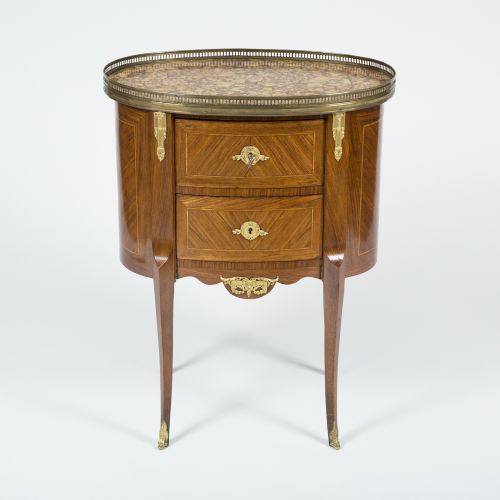
Louis XVI Kingwood Commode
A louis xvi kingwood commode brings architectural restraint and refined wood veneers to a formal interior.
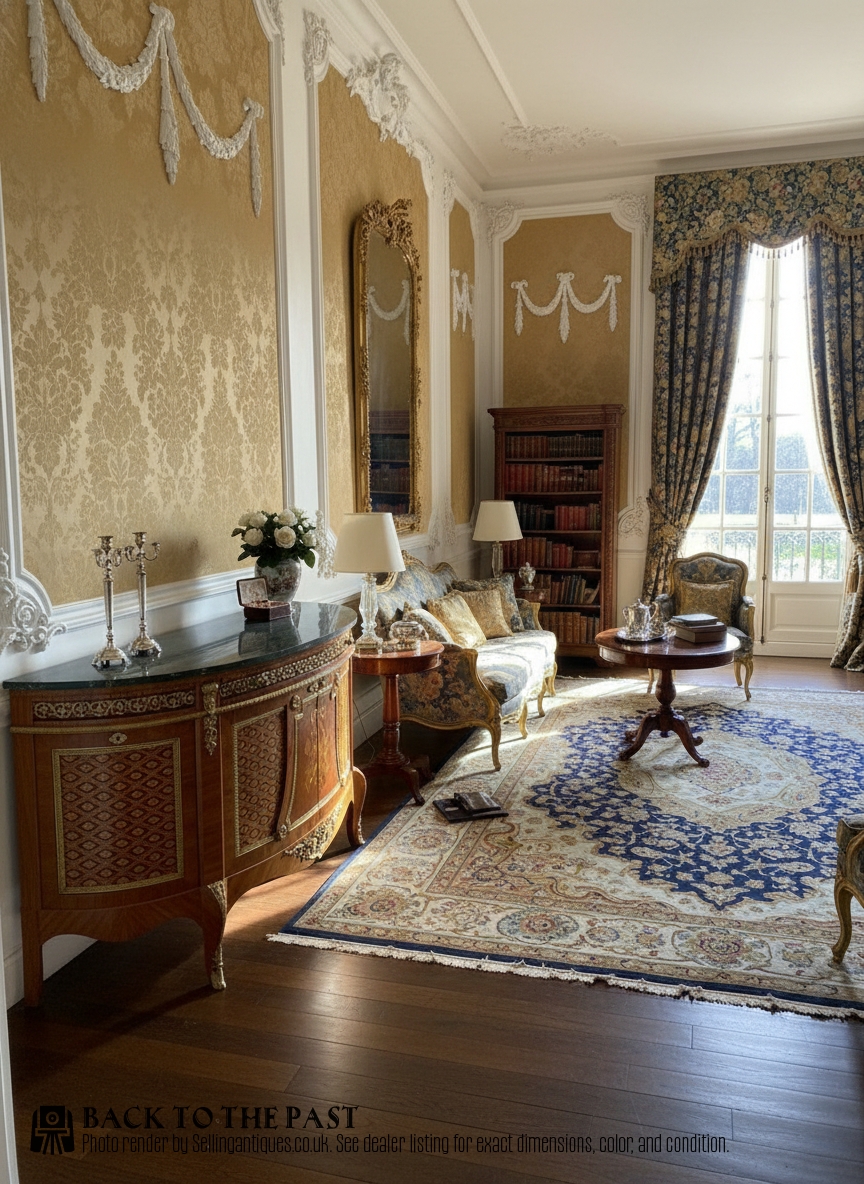
Louis XVI Kingwood Commode
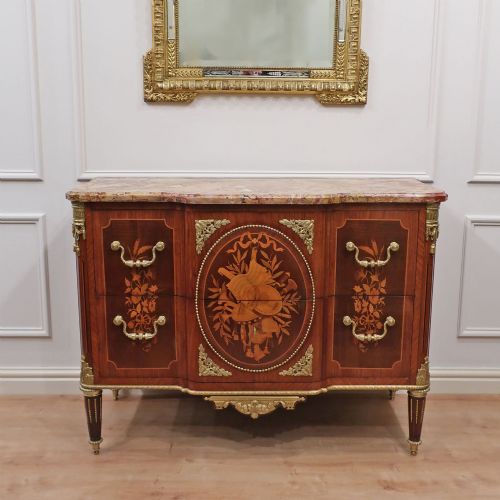
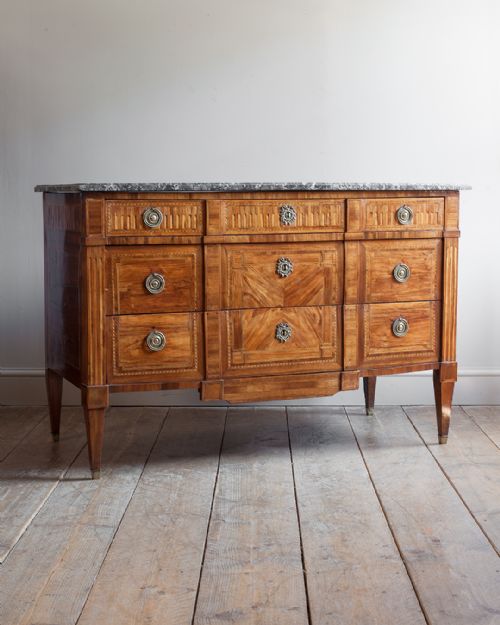
A louis xvi kingwood commode is a formal storage chest defined by straight lines, symmetrical parquetry, and classical proportions rather than the exuberant curves of earlier revivals. Pieces listed range from authentic eighteenth-century examples to nineteenth-century revivals and early twentieth-century interpretations.
How They Were Made
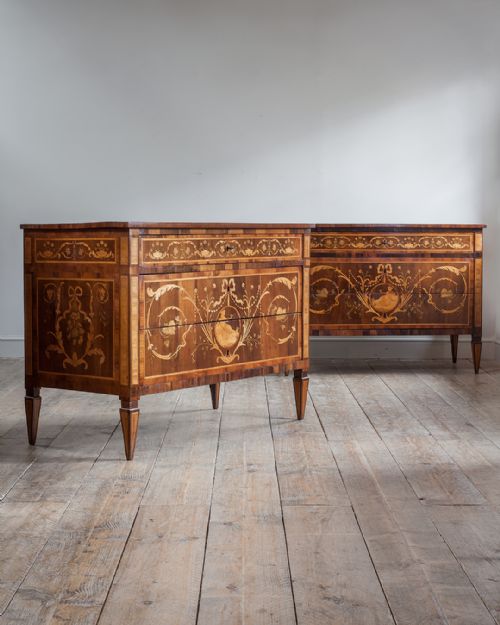
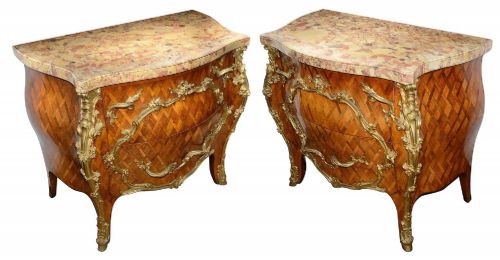
Cabinetmakers constructed these commodes using dense timbers like kingwood, walnut, and rosewood, sliced thin to create intricate marquetry and geometric parquetry patterns across the drawer fronts and sides. Ormolu and gilt bronze mounts were cast and chased to accentuate the structural corners, aprons, and key escutcheons.
Heavy marble slabs, including varieties like breche d'alep, were shaped to fit precisely onto the upper surface of each chest. Brass and porcelain details occasionally appear alongside the primary timber frames to finish the decorative scheme.
The furniture spans the eighteenth century through to the early twentieth century, encompassing both original period pieces and later revivals.
What Varies in Quality
The distinction between ordinary and exceptional pieces rests in the crispness of the gilt bronze mounts and the precision of the wood inlay. Finer examples display hand-chased ormolu with sharp definition, whereas lesser items rely on softer, cast metalwork.
The integrity of the timber veneer work also signals quality, with superior commodes exhibiting tightly aligned grain patterns and complex geometric parquetry that remains flush across the entire carcass. Structural balance and the weight of the fitted marble top further separate standard production from master-workshop output.
Paul Sormani
The Louis XVI Kingwood Commode Glossary
- Kingwood
- A dense, heavily figured Brazilian timber prized for its rich brown colour and contrasting dark streaks. It formed the primary surface veneer for high-status eighteenth-century French furniture.
- Ormolu
- Gilded bronze applied to furniture mounts, feet, and handles. It provides a bright metallic contrast against dark exotic woods.
- Marquetry
- The art of applying decorative veneer pieces in pictorial or botanical patterns onto a timber carcass. This technique requires meticulous hand-cutting and fitting of disparate wood species.
- Parquetry
- Geometric wood inlay forming repeating patterns such as cubes, chequers, or lozenges. It showcases the cabinetmaker's precision in grain alignment.
- Breche d'alep
- A type of quarried marble featuring brecciated patterns of varied tones, frequently selected for eighteenth and nineteenth-century cabinet tops.
Louis XVI Kingwood Commode: Frequently Asked Questions
How do I spot an eighteenth-century original?
Authentic period pieces display period-appropriate construction methods, hand-cut dovetails in the drawer construction, and genuine age-related wear to the timber and interior surfaces.
Later nineteenth-century revivals often use machine-sawn elements and standardised hardware, even when utilising genuine period woods and traditional decorative techniques.
Can these commodes be used in modern rooms?
These chests function well as bedroom storage, living room credenzas, or hallway feature pieces due to their flat marble surfaces and manageable chest heights.
Their restrained neoclassical lines allow them to sit comfortably alongside contemporary furnishings without overwhelming a minimalist space.
How should I care for the marble top?
Wipe the stone surface regularly with a soft, damp cloth and neutral soap to prevent staining from acidic liquids or oils.
Avoid abrasive cleaners or harsh chemicals that can dull the polished stone finish over time.