


Kingwood Glass Vitrine Cabinet
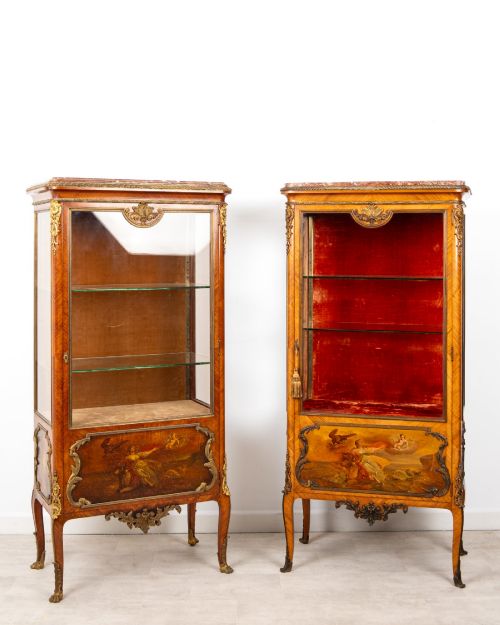
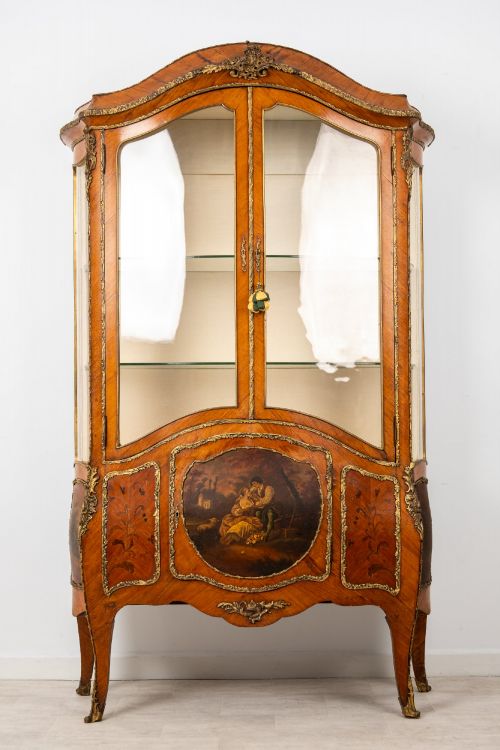
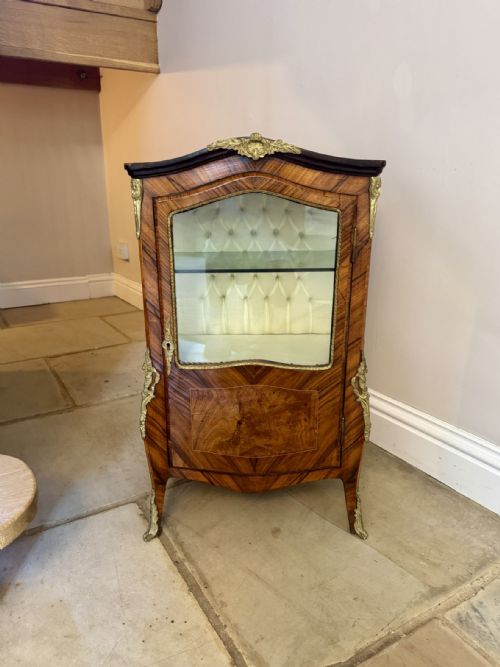
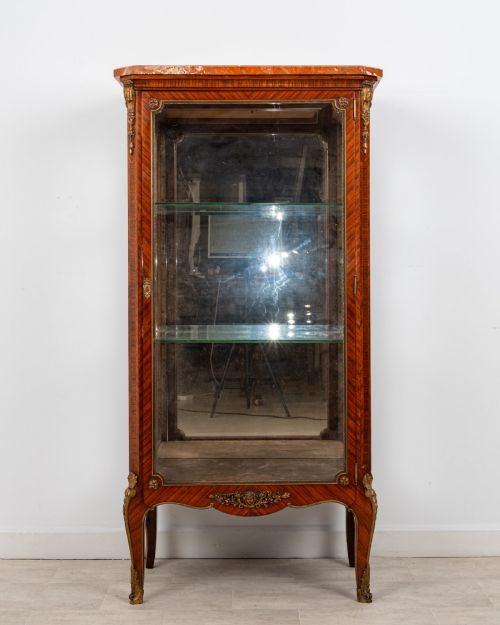
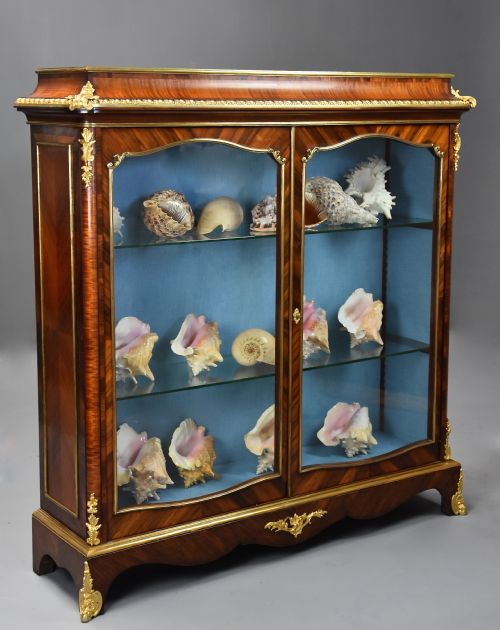
These kingwood glass vitrine cabinets offer figured wood and cast mounts to display collections behind glazed panels.
How they were made
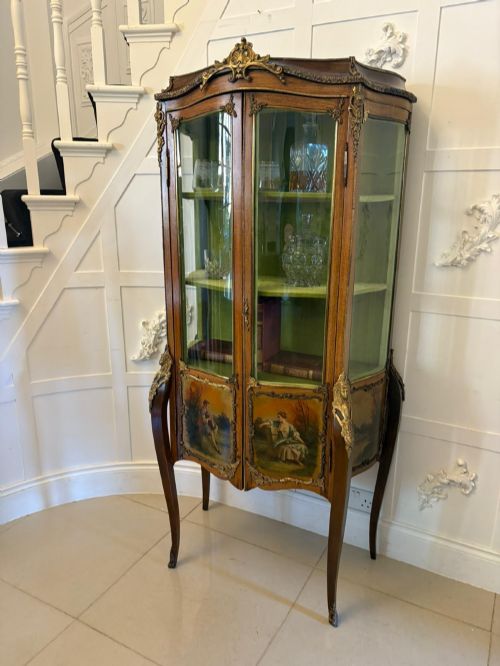
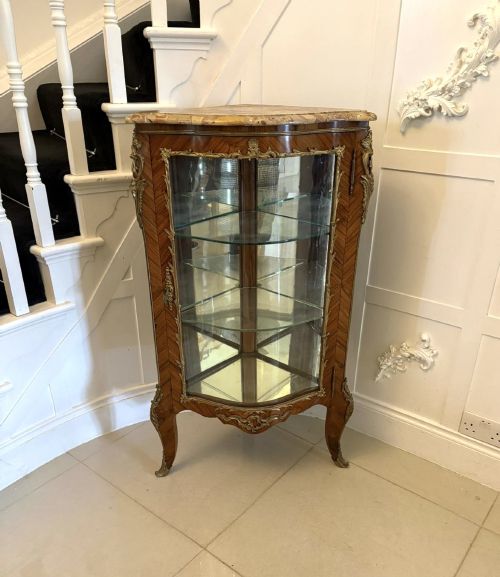
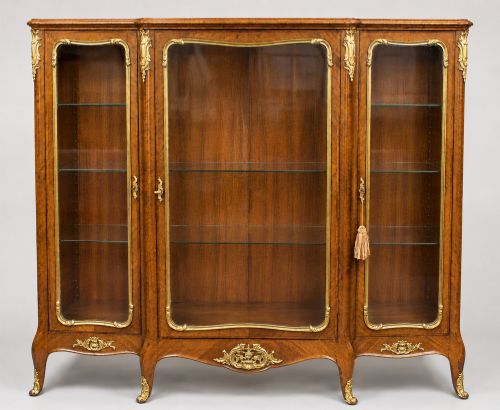
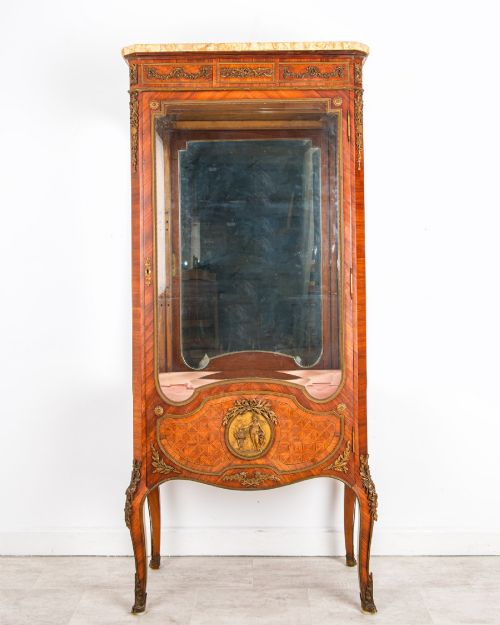
Construction relies on timber carcases overlaid with kingwood veneers, arranged in geometric parquetry or floral marquetry patterns. Carved or cast ormolu and gilt-bronze mounts are applied to angles, borders, and feet to accentuate the contours.
Glazing employs curved and flat glass panes fitted into timber doors, complemented by marble slab tops in many nineteenth-century examples. Painted Vernis Martin panels appear on lower sections or sides, reproducing eighteenth-century lacquer techniques.
What varies in quality
The refinement of the ormolu or gilt-bronze mounts distinguishes baseline production from works associated with notable makers, showing sharper chasing and weightier casting in superior examples. Veneer selection similarly separates standard furniture from pieces exhibiting carefully matched kingwood grain patterns.
Structural complexity, such as bombé profiles, serpentine fronts, and bent glass panels, demands advanced joinery and influences the overall presence of the cabinet. Integrated details like hand-painted Vernis Martin panels add distinct artistic dimension to individual pieces.
Materials documented across these display pieces include kingwood, walnut, ormolu, gilt-bronze, marble, fabric, and brass.
François Linke·G. Durand·Gouffel
The Kingwood Glass Vitrine Cabinet Glossary
- Kingwood
- A dense, richly figured Brazilian timber utilised for decorative veneers in fine cabinet-making. It displays dark violet-brown tones with lighter streaks.
- Ormolu
- Cast brass that has been mercury gilt, providing a bright golden finish. It decorates the mounts and trims of French revival furniture.
- Vitrine
- A glass-fronted display cabinet designed to showcase porcelain, curiosities, or books. The term derives from the French word for glass.
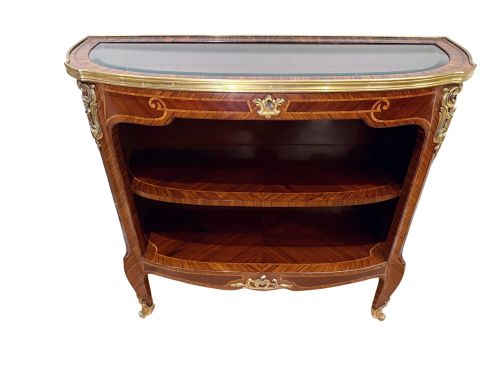
- Bijouterie Table
- A low display table with a glazed top and compartment for small valuables. These pieces often stand on slender cabriole legs with bronze mounts.
Kingwood Glass Vitrine Cabinet: Frequently Asked Questions
What is a kingwood glass vitrine cabinet used for?
These cabinets serve to display porcelain, silver, and decorative objects while protecting them from dust behind glazed doors. The inclusion of glass panels and glass shelves maximises visibility from multiple angles.
Historically placed in reception rooms and drawing rooms, they acted as focal points for demonstrating a household's curated collections and refined tastes.
How do you date a kingwood glass vitrine cabinet?
Dating relies on stylistic markers, construction methods, and materials recorded across nineteenth and early twentieth-century examples. Pieces often align with Victorian or Edwardian periods, or specific revivals like Louis XV and Louis XVI.
Examining the interior timbers, backboards, and the composition of ormolu mounts helps establish the approximate decade of manufacture.
What is the difference between Louis XV and Louis XVI styles?
Louis XV revival pieces feature asymmetrical curves, serpentine fronts, and flowing rococo ornamentation with cabriole legs. The lines are organic and undulating.
Louis XVI revival pieces introduce stricter symmetry, straight tapering fluted legs, and neoclassical motifs like urns and swags within rectangular or arched overall forms.
How should I care for a kingwood cabinet with marble?
Maintenance involves dusting timber surfaces with a soft, dry cloth and avoiding direct sunlight to prevent veneer fading. Natural wax applied sparingly preserves the kingwood finish.
Marble tops require prompt wiping of spills to prevent staining, using mild soap and water rather than acidic cleaners that etch the polished stone.