





Gold French Vitrine
A gold french vitrine is a glazed display cabinet designed to showcase fine objects, bringing decorative elegance and historic charm to a room.
Gold French Vitrine
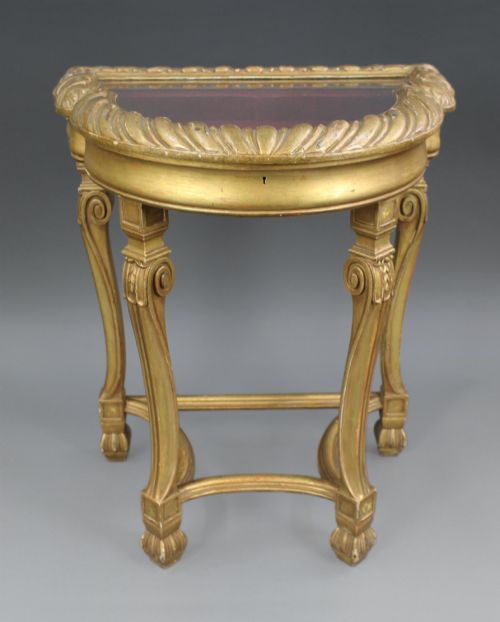
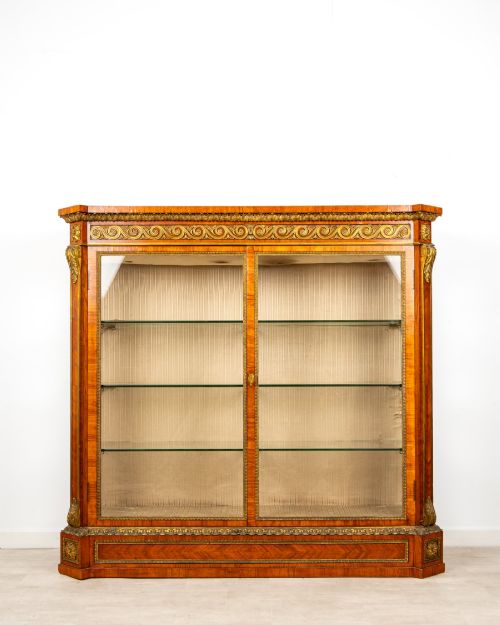
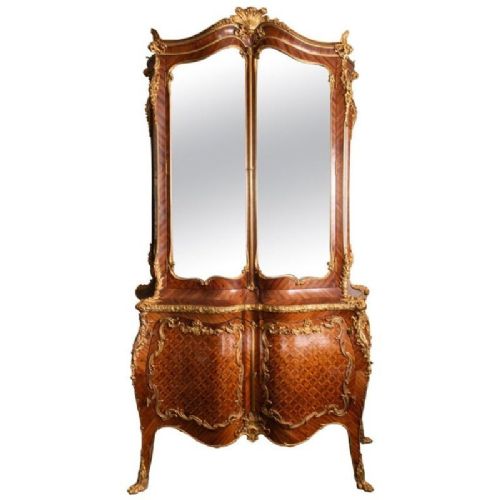
A gold french vitrine typically takes the form of a glazed display cabinet or freestanding display case, designed to hold and exhibit collections behind glass panels. Buyers seeking a gold french vitrine will encounter various expressions of French taste, including Louis XV revival, Louis XVI style, and French Rococo Revival pieces.
The selection ranges from tall, imposing nineteenth-century cabinets and cylindrical pedestal forms down to smaller serpentine fronted display pieces and hanging display cases. Materials such as giltwood, ormolu, and parcel-gilt finishes dominate the appearance, often paired with mahogany, kingwood, or ebonised elements.
Many examples incorporate decorative painted panels in the Vernis Martin style alongside traditional glass and brass or gilt-bronze mounts. These cabinets originate primarily from the nineteenth and early twentieth centuries, spanning Victorian interpretations up to Edwardian and Art Deco periods.
Materials and construction methods
Cabinetmakers utilised hardwoods such as mahogany and kingwood as foundational structures, applying rich surface treatments including gilding, parcel-gilt, and ebonising. Ormolu and gilt-bronze mounts provided decorative architectural accents around glass doors and framing.
Glazing techniques allowed for side and front visibility, incorporating curved serpentine glass or flat panes secured within brass or wooden frames. Decorative surfaces often integrated painted panels executed in the Vernis Martin tradition, requiring skilled application of multiple varnish layers.
Gold French Vitrine Retail Price Guide 2026
Typical asking prices for gold french vitrine among the pieces listed under this phrase on Sellingantiques today, from the lower quarter to the upper quarter. They describe what is for sale here now, not the wider market.
Distinguishing quality across examples
Quality rests heavily on the crispness of the giltwood carving and the weight and detail of the ormolu or gilt-bronze mounts. Superior cabinets display finely hand-chased metalwork and deeply carved wooden ornamentation rather than flat or cast substitutes.
The integration of materials also defines the tier of a piece, seen in the smoothness of serpentine glass, the complexity of marquetry or painted Vernis Martin panels, and the structural integrity of the internal shelving and doors.
H. J. Hatfield & Sons·Siegel·Francoise Linke
The Gold French Vitrine Glossary
- Vitrine
- A glass display cabinet intended for the presentation of porcelain, curiosities, or small collectibles. These pieces often feature glazed sides to maximise light penetration.
- Ormolu
- Gilt bronze mounted onto furniture as decorative hardware and mounts. This technique was widely utilised by cabinetmakers during the nineteenth century.
- Vernis Martin
- A type of simulated Japanese lacquer developed in France, consisting of translucent varnishes over painted scenes. It appears frequently on decorative cabinet panels.
- Kingwood
- A dense, richly figured tropical timber utilised in high-end cabinetmaking for veneering. It brings dark contrasting grain patterns to the surface.
- Giltwood
- Timber that has been coated with gold leaf or gold paint to create a brilliant metallic finish. This surface treatment defines the aesthetic of many revival pieces.
Gold French Vitrine: Frequently Asked Questions
What is a gold french vitrine?
A gold french vitrine is a decorative glass cabinet designed for displaying precious objects and fine ceramics.
These pieces use glazed panels and gilded woodwork to highlight the items placed inside while serving as decorative furniture.
How were these cabinets used?
They were utilised in drawing rooms and reception spaces to display collections of porcelain, silver, and small curiosities.
The glass doors protected delicate items from dust while allowing visitors to admire the owner's collection.
Where should I place a vitrine?
A vitrine suits drawing rooms, dining rooms, or hallways where natural light can strike the glass and gilded surfaces.
Positioning them away from direct sunlight protects both the cabinet finish and the items displayed within.
How do I identify a revival style?
Revival styles draw on earlier periods like the reigns of Louis XV and Louis XVI, incorporating characteristic curves and mounts.
Examining the construction methods and materials helps date the piece to the nineteenth or twentieth century.