



Khorasan Area Rug
These khorasan area rug pieces are woven tribal and regional carpets offering rich botanical lattices and deep wool piles.
Khorasan Area Rug
A khorasan area rug brings together centuries of weaving traditions from north-east Persia, spanning tribal and regional workshops. When searching this phrase, a buyer meets pieces originating from the nineteenth century up to the early twentieth century.
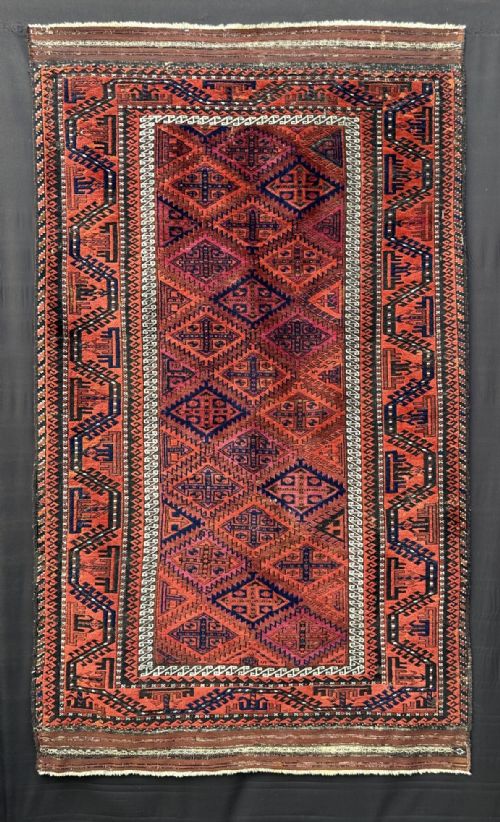
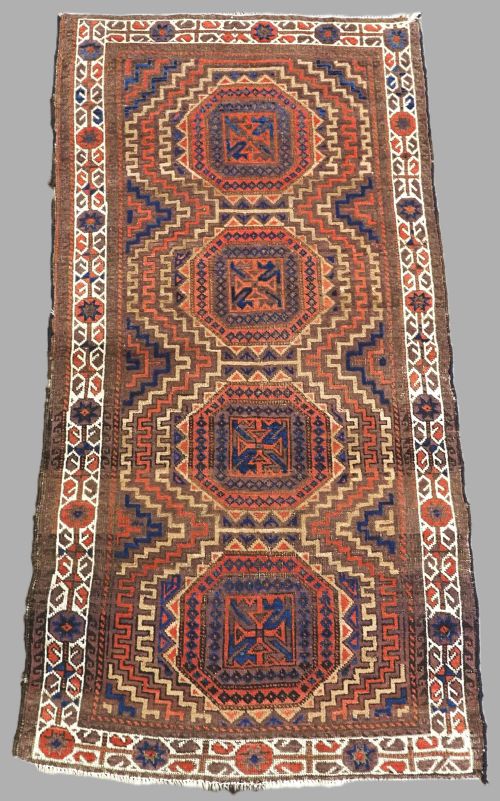
The most common version on this page is the Khorasan Baluch rug, often displaying intricate geometric patterns such as the mina khani design or fine lattice motifs. These floor coverings bridge the gap between nomadic tribal expression and structured Persian carpet production.
Makers and weavers from this area utilised distinct regional sub-styles, including pieces attributed to the Quchan Kurds and Salar Khani groups. Such diversity ensures that each textile carries a specific local character within the broader Khorasan provenance.
How they were made
These carpets rely heavily on natural wool for the pile, providing durability and a soft underfoot feel. Certain rustic pieces incorporate camel wool, adding unique tactile depth and unbleached tonal variety to the surface.
Cotton foundations supply the sturdy structural framework for many of these floor coverings, allowing the dense wool knots to hold their shape firmly over decades of use. This combination of materials ensures both flexibility and structural integrity.
Khorasan Area Rug Retail Price Guide 2026
Typical asking prices for khorasan area rug among the pieces listed under this phrase on Sellingantiques today, from the lower quarter to the upper quarter. They describe what is for sale here now, not the wider market.
Current listings feature pieces spanning from the late nineteenth century through to the 1920s, constructed from wool, cotton, and camel wool.
What varies in quality
The precision of the weave and the complexity of the design define the upper tier of these textiles. Fine lattice work and well-executed geometric guls demand greater technical skill from the weaver than simpler tribal fields do.
The condition of the wool pile and the integrity of the foundation dictate how well a piece has survived its decades of service. Untouched rustic examples retain their original charm, while evenly worn surfaces demonstrate the resilience of the natural materials.
The Khorasan Area Rug Glossary
- Gul
- A medallion or repeating octagonal motif commonly found in tribal and regional weaving traditions. This pattern serves as a primary decorative element across many Baluch carpets.
- Mina khani
- An overall pattern composed of daisy-like flowers connected by curved lattices, creating a repeating grid across the field. It appears frequently in nineteenth-century Persian carpets.
- Calyx lattice
- A geometric arrangement featuring floral calyx motifs linked within a framework of diagonal lines. This design structure adds formal geometry to tribal rugs.
- Salar Khani
- A specific sub-style of Baluch weaving associated with the Khorasan region, known for distinct design variations. Pieces bearing this attribution display specific regional characteristics.
Khorasan Area Rug: Frequently Asked Questions
How do I care for an old wool carpet?
Vacuum gently without using a rotating brush roll to protect the delicate wool fibres from excessive wear. Keep the textile out of direct sunlight to prevent the natural dyes from fading over time.
Rotate the floor covering periodically to ensure even foot traffic distribution across the pile. Professional cleaning should be undertaken sparingly by specialists familiar with antique Persian textiles.
Where were these carpets originally woven?
These pieces originate from the Khorasan province in north-east Persia, encompassing various tribal and regional production centres. Weavers from nomadic and semi-nomadic groups contributed distinct regional styles to the local output.
Towns and rural areas such as Quchan saw Kurdish and Baluch communities producing robust floor coverings. Each locale imparted its own preferences in motif structure and colour palette.
How do I identify a nineteenth-century piece?
Nineteenth-century examples often exhibit hand-spun wool with natural dye variations that create subtle abrash across the field. The structural materials and knotting techniques reflect traditional pre-industrial methods of production.
Design elements tend to follow older tribal traditions rather than standardised commercial patterns. Examination of the foundation and selvedges reveals the handmade nature characteristic of this era.
Can I use these rugs in high traffic rooms?
Wool and cotton construction provides natural resilience, allowing these carpets to withstand regular movement in domestic spaces. Placing a suitable underlay beneath the textile prevents slipping and reduces friction against the floor.
Heavily used hallways benefit from sturdy pile construction that resists crushing underfoot. Proper placement ensures the antique textile remains a functional part of the interior.