







Kershaw Schofield Art
Kershaw Schofield art brings the quiet observation of British Impressionism and interwar realism directly into your rooms through oil and gouache.
Kershaw Schofield Art
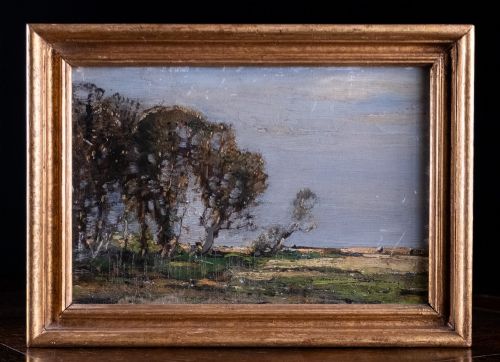
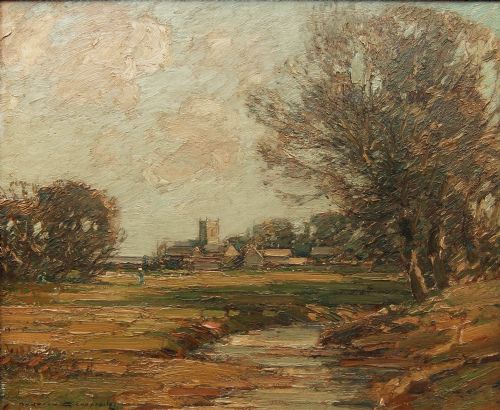
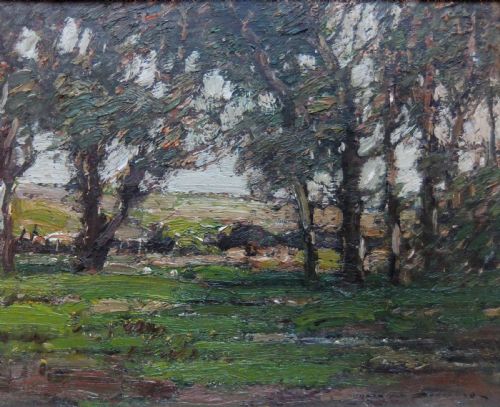
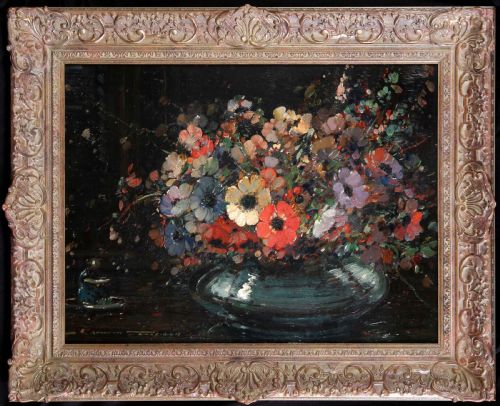
When you search for Kershaw Schofield art, you are looking at oil paintings, panels, and boards created by the British artist spanning the early twentieth century. The selections show a strong leaning towards landscapes, rural scenes, still life studies, and portraiture from periods around 1910, 1920, and 1930.
The most common subjects you will meet in these listings are countryside views, village scenes, and intimate still life arrangements like anemones. Alongside these pastoral compositions, the record includes formal portraiture, such as royal double portraits set within stepped oak frames.
These works capture a specific interwar realism and impressionistic approach to light and nature. Buyers seek them out to anchor a room with genuine period character and tangible historical depth.
Materials and technique
The physical backbone of these works relies on traditional supports including canvas, wooden board, oak panels, and gesso. Artists of this era applied oil paint with visible brushwork, building texture and depth across the surface.
In addition to standard oils, some pieces utilise gouache on paper to achieve a different matte finish and immediacy. Framing often involves heavy wooden structures, sometimes incorporating bespoke presentation plaques.
Materials recorded across the inventory include canvas, oil paint, wood, gesso, board, and oak.
Distinctions in quality
Quality in these paintings rests on the strength of the composition and the confidence of the brushwork. Works that capture light and atmosphere with immediacy stand apart from more static or formulaic compositions.
The integrity of the original support and the preservation of the paint surface dictate the visual impact of each piece. Frames also contribute significantly, particularly where original stepped oak surrounds and period presentation plaques remain intact.
Kershaw Schofield
The Kershaw Schofield Art Glossary
- British Impressionism
- A style of painting developed in the late nineteenth and early twentieth centuries that focuses on light, transient moments, and looser brushstrokes. British practitioners adapted French techniques to domestic landscapes and coastal scenes.
- Interwar Realism
- An artistic approach dominant between the First and Second World Wars that portrayed everyday subjects with a sober, direct fidelity. It rejected extreme abstraction in favour of recognisable forms and grounded local scenes.
- Oil on board
- A painting technique where oil paint is applied directly to a rigid wooden or composite board rather than stretched canvas. This surface offers a firm foundation that often requires less maintenance over the decades.
- Gouache
- An opaque water-based paint that dries to a smooth, matte finish. It allows for vibrant colour application and precise detail work on paper supports.
Kershaw Schofield Art: Frequently Asked Questions
What subjects did Kershaw Schofield paint?
The available works demonstrate a broad range covering rural landscapes, village views, and quiet farm settings. You will also find floral still life compositions and royal portraiture.
These diverse subjects reflect the working life of an artist active through the early decades of the twentieth century.
How should I hang an oil painting on board?
Ensure the wall space avoids direct sunlight and damp conditions to protect both the wooden support and the oil pigments.
Use secure picture hooks rated for the weight of the frame, keeping the piece at eye level for optimal viewing.
How do I identify a 1920s painting?
Look for stylistic markers associated with interwar realism alongside materials like wooden panels and canvas typical of the decade. Signatures and inscriptions often provide direct dating evidence.
Framing details, such as stepped oak surrounds, can also point towards specific presentation contexts from the period.
What is the difference between canvas and board?
Canvas is a flexible woven fabric stretched over a wooden frame, giving a slight spring under the brush. Board is a rigid flat support that provides a completely solid resistance during painting.
Both materials were used extensively during the early twentieth century depending on the artist's preference.