

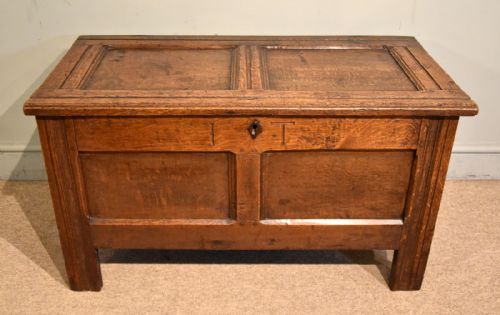
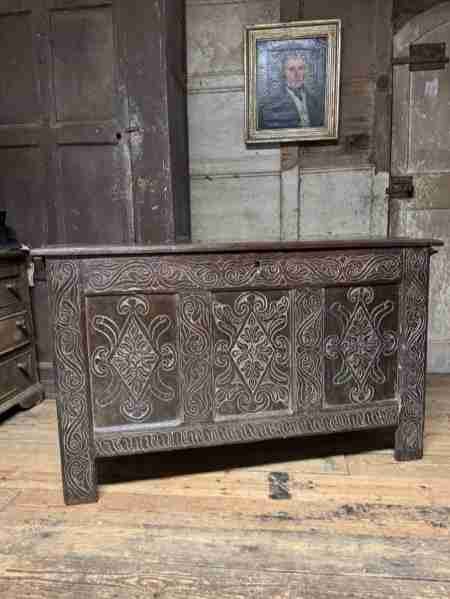
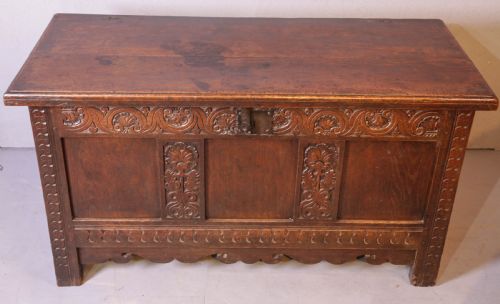
Joined Oak Trunk
A joined oak trunk is a sturdy timber chest built with mortise and tenon framing, offering timeless storage rooted in centuries of domestic life.
Joined Oak Trunk
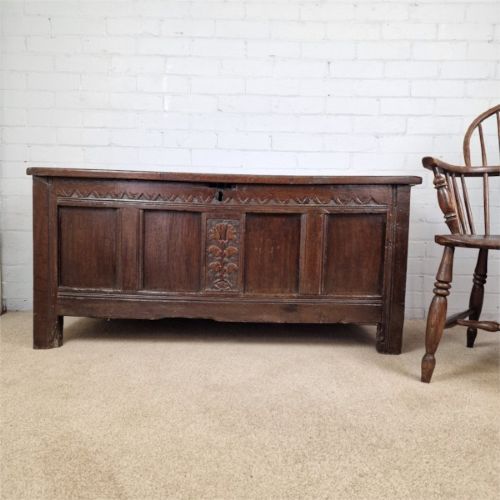
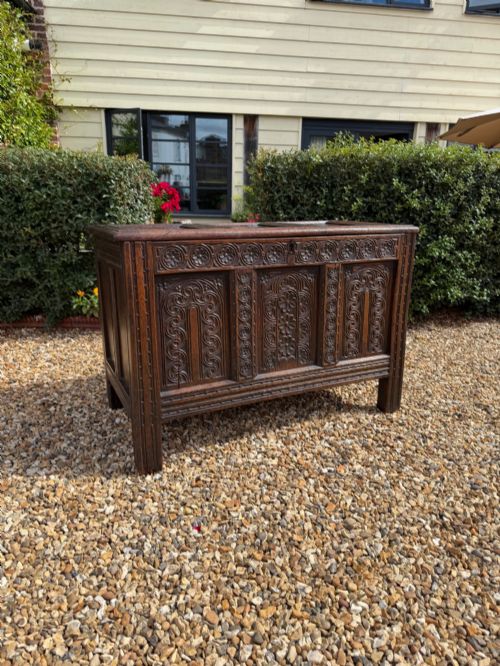
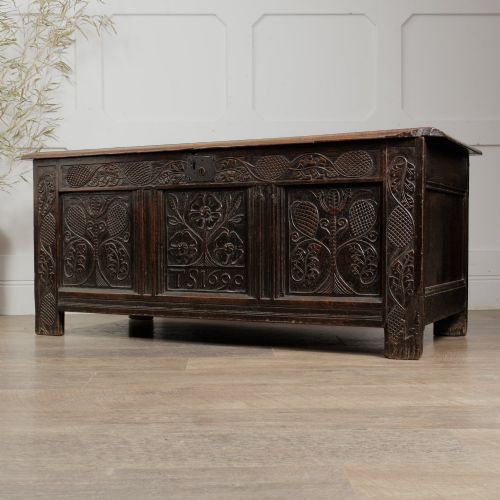
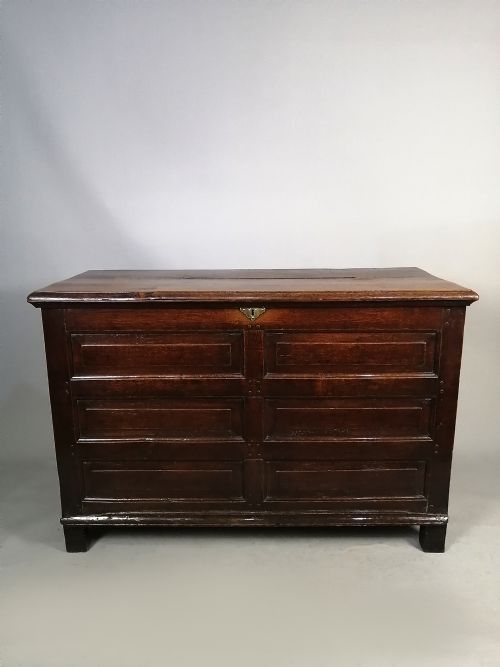
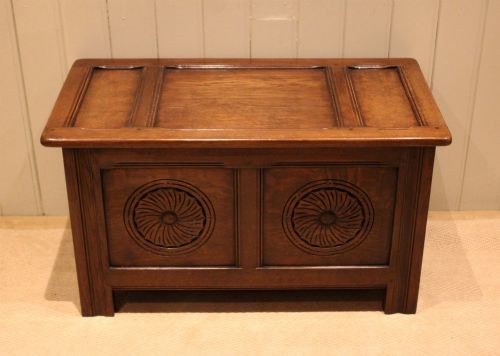
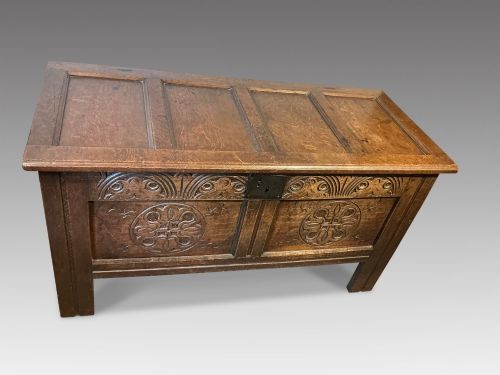
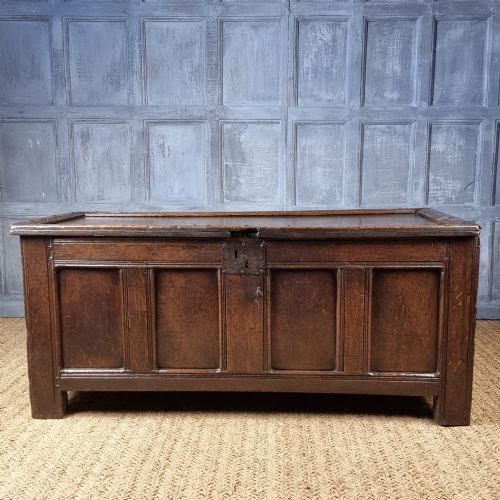
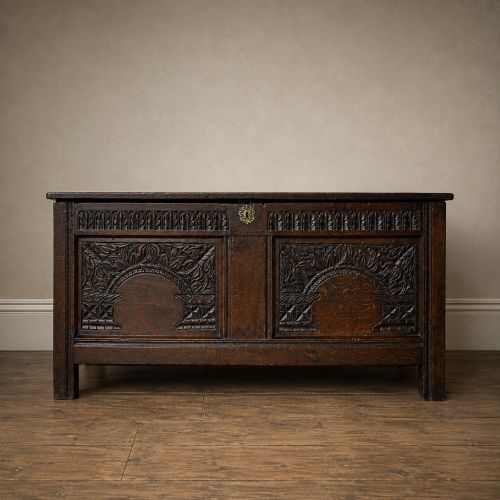
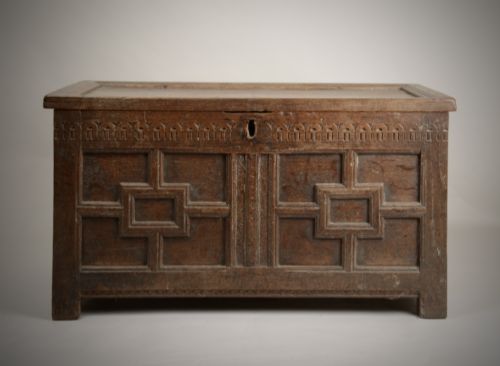
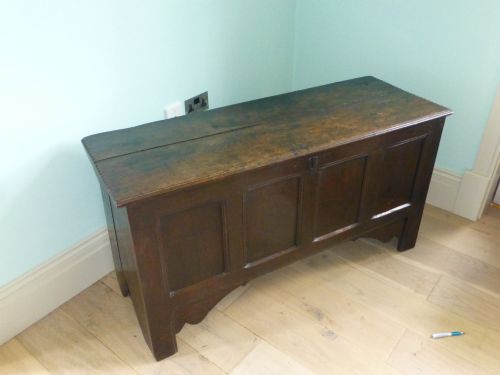
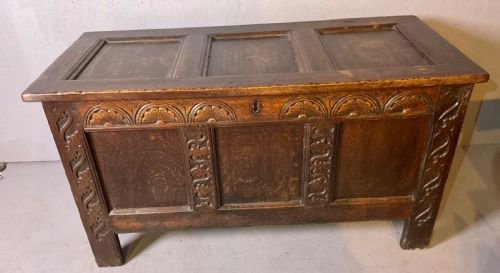
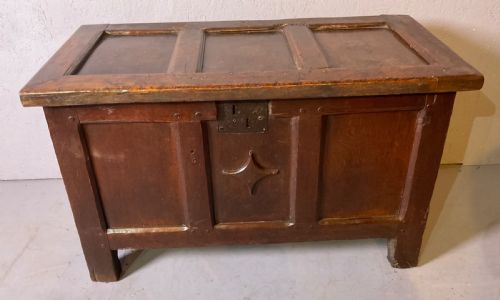
A joined oak trunk, often catalogued as a coffer or blanket chest, serves as a primary form of domestic storage across centuries of English and Welsh craftsmanship. These timber boxes provide rigid containment through pegged frame construction rather than simple boarded joints.
The pieces appearing on this page span several distinct eras, with the seventeenth century providing the core of the selection. Alongside these seventeenth-century examples, items from the sixteenth century, the eighteenth century, and occasional later interpretations demonstrate the enduring appeal of panelled oak construction.
Regional variations emerge clearly across the grouping, showing specific regional traits from areas such as Wales, Lancashire, and Lakeland. Buyers frequently encounter forms featuring single panels, multiple panels, or integrated drawer sections known as mule chests.
How they were made
Construction relies upon heavy oak timbers shaped into frames and panels, secured by wooden pegs rather than modern fixings. This joined technique allows the wood to expand and contract naturally within the frame without compromising the structural integrity of the chest.
Surface decoration involves hand carving, geometric moulding, and traditional linenfold motifs cut directly into the solid wood. Blacksmith-made iron and brass hardware, including hinges and lock plates, completes the assembly of these heavy storage pieces.
Several trunks preserve centuries-old carpenter's setting-out lines scratched directly into the oak to guide the original assembly.
What varies in quality
Quality rests upon the proportion and integrity of the original oak frame, alongside the crispness and depth of any hand-carved ornament. Pieces retaining their structural timber without excessive replacement parts demonstrate superior survival through the centuries.
The character of the wood surface dictates much of the visual distinction between examples, with untouched patination elevating a piece considerably. Finer items exhibit harmonious timber selection where the grain and colour of the panels complement the surrounding framework.
Thomas Dennis
The Joined Oak Trunk Glossary
- Joined
- Timber construction utilising mortise and tenon joints secured with wooden dowels or pegs. This method distinguishes superior furniture from simpler boarded boxes.
- Coffer
- A heavy storage chest traditionally used for valuables, linen, or documents. The term is frequently used interchangeably with trunk or blanket chest in historical listings.
- Linenfold
- A style of carved wooden panelling that resembles folded fabric, popular during the Tudor and Elizabethan periods. It adds texture and decorative depth to the face of a chest.
- Mule chest
- A storage chest featuring one or more drawers built into the base beneath the main compartment. This form bridges the evolution between the traditional coffer and the modern chest of drawers.
- Patina
- The surface sheen and deep colour developed by aged oak through decades of handling, wax, and light. A desirable patination reflects genuine age and continuous use.
Joined Oak Trunk: Frequently Asked Questions
What was a joined oak trunk used for originally?
These chests functioned primarily as secure storage for household valuables, textiles, and important documents in domestic and ecclesiastical settings. Because houses lacked fitted closets, families relied on heavy timber boxes to protect possessions from dampness and theft.
Over time, their role evolved to include housing blankets and everyday clothing within the bedroom or parlour. Their sturdy lids also allowed them to double as temporary seating or tables when space was at a premium.
How do I date a joined oak trunk?
Dating relies on observing construction methods, timber preparation marks, and decorative styles characteristic of specific reigns or centuries. Sixteenth-century examples often display linenfold carving, while seventeenth-century versions frequently incorporate geometric mouldings and pegged frame joints.
Changes in hardware, panel thickness, and regional carving motifs provide further clues to a piece's origin. Comparing the construction details against dated benchmark pieces helps narrow down the decade of manufacture.
Where were joined oak trunks made?
Production took place locally in workshops across England and Wales, where regional cabinet makers utilised native hardwood supplies. Different districts developed distinct stylistic traits, such as the specific framing patterns found in Lancashire or the particular carving styles of Welsh valleys.
Local timber availability heavily influenced the appearance of each chest, as craftsmen worked with the specific grain and quality of regional oak trees. This local production creates the regional variations identifiable in surviving pieces today.
How do I care for an antique oak chest at home?
Maintaining an antique oak chest requires placing it away from direct heat sources and dramatic humidity fluctuations that cause timber to split. Consistent indoor conditions protect the historic wood and prevent the frame joints from loosening over time.
Occasional application of traditional beeswax helps nourish the surface and preserves the accumulated patina without sealing the wood. Gentle dusting with a dry cloth keeps the carved details clear of debris.