





Joined Oak Furniture
Joined oak furniture brings heavy seventeenth-century timber into modern rooms through sturdy joint stools, wainscot armchairs and deep coffers.
Joined Oak Furniture
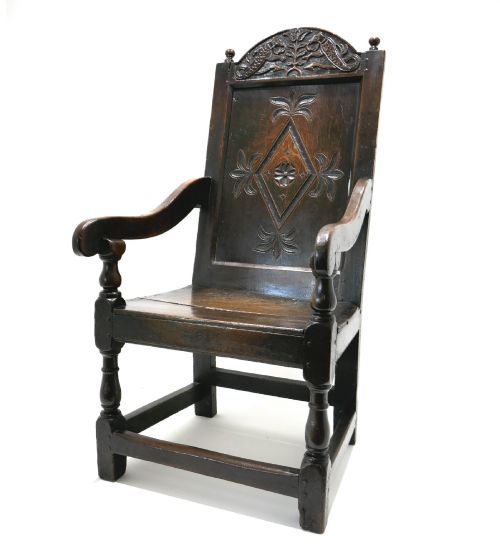
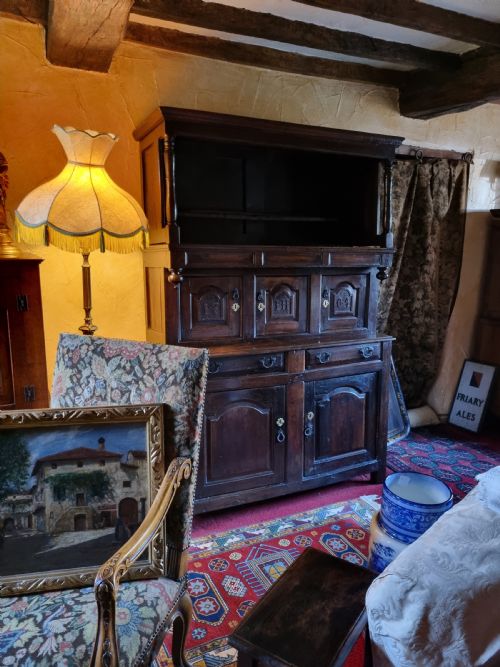
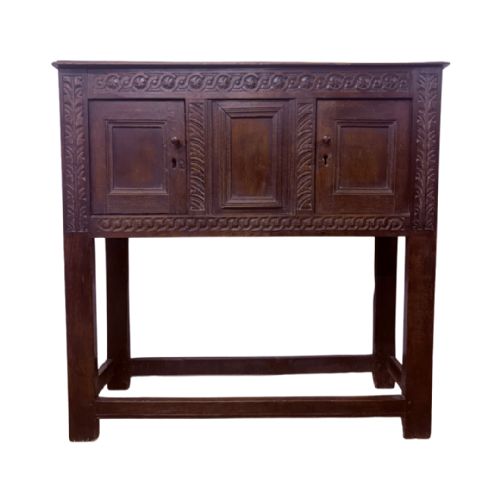
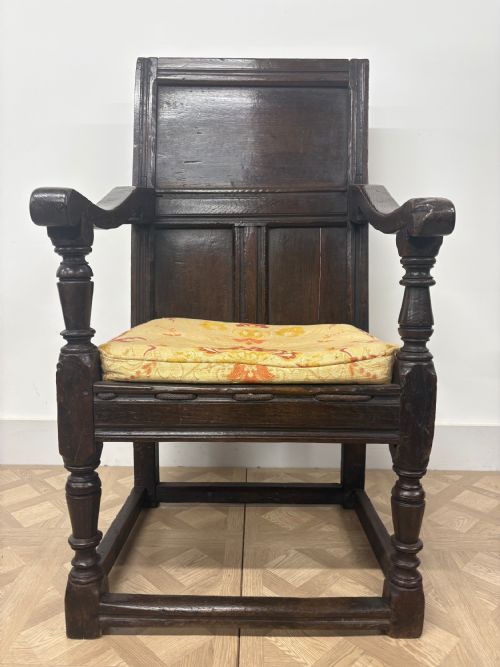
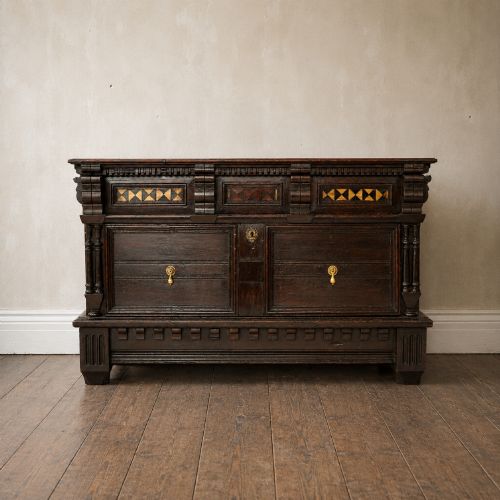
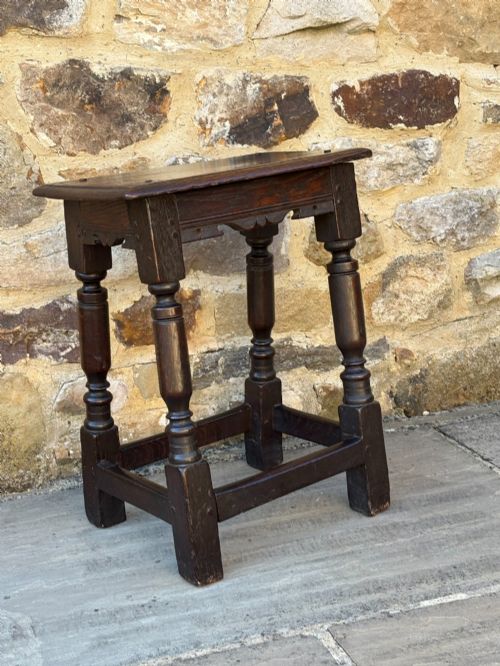
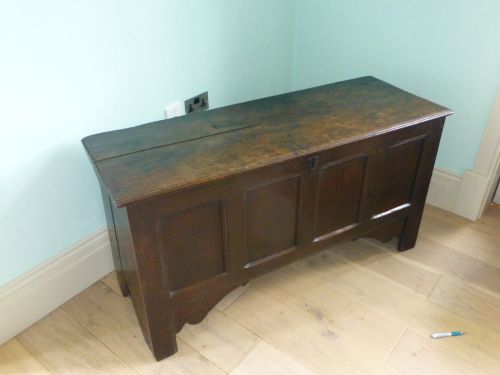
When you search for joined oak furniture, you find pieces built from solid English timber using traditional frame and panel construction rather than simple boarded boxes. The forms span seventeenth-century wainscot armchairs, joint stools and coffers alongside Welsh tridarns and regional cupboards.
The pieces you meet most often on this page date from the seventeenth century, carrying the stylistic markers of the Jacobean, Charles I and Commonwealth periods. Regional variations appear frequently, from Welsh vernacular pieces to Yorkshire and Lancashire examples.
Domestic storage and seating dominated early households, leading to the survival of robust chests, court cupboards and side tables. These objects were built to withstand heavy daily use, relying on pegged joints that tighten as the wood seasons.
What varies in quality
Quality rests upon the integrity of the original timber and the survival of primary surfaces without excessive intervention. Pieces retaining their original top boards, floorboards and pegged joints command greater regard among collectors.
Carved detail varies from crisp, deep relief work executed by skilled regional hands to simpler, shallower incisions on vernacular pieces. The proportion of timber replacement alters the standing of a piece, as does the retention of original ironwork.
Joined Oak Furniture Retail Price Guide 2026
Typical asking prices for joined oak furniture among the pieces listed under this phrase on Sellingantiques today, from the lower quarter to the upper quarter. They describe what is for sale here now, not the wider market.
Early close stools disguised sanitation as respectable oak seating, proving that even seventeenth-century privacy required sturdy joinery.
The Joined Oak Furniture Glossary
- Joined stool
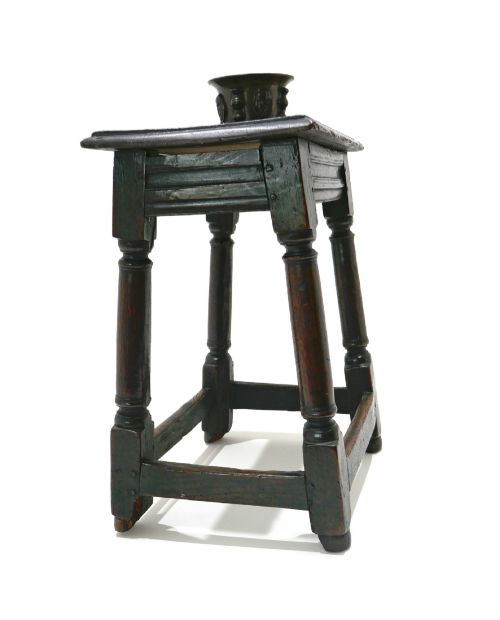
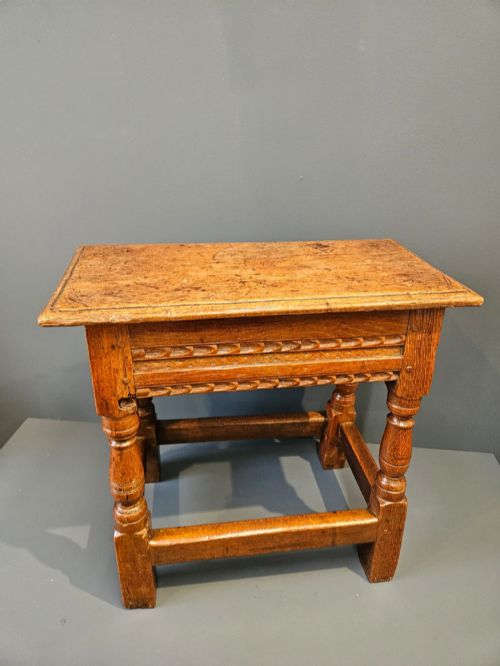
- A sturdy wooden seat constructed with mortise and tenon joints and pegged frames, often called a joint stool. These served as primary seating at dining tables before chairs became common.
- Wainscot armchair
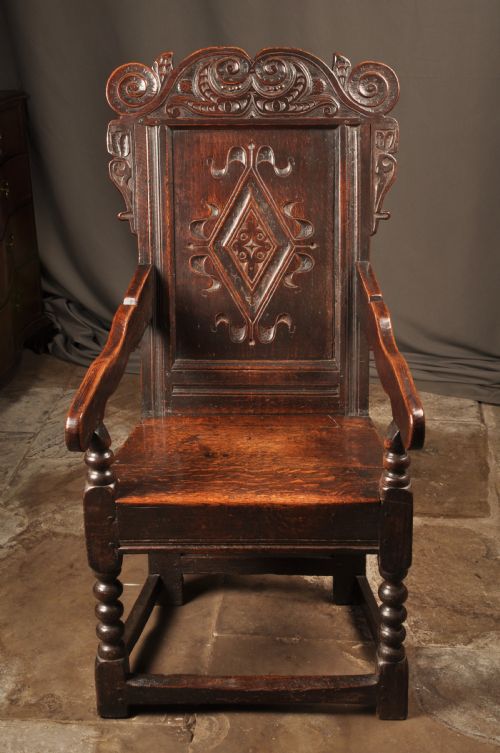
- A heavy wooden chair featuring a panelled backrest, solid wooden seat and panelled arms. The term originally denoted fine foreign oak used for panelling.
- Coffer
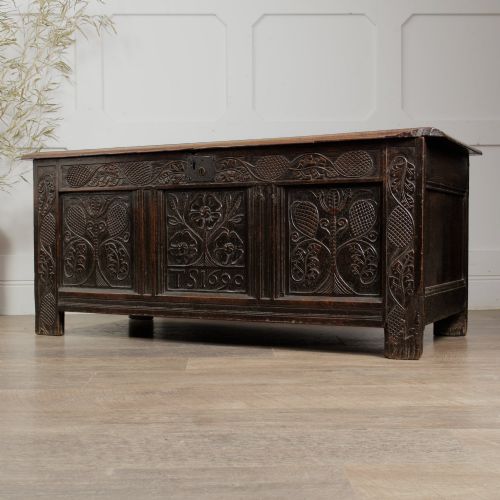
- A large rectangular chest with a hinged lid used for storing valuables, textiles and household goods. Early examples feature boarded or panelled construction with iron strap hinges.
- Court cupboard
- A large storage piece with enclosed upper and lower sections used for displaying plate and storing food. These architectural items often incorporate turned posts and carved friezes.
- Tridarn
- A large Welsh three-piece cabinet featuring open shelves, enclosed cupboards and a base section. They provided substantial storage and display space in rural homes.
Joined Oak Furniture: Frequently Asked Questions
What is joined oak furniture?
Joined oak furniture encompasses seventeenth-century and later items built using mortise and tenon frames rather than simple nailed boards. The technique created rigid structures for seating, storage and display.
Survival rates are highest for robust forms like joint stools, wainscot chairs and panelled coffers designed for heavy domestic service.
How do I date joined oak?
Dating relies on construction methods, tool marks, regional styles and changes in decorative carving from the Jacobean era onward. Peg placement and timber shrinkage offer further clues.
Later vernacular pieces often retained archaic construction methods long after metropolitan fashions shifted.
Where was joined oak made?
Production took place across English and Welsh workshops, with distinct regional styles developing in places like Yorkshire, Lancashire and the Welsh valleys. Local joiners utilised native English oak.
Vernacular pieces often reflect the specific timber availability and traditions of their home counties.
How do I live with joined oak?
These pieces require stable indoor humidity away from direct heat sources to prevent the solid oak from splitting or warping. Natural wax polish maintains the dry, matte finish characteristic of early surfaces.
Their heavy proportions make them suitable as anchor pieces in traditional or contemporary rooms.