





Japanese Terracotta Urns
Japanese terracotta urns bring striking forms and red clay bodywork into a room, offering genuine presence through earthenware and porcelain execution.
Japanese Terracotta Urns
Japanese terracotta urns encompass earthenware, red clay, and porcelain vessels created in forms such as ginger jars, lidded vases, and floor vases. The pieces span the nineteenth century through the Edwardian era, incorporating styles from the Meiji period and Japanese export production.
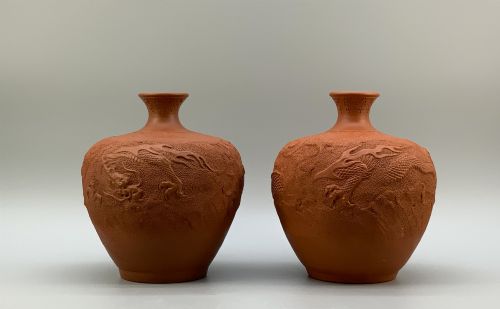
The objects appearing on this page range from small hand-painted vases to large floor vases and table lamps. Buyers encounter diverse decorative configurations, including pairs of red clay dragon and phoenix vases alongside geometric inset panel designs.
How they were made
Maker operations utilised red clay and earthenware as the primary structural bodies, complemented by porcelain and glaze treatments. Surface enrichment frequently involved hand painting, enamel application, and gilt or gold leaf detailing.
Production methods encompassed throwing and shaping robust earthenware forms, followed by intricate hand-painted decoration across the body. Artisans applied glaze and gold leaf highlights to accentuate specific design elements on the vases and ginger jars.
Japanese Terracotta Urns Retail Price Guide 2026
Typical asking prices for japanese terracotta urns among the pieces listed under this phrase on Sellingantiques today, from the lower quarter to the upper quarter. They describe what is for sale here now, not the wider market.
Listings feature items spanning the nineteenth century, 1900, 1920, and the Edwardian era, incorporating red clay, porcelain, and gilt.
What varies in quality
Quality differentiates itself through the precision of the hand-painted execution and the complexity of the surface ornamentation. Pieces displaying refined enamel work and careful application of gold leaf occupy the upper tier of the range.
The scale and ambition of the vessel shape also distinguish the execution, with large floor vases and balanced pairs requiring greater technical mastery. The clarity of the red clay body or porcelain base contributes directly to the overall finish.
Tokoname·Kutani·Satsuma·Fukagawa
The Japanese Terracotta Urns Glossary
- Earthenware
- Porous pottery fired at relatively low temperatures that forms the foundational red clay body for many vessels. This material is typically glazed to ensure it holds liquid.
- Imari
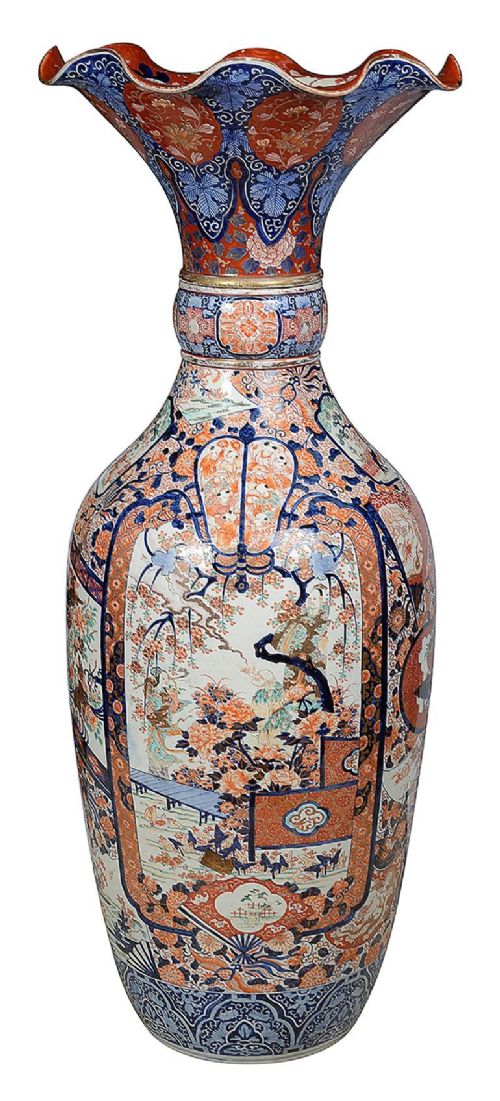
- A traditional style of Japanese export porcelain characterised by a distinct palette of underglaze blue and iron red, often augmented with gilt highlights. The style gained significant popularity in the West during the nineteenth century.
- Meiji Period
- The era of Japanese history spanning from 1868 to 1912, marked by increased cultural exchange and export of decorative arts. Pieces from this time demonstrate remarkable technical skill in ceramics.
- Satsuma
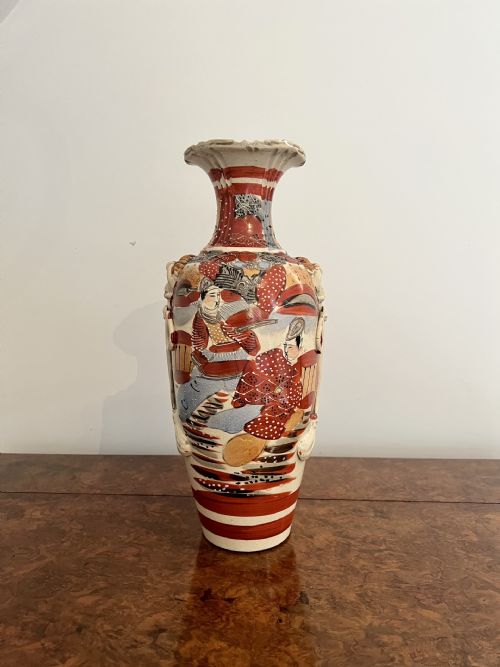
- A type of Japanese earthenware featuring a crackle glaze and elaborate overglaze enamel and gold decoration. These wares were widely produced for the export market during the late nineteenth and early twentieth centuries.
Japanese Terracotta Urns: Frequently Asked Questions
What materials are Japanese terracotta urns made from?
The listings show pieces constructed from red clay, earthenware, and porcelain. Surface decoration incorporates glaze, enamel, gold leaf, and gilt.
Artisans combined these materials during the Meiji period and subsequent eras to produce decorative vases, ginger jars, and large floor models.
How do I identify Meiji period pieces?
Meiji period items correspond to the late nineteenth and early twentieth centuries, aligning with traditional Japanese export styles. Evidence includes hand-painted motifs and specific regional potteries.
Items from this timeframe often feature intricate enamel work, geometric panels, or traditional dragon and phoenix iconography.
Where were these urns originally displayed?
Large floor vases and lidded urns served as statement decorative objects within nineteenth-century and Edwardian interiors. Their substantial height suited prominent placement in hallways and principal reception rooms.
Smaller examples functioned as table vases or were adapted into lamps while retaining their core ceramic identity.
Are these urns sold as pairs?
The selection includes both individual decorative vessels and matched pairs. Pairs frequently share identical motifs, such as dragon and phoenix designs on red clay bodies.
Buyers find both single lidded ginger jars and symmetrical pairs of Kutani porcelain vases across the available items.