



Relief Carved Dragon Vases
Relief carved dragon vases bring sculptural weight and mythology to a room through cast bronze and red clay.
Relief Carved Dragon Vases
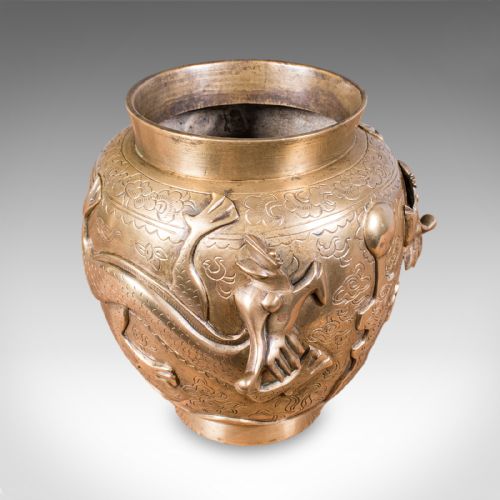
Relief carved dragon vases encompass heavy metal vessels and terracotta forms originating from 19th-century Japan and China. When you search for relief carved dragon vases, you find pieces spanning the Victorian era through the early decades of the twentieth century. These objects include baluster vases, decorative posy urns, and converted table lamps.
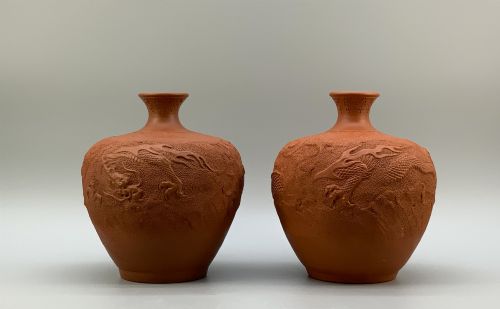
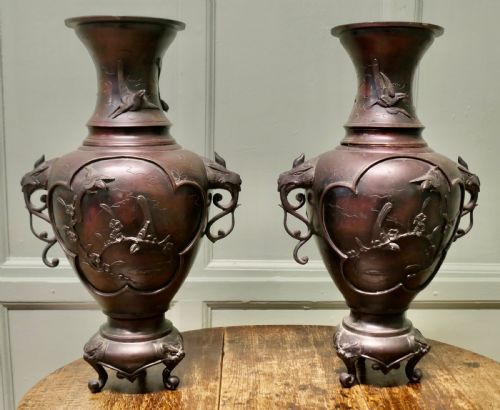
The Japanese examples on this page frequently date to the Meiji period and utilise bronze, while the Chinese pieces include both copper-alloy vessels and red clay bodies. You encounter pairs as well as substantial single pieces, many displaying high-relief surface work depicting mythical creatures.
How they were made
Bronze and copper alloys dominate the construction of these vessels, shaped through casting and intricate surface carving. Artisans achieved the three-dimensional depth by chiselling the metal directly or casting the dragon motifs in high relief.
Red clay and terracotta examples employ modelling and traditional pottery techniques, creating textured surfaces that highlight the mythical imagery. Patination processes applied to the bronze surfaces produce varied dark finishes ranging from polished highlights to deep earthy tones.
Relief Carved Dragon Vases Retail Price Guide 2026
Typical asking prices for relief carved dragon vases among the pieces listed under this phrase on Sellingantiques today, from the lower quarter to the upper quarter. They describe what is for sale here now, not the wider market.
Materials documented across the available pieces include bronze, copper alloy, red clay, terracotta, and patinated bronze.
What varies in quality
Weight and metal thickness also divide the range, with heavier specimens showing greater substance in the casting. The integration of the dragon motif around the neck and body determines whether the design feels unified or merely applied.
The Relief Carved Dragon Vases Glossary
- Meiji Period
- A Japanese era lasting from 1868 to 1912 known for significant artistic production in metalwork. Pieces from this time often feature detailed depictions of dragons and natural subjects.
- Baluster
- A vase form with a rounded body that tapers toward the base and flares at the neck. This shape provides a broad canvas for high-relief dragon decoration.
- Patinated Bronze
- Metal alloy treated with chemicals or heat to alter its surface colour. This finish enhances the visibility of carved details and protects the metal.
- Copper Alloy
- A broad classification of metals containing copper, including bronze and brass. These materials were utilised for their durability and capacity to hold fine surface detail.
- Tokoname Red Clay
- A specific type of Japanese ceramic material originating from a noted pottery region. These vessels utilise local clay bodies to create textured decorative forms.
Relief Carved Dragon Vases: Frequently Asked Questions
How do I clean a bronze dragon vase?
Dust the surface gently with a soft, dry brush to prevent dirt accumulation within the high-relief carvings.
Avoid using liquid polishes or chemical cleaners, as these can strip the historical patination from the metal.
Were these vases made as lamps?
Most of these pieces began life purely as decorative vases or urns during the nineteenth century.
Some examples were adapted into table lamps later in their existence, often during the twentieth century.
How do I distinguish Japanese from Chinese pieces?
Japanese examples from this selection frequently date to the Meiji period and employ distinct patinated bronze casting styles.
Chinese pieces in the listings often utilise red clay or copper-alloy construction, sometimes incorporating specific reign marks on the base.
Where should I display a heavy bronze vase?
Place these substantial pieces on sturdy furniture such as sideboards or low tables where their weight is fully supported.
Ensure they sit away from high-traffic areas to protect the projecting relief details from accidental knocks.