

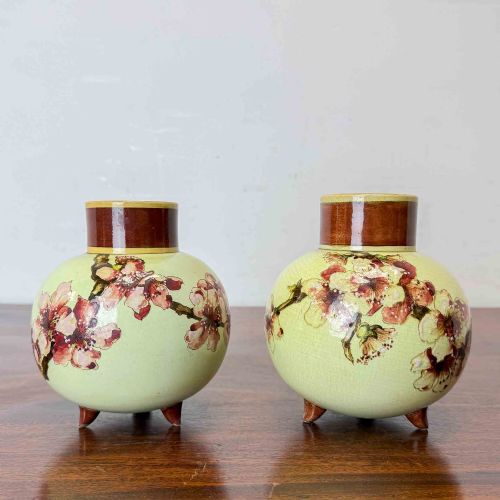


Japanese Style Vase
These japanese style vase examples bring together imported motifs and European craftsmanship from the Victorian and Edwardian eras.
Japanese Style Vase
When you search for a japanese style vase, you encounter a mix of authentic Meiji period imports and domestic European interpretations inspired by Eastern design. The most common pieces on this page are Victorian and Edwardian adaptations, alongside genuine Satsuma, Arita, and Fukagawa wares from the late nineteenth century.
Forms range from tall bulbous bodies and trumpet-shaped beaker vases to covered urns and converted table lamps. Makers in Britain and France borrowed heavily from Edo and Meiji aesthetics, producing items that merge traditional Eastern motifs with Western manufacturing techniques.
How they were made
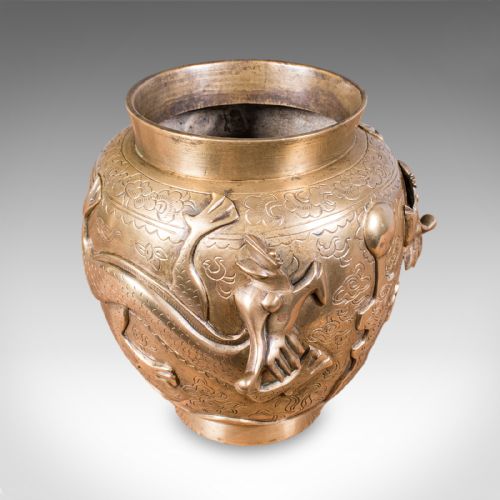
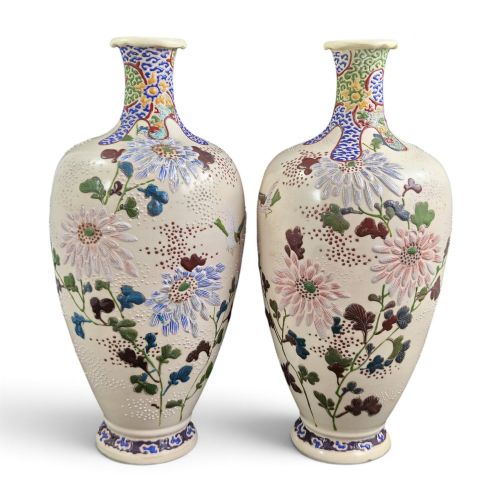
Potters and metalworkers shaped these objects using porcelain, earthenware, and bronze, frequently applying intricate gold leaf, enamel, and champlevé details. Surface decoration often relied on hand-painted glazes, moriage relief work, and blue and white pigments fired at high temperatures.
Many works combine ceramic bodies with metal mounts, while others utilise carved wood stands or fabric elements to complete the decorative scheme.
Japanese Style Vase Retail Price Guide 2026
Typical asking prices for japanese style vase among the pieces listed under this phrase on Sellingantiques today, from the lower quarter to the upper quarter. They describe what is for sale here now, not the wider market.
Listings feature porcelain, earthenware, and bronze pieces spanning the seventeenth to the twentieth centuries.
What varies in quality
The standard of a japanese style vase rests upon the crispness of the hand-painted details and the precision of the gilding and enamel work. Superior pieces display refined potting, balanced proportions, and clear adherence to traditional decorative motifs such as chrysanthemums and dragons.
Lesser examples show heavier, less disciplined brushwork or mass-produced printed transfers rather than hand-executed ornamentation. The complexity of the mounting, whether in champlevé bronze or carved porcelain, also distinguishes standard production wares from high-end display pieces.
Royal Crown Derby·Doulton Lambeth Faience·Stevenson and Hancock·Fukagawa
The Japanese Style Vase Glossary
- Champlevé
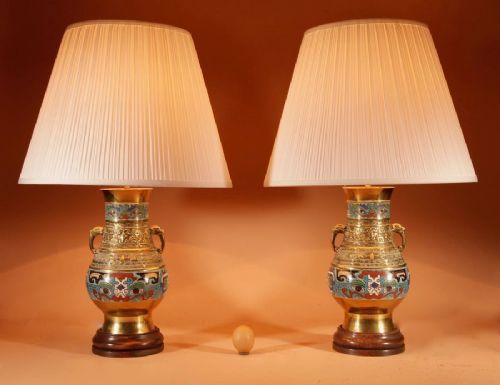
- An enamelling technique where trenches are carved into a metal surface and filled with vitreous enamel before firing. This method creates bold coloured patterns bordered by thin lines of exposed metal.
- Satsuma
- A type of earthenware originating from the Satsuma Province in Japan, typically characterised by a crackle-glaze finish and ornate polychrome and gilt decoration. These pieces were widely exported during the Meiji period.
- Imari
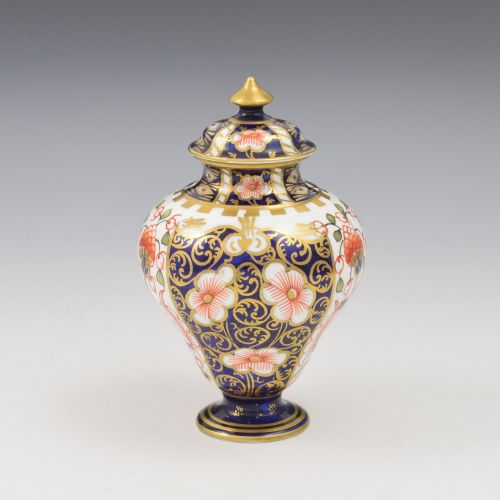
- A style of Japanese porcelain featuring a distinct palette of underglaze blue, iron red, and gold, which heavily influenced European potteries. British factories frequently produced their own versions of this vibrant aesthetic.
- Moriage
- A decorative ceramic technique using piped slip to build up raised designs in relief. This creates a tactile surface that stands proud of the main glaze.
- Japonisme
- A nineteenth-century European cultural movement reflecting the widespread influence of Japanese art on Western design. It appears across ceramics, furniture, and decorative metalwork of the period.
Japanese Style Vase: Frequently Asked Questions
How do I spot genuine Satsuma ware?
Authentic Satsuma pieces typically feature a fine ivory-coloured earthenware body covered in a characteristic network of minute crackle glaze. They are almost universally decorated with hand-painted enamel and heavy gilding depicting traditional figures or floral motifs.
Later European copies often lack the depth of hand-painting and the subtle weight distribution characteristic of the original Japanese imports from the late nineteenth century.
What is champlevé bronze?
Champlevé bronze involves gouging or casting hollows into a bronze base to form compartments that are subsequently filled with coloured enamel pastes. The entire object is then fired, polished, and finished to create a smooth, decorated surface.
This technique was frequently utilised during the Victorian and Edwardian periods for decorative table lamps and heavy vases influenced by Eastern aesthetics.
How do I date a blue and white vase?
Dating blue and white ceramics requires examining the quality of the cobalt pigment, the purity of the porcelain paste, and any base signatures or reign marks. Earlier pieces often display a deeper, slightly pooled blue under a clear glaze with subtle potting irregularities.
Later Victorian and Edwardian reproductions tend to have brighter, more uniform glazes and lack the natural wear patterns found on seventeenth or eighteenth-century examples.
Were these vases made for export?
Many Japanese ceramics from the late nineteenth century were specifically produced for Western export markets following the opening of trade ports. These items often catered to European tastes by adopting familiar shapes or incorporating elaborate gilt embellishments.
Concurrently, domestic European potteries manufactured their own interpretations to satisfy the immense Victorian appetite for Eastern design.