


Japanese Style Bamboo
These pieces of Japanese style bamboo bring organic warmth and nineteenth-century craftsmanship directly into your interior.
Japanese Style Bamboo
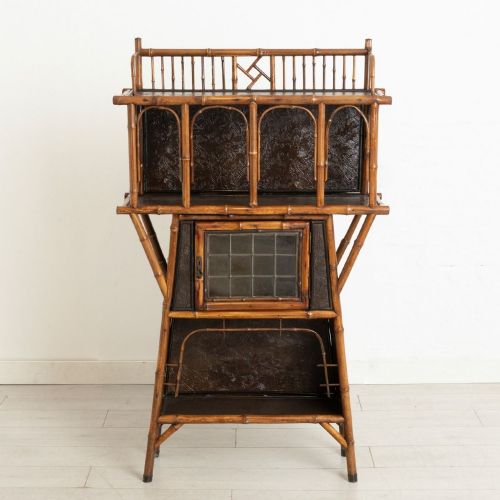
When you search for japanese style bamboo, you are looking at nineteenth-century furniture and decorative objects that combine natural plant materials with Aesthetic Movement and Chinoiserie design. These pieces bridge British domestic utility and Eastern ornamentation, reflecting a fascination with foreign aesthetics during the Victorian era.
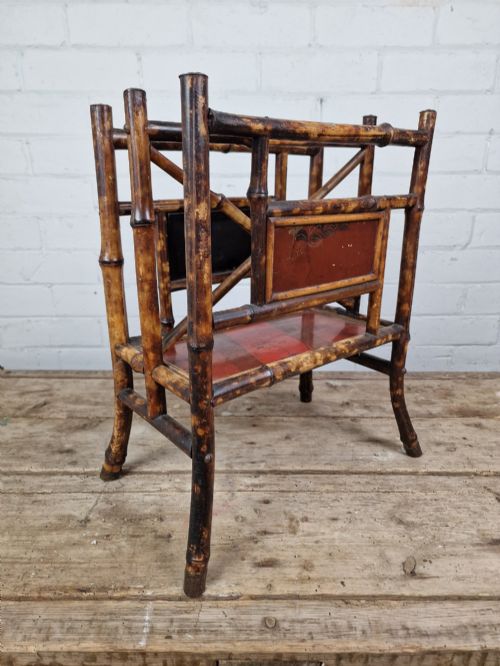
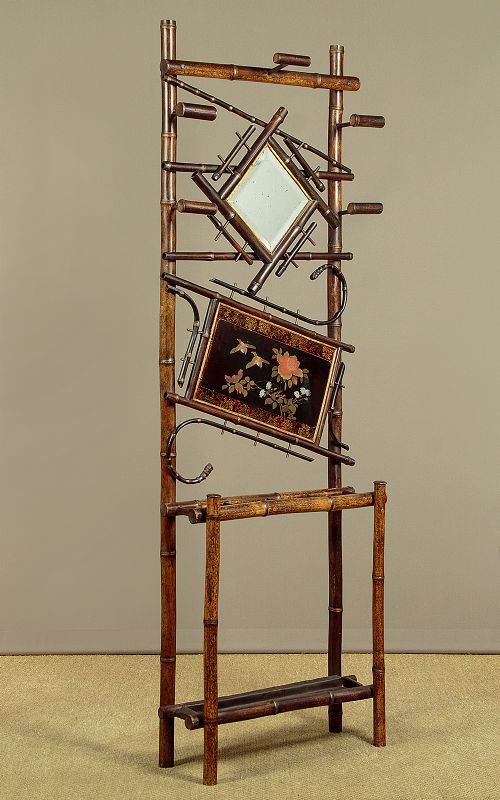
You are most likely to meet side tables, magazine racks, and hall stands on this page, alongside occasional display cabinets and dinner gongs. They span decades from the mid to late nineteenth century, including pieces explicitly associated with the Victorian period.
Makers utilised tiger bamboo and standard bamboo alongside wood, brass, and glass, frequently incorporating lacquered panels or embossed paper to complete the surface decoration. These items range from small occasional furniture to larger hallstands and bedroom suites.
How they were made
Craftsmen built these structures using natural bamboo stems and wood frames, securing joints with traditional joinery methods suited to hollow plant materials. Surfaces were often enhanced with applied lacquer panels or decorative embossed paper to introduce contrasting textures and dark tones.
Makers integrated brass hardware and glass elements where function required, particularly on display cabinets and dinner gongs. The use of tiger bamboo provided distinctive patterning across structural members and smaller stands.
Listings feature items from the nineteenth century, including specific years like 1860, 1880, 1890, and 1900, alongside general Victorian periods.
What varies in quality
Quality rests upon the structural integrity of the bamboo framing and the preservation of any associated lacquered panels or glass. Pieces featuring specialised materials like tiger bamboo or attributed maker designs sit higher in the range than standard utility items.
The complexity of the form dictates distinction, separating simple magazine racks from elaborate hall stands and display cabinets with fitted compartments.
Leonard Wyburd for Liberty and Co
The Japanese Style Bamboo Glossary
- Aesthetic Movement
- A late nineteenth-century design style emphasising art for art's sake and the integration of Japanese motifs into British interiors. This movement drove the popularity of bamboo furniture in domestic settings.
- Canterbury
- A low stand traditionally used for holding sheet music or magazines, frequently constructed from bamboo during the Victorian period. These items often feature slatted dividers and lower shelves.
- Chinoiserie
- European artistic interpretation of Chinese and East Asian decorative styles, commonly found on lacquered panels within bamboo furniture. It introduces painted motifs and scenic views to surfaces.
- Tiger Bamboo
- A distinct variety of bamboo featuring natural mottled or striped markings resembling a tiger's coat. Craftsmen utilised this visually striking material to add contrast and decorative appeal to frames.
Japanese Style Bamboo: Frequently Asked Questions
How do I date bamboo furniture?
Dating relies on construction methods, hardware types, and associated stylistic movements recorded in the evidence such as the Aesthetic Movement or Victorian periods. Pieces often date from the mid to late nineteenth century.
Examine the joints, the presence of lacquered panels, and any attribution to specific makers or retailers active during the era to narrow the timeframe.
Were these made in Japan or Britain?
Most pieces reflect British interpretations of Eastern design, produced during the Victorian era under the influence of the Aesthetic Movement and Chinoiserie tastes. They served domestic British interiors.
Materials like bamboo and decorative motifs were imported or emulated to satisfy Victorian demand for exotic furnishings.
How do I care for bamboo furniture?
Maintain these items by keeping them away from direct sunlight and excessive moisture, which can damage natural plant fibres and lacquer. Dust gently with a dry cloth.
Avoid harsh chemical polishes that might degrade delicate surfaces such as embossed paper or lacquered panels found on side tables and cabinets.
What rooms suit these pieces?
These items fit well in hallways, living rooms, and bedrooms, offering practical storage through console tables, magazine racks, and display cabinets. Their slender profiles suit compact spaces.
The organic texture of bamboo and dark lacquer panels complement both traditional and eclectic modern interior schemes.