
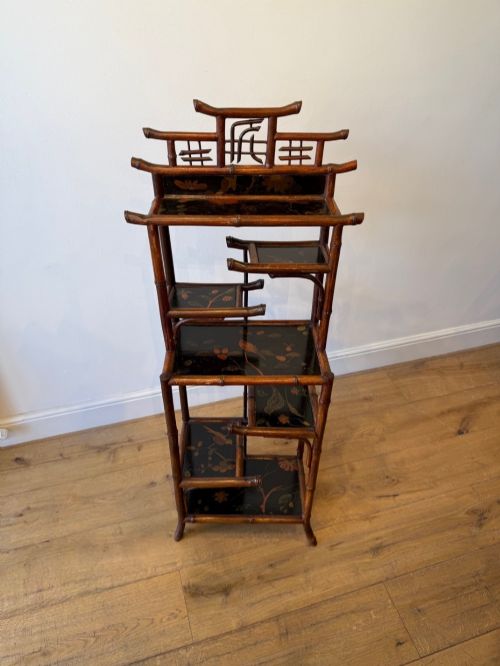
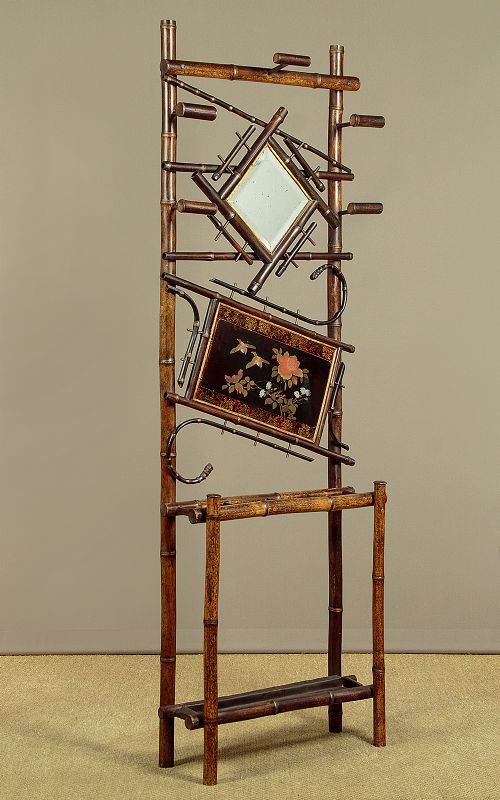


Lacquered Bamboo Stand
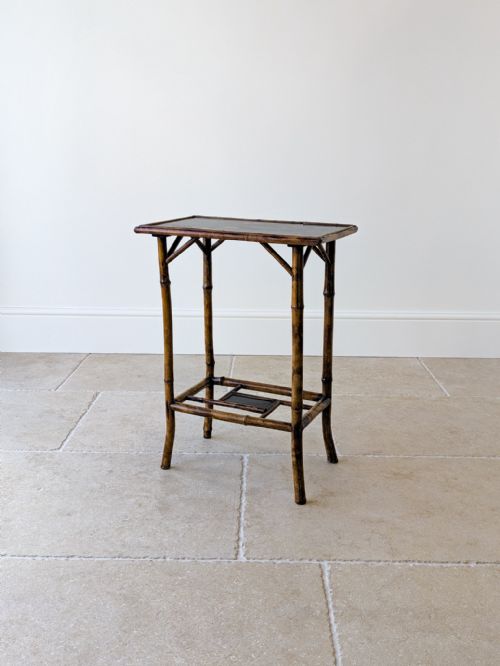
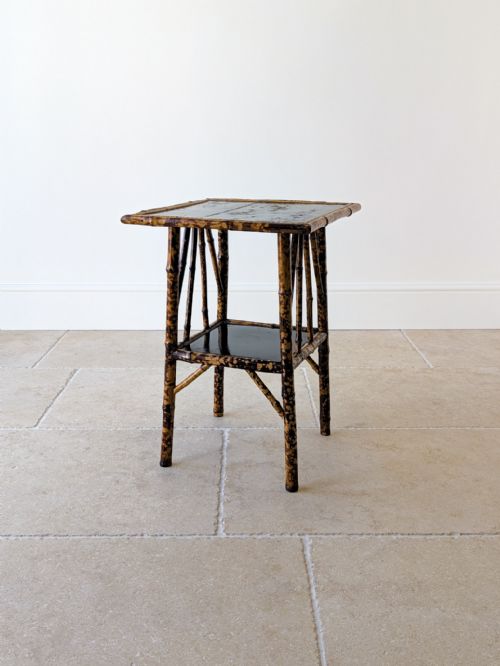
These lacquered bamboo stand pieces bring a distinct nineteenth-century aesthetic touch to interiors, blending organic cane frames with decorative surfaces.
Lacquered Bamboo Stand
When searching for a lacquered bamboo stand, a buyer encounters a variety of nineteenth-century occasional furniture designed for utility and display. The selection on this page centres primarily on Victorian and Regency forms, drawing heavily on Chinoiserie and Aesthetic Movement tastes.
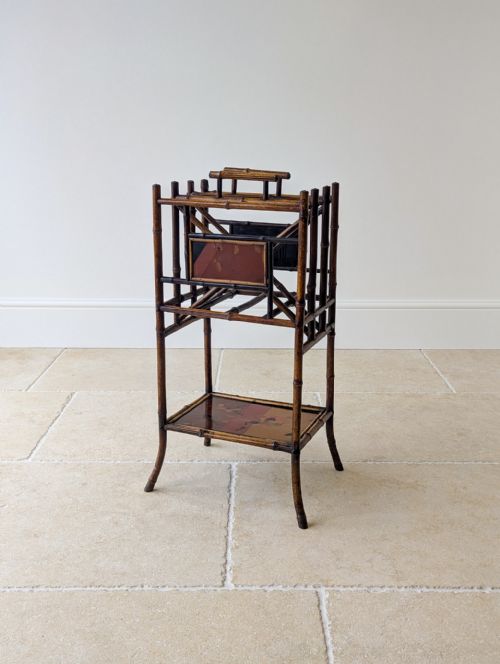
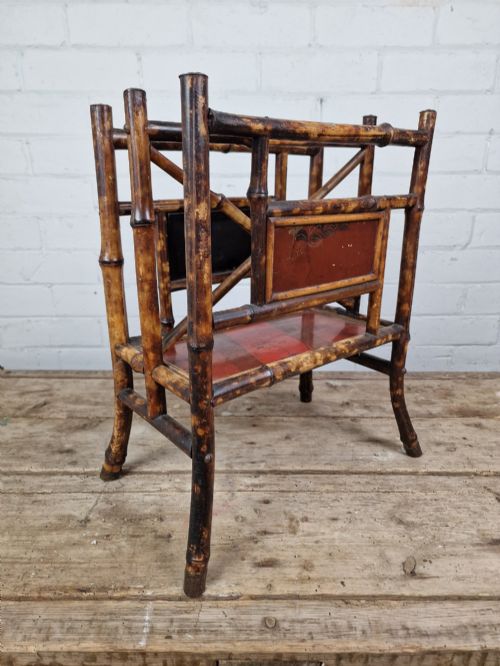
The most common versions met here include side tables, tray tables, and magazine racks or canuterburys. Alongside these are two-tier tables, display shelves, hall stands, and torcheres, constructed from bamboo, tiger bamboo, and ebonised wood.
Origins stretch across the nineteenth century, encompassing Regency and Victorian periods with dates spanning from eighteen sixty to nineteen hundred. These pieces served practical domestic roles in Victorian and Regency homes while satisfying a fascination with imported decorative styles.
How they were made
Construction relies on natural bamboo and tiger bamboo frames combined with wooden elements, often supporting panels of lacquer or papier-mâché. Makers utilised gold leaf, gilt, and painted tole to achieve the decorative surfaces characteristic of Chinoiserie ornamentation.
Tiger bamboo brings a fierce stripe to polite tea trays.
What varies in quality
Quality in a lacquered bamboo stand rests on the execution of the surface decoration and the structural integrity of the cane framework. Pieces exhibiting finely detailed Chinoiserie lacquer panels or original gold leaf display a higher grade of craftsmanship.
The choice of materials also dictates standing, with tiger bamboo and papier-mâché trays showing distinct regional and period-specific manufacturing standards. Balance and joinery within multi-tier side tables and canterburys separate standard utility items from finer decorative examples.
The Lacquered Bamboo Stand Glossary
- Canterbury
- A low stand fitted with vertical partitions, traditionally used for holding sheet music, magazines, or newspapers. These frequently appear in bamboo and lacquered formats during the Victorian period.
- Chinoiserie
- European artistic style reflecting Chinese motifs and decorative techniques, applied extensively to lacquer panels and papier-mâché trays on stands. This aesthetic dominated fashionable interiors during the eighteenth and nineteenth centuries.
- Torchere
- A tall, slender stand designed to support a lamp or candle, often taking the form of a column or pillar. Regency examples employ painted tole and lacquered finishes.
- Tiger bamboo
- A specialised variety of bamboo exhibiting natural mottled or striped markings resembling tiger skin. It was utilised by nineteenth-century makers for its decorative grain.
- Papier-mâché
- A composite material made from paper pulp or layers of paper bound with glue, moulded and painted. It provided a smooth base for elaborate lacquer decoration on serving trays mounted to stands.
Lacquered Bamboo Stand: Frequently Asked Questions
What is a bamboo canterbury?
A bamboo canterbury is a small compartmentalized stand designed for storing sheet music, periodicals, or magazines within a Victorian interior.
These pieces combine lightweight cane frames with divided sections, often incorporating lacquered panels or shelves.
How do I date a papier-mâché tray on stand?
Dating relies on examining the construction of the folding or fixed stand alongside the style of the painted decoration. Regency examples often display distinct Brighton Pavilion influences, while Victorian versions lean towards Aesthetic Movement or Chinoiserie motifs.
Materials such as ebonised wood and specific lacquer techniques further narrow the decade of manufacture between eighteen sixty and nineteen hundred.
Where were lacquered bamboo stands used?
These stands functioned as versatile furnishings in nineteenth-century drawing rooms, hallways, and morning rooms. Side tables and torcheres held lamps or decorative objects, while hall stands provided organisation for outerwear.
What distinguishes Aesthetic Movement bamboo?
Aesthetic Movement bamboo furniture prioritizes artistic design and structural simplicity over traditional revival styles. These pieces frequently utilise ebonised wood alongside natural or tiger bamboo to create balanced, asymmetrical compositions.