

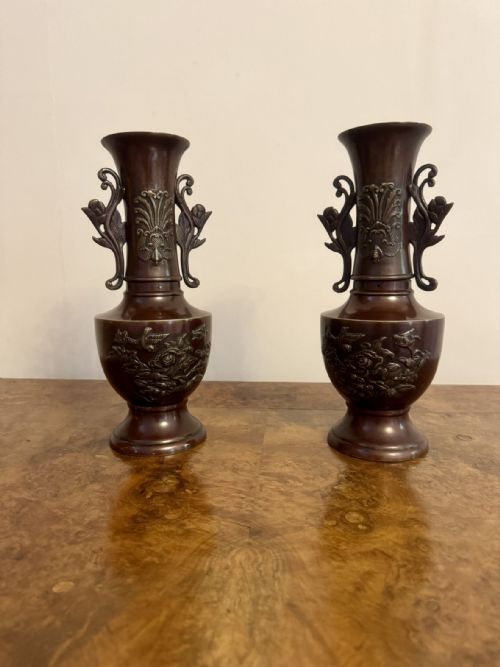


Japanese Relief Carved Vases
Japanese relief carved vases bring heavyweight metalwork and rich clay textures from the Meiji era directly into modern interiors.

Japanese Relief Carved Vases
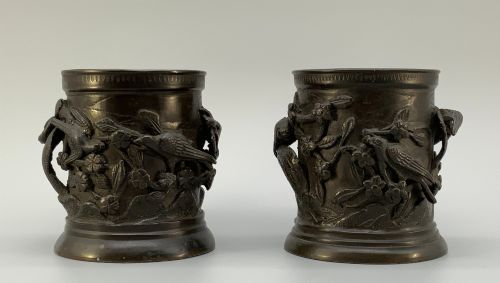
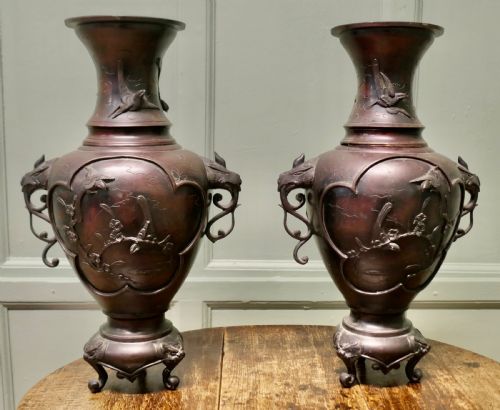
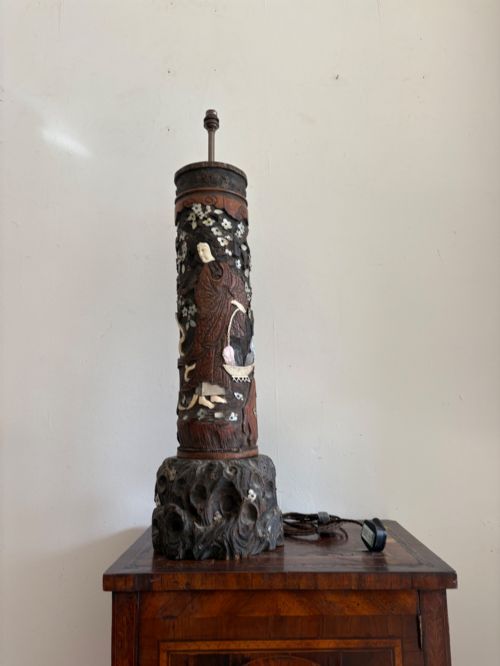
These pieces are sculptural vessels produced during the 19th and early 20th centuries, spanning the Meiji period and Victorian eras. When you search for japanese relief carved vases, you encounter heavy cast metal urns and textured clay vessels alongside converted table lamps. Bronze forms dominate the selection, often shaped as baluster urns or twin-handled vessels decorated with birds, blossom, dragons, and phoenix motifs.
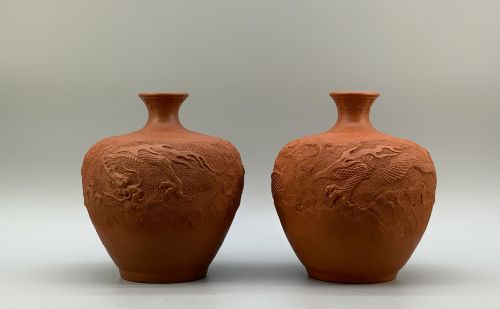
Makers and workshops utilised distinct regional traditions, producing everything from patinated bronze floor urns to red clay posy vases. The inventory frequently includes matched pairs alongside substantial single pieces suitable for formal display. Stoneware jardiniere forms also appear, broadening the range beyond standard vase silhouettes.
Materials and construction methods
Metal vessels rely on bronze and patinated bronze, shaped through traditional casting methods before artisans applied fine surface details. Relief carving and applied elements create three-dimensional depictions of fauna and flora directly on the body of the vase. Enamel accents occasionally provide colour contrast against darkened metal surfaces.
Clay works utilise red clay and stoneware, fired at high temperatures to achieve durable bodies. Artisans carved intricate dragons and phoenix motifs into the damp clay before glazing or firing, resulting in permanent tactile patterns across the exterior.
Listings feature items predominantly from the 19th century and early 20th century, with bronze and red clay as the primary materials.
Assessing quality in metal and clay vessels
Quality rests in the crispness of the chased and carved details, where master metalworkers and potters achieved deep undercut relief rather than shallow surface stamping. The weight and wall thickness of the bronze or clay dictate the structural integrity of large baluster urns and jardiniere forms. Signatures from recognised bronze-casters or ceramic studios elevate the standing of a piece.
Surface patination and finish consistency separate standard production items from workshop masterpieces. Original patination shows subtle tonal shifts from handling and age, whereas inferior pieces often display flat, uniform chemical coatings applied long after production.
Makuzu Kozan II·Genryusai Seiya
The Japanese Relief Carved Vases Glossary
- Meiji Period
- The era in Japanese history spanning from 1868 to 1912, characterised by opening trade with the West and exceptional metalwork production. Most bronze vessels on this page date from this timeframe.
- Baluster
- A vase shape with a rounded body that tapers toward the base and flares at the neck. This silhouette provides a stable foundation for heavy relief carving.
- Patinated Bronze
- Metal treated with chemicals and heat to produce a stable, decorative surface colour ranging from deep brown to greenish black. This finish protects the alloy while enhancing visual depth.
- Jardiniere
- A large decorative pot or stand designed to hold potted plants or floral arrangements. These heavy vessels often feature wide openings and robust handles.
Japanese Relief Carved Vases: Frequently Asked Questions
How do I date a Japanese bronze vase?
Dating relies on stylistic markers from the Meiji period, manufacturing techniques, and occasional inscribed signatures or dates on the base. Many pieces carry seals or marks corresponding to late 19th-century production.
Victorian import records and registration marks can also help narrow the timeframe when items entered Western collections during the height of Japanning trends.
Are these vases watertight?
Most antique bronze and stoneware vessels were made primarily for decorative display rather than holding water. Metal seams and porous clay bodies can develop minor seepage over time.
Using a discreet inner glass liner protects the interior metal or unglazed clay from mineral deposits and moisture damage.
How should I clean patinated bronze?
Dust bronze surfaces gently with a soft, dry cloth to preserve the original antique patination. Avoid abrasive cleaners, polishes, or chemical solvents that strip away historic finishes.
Microcrystalline wax can be applied sparingly by experienced collectors to protect vulnerable metal surfaces from atmospheric corrosion.
What is Tokoname red clay?
Tokoname clay originates from one of Japan's ancient kilns, known for producing iron-rich red pottery that takes fine carved detailing exceptionally well. The dense body allows artisans to carve intricate dragons and phoenixes directly into the damp clay.
These pieces offer a lighter alternative to heavy bronze while retaining strong sculptural relief.