


Japanese Porcelain Statue
These Japanese porcelain statue examples bring expressive figures and deities into rooms through rich enamel work spanning the Edo, Meiji, and Taisho periods.
Japanese Porcelain Statue
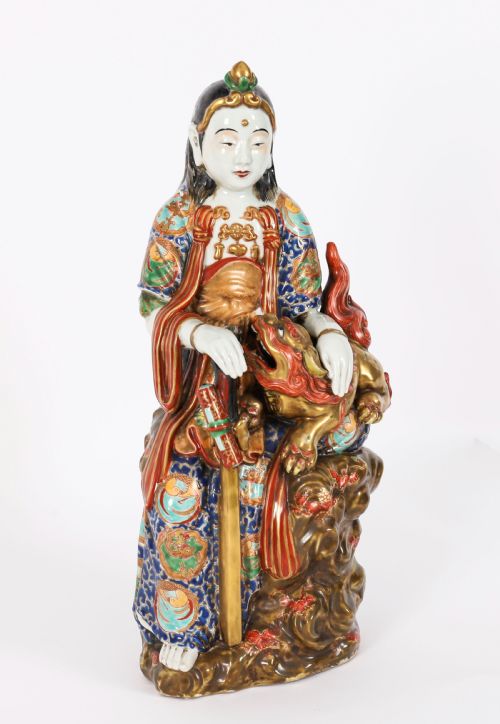
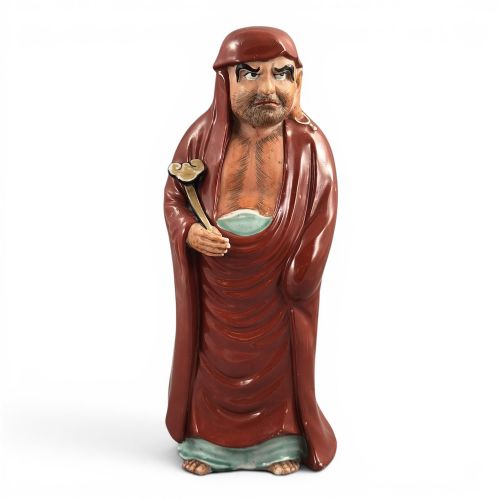
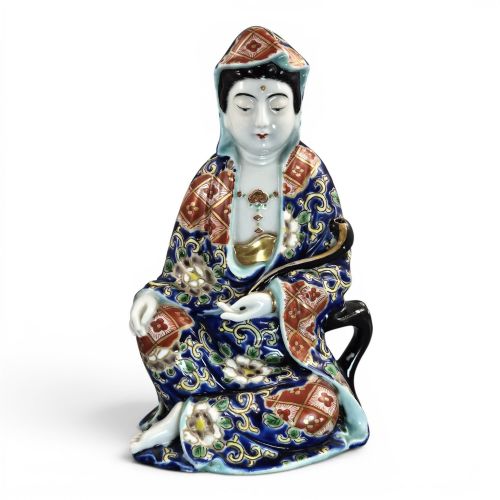
When you search for a japanese porcelain statue, you encounter sculptural figures depicting deities, monks, animals, and cultural archetypes like the Bijin or Courtesan. These pieces range from small table sculptures to large decorative okimono and figurines.
The versions most commonly met on this page originate from the Meiji and Taisho periods, alongside examples from the Edo period and the 19th century. They capture subjects such as Kannon, Daruma, and guardian lion dogs.
Makers and kilns including Kutani, Satsuma, Arita, and Hirado produced these works to represent spiritual figures, mythical beasts, and historic personalities in ceramic form.
How they were made
The creation of these figures relies on moulded or modelled porcelain and earthenware body shapes finished with detailed glazes. Artisans applied polychrome enamel alongside gold leaf and gold gilt highlights to accentuate robes and facial expressions.
Techniques such as moriage build up slip in raised relief dots and lines to create texture on garments and decorative borders. Kilns like Mikawachi and Kutani utilised these methods to achieve their characteristic painted surfaces.
Listings feature porcelain, earthenware, enamel, glaze, and gold leaf across the 18th, 19th, and early 20th centuries.
What varies in quality
The depth of historical association and the reputation of specific kilns, such as Hirado or Kutani works, distinguish standard decorative figures from master-level pieces.
Makuzu Kozan II·Mikawachi Kilns
The Japanese Porcelain Statue Glossary
- Okimono
- A Japanese term for an ornamental object or statue intended for display on a shelf or in a tokonoma alcove. These sculptures often depict deities, historical figures, or animals.
- Moriage
- A Japanese ceramic technique where slip is piped onto the surface in raised dots or lines to create tactile decorative patterns. This method is frequently seen on Kutani wares.
- Kutani
- A style of Japanese porcelain traditionally associated with vibrant coloured enamels and bold pictorial designs. Pieces from this tradition often feature figures finished in rich reds, greens, and gold.
- Satsuma
- Earthenware or porcelain pottery typically characterised by a fine crackle glaze and elaborate overglaze enamels combined with gilt. Many figural representations utilise this decorative vocabulary.
- Bijin
- A traditional Japanese art motif depicting a beautiful woman, often shown in elaborate historical costume. These figures appear frequently in Meiji period porcelain and sculpture.
Japanese Porcelain Statue: Frequently Asked Questions
How do I identify Meiji period pieces?
Meiji period works date from the late nineteenth to early twentieth century and often show intricate enamel and gilt detailing.
They reflect a period of heightened sculptural ambition in Japanese ceramics following the opening of trade.
What subjects do these statues show?
The subjects include Buddhist and Daoist figures like Kannon and Daruma, along with guardian lion dogs and cultural archetypes.
Animals and mythical beasts also appear frequently across the historical periods represented.
How should I display a porcelain statue?
These statues suit stable surface placement on sideboards, tables, or specialised display shelving away from heavy traffic.
Their detailed enamel and gold leaf work benefits from even ambient lighting that highlights the surface relief.