




Japanese Patinated Bronze Urn
A Japanese patinated bronze urn brings heavy metalwork and Meiji period craftsmanship directly into a room, offering dark patinas and cast ornament.
Japanese Patinated Bronze Urn
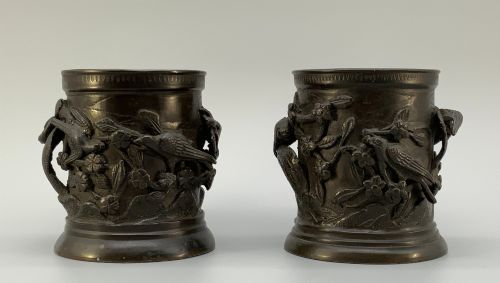
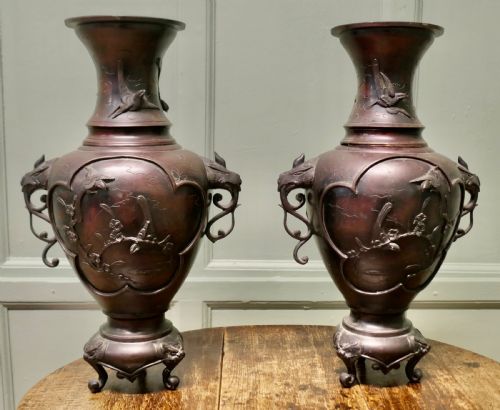
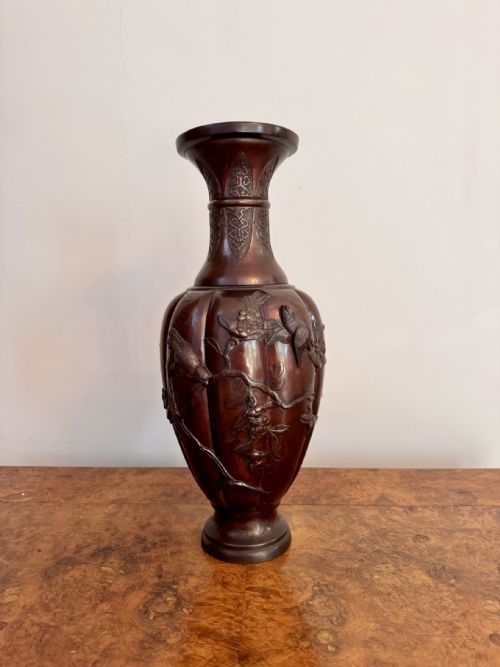
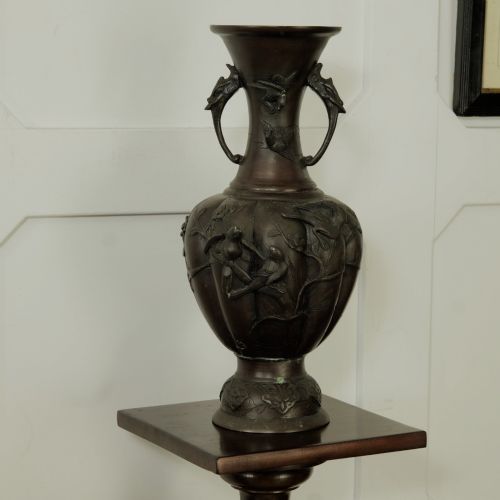
When someone searches for a japanese patinated bronze urn, they encounter heavy metal vessels created primarily during the Meiji period and the nineteenth century. These objects arrive as single pieces or balanced pairs, taking the form of baluster vases, jardinières, and garden temple vessels.
The most common examples on this page date from the Victorian era up to the early twentieth century. Makers cast these works in bronze, incorporating mixed metals and patinated surfaces that show birds, blossoms, and dragons.
How they were made
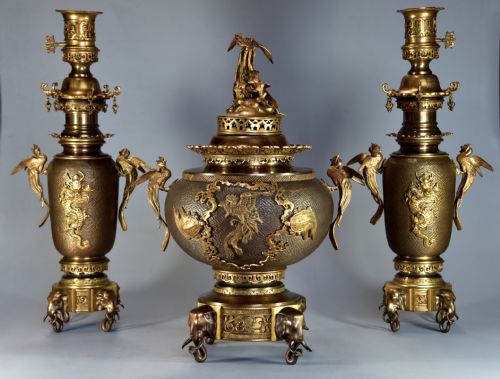
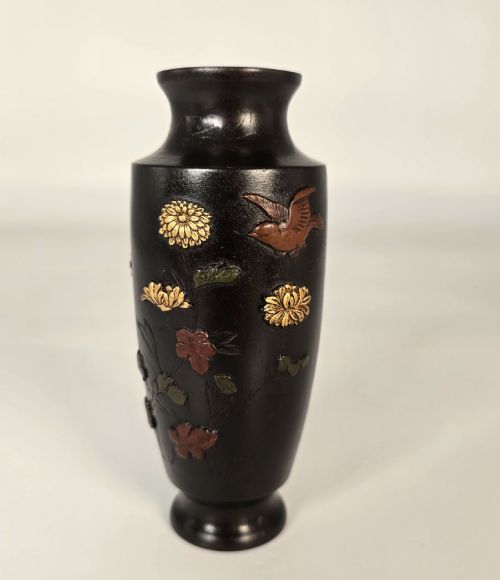
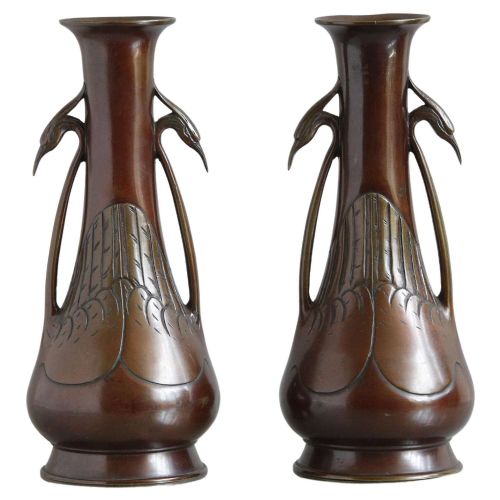
Artisans used bronze, copper, and mixed metals to cast these vessels, applying chemical treatments to achieve deep patinated surfaces. Workshops incorporated gold inlay and surface carving to define details like egret handles, birds, and floral bouquets.
Makers utilised traditional casting techniques, producing heavy bodies that often weigh several kilograms. Certain pieces feature applied elements such as dragon motifs or distinct handle shapes like the mimikuchi form.
Several heavy bronze vases feature handles shaped as egrets and elephants, proving that nineteenth-century metalworkers enjoyed sculptural wildlife.
What varies in quality
Quality rests upon the crispness of the casting and the depth of the patination across the bronze surface. Superior examples display sharply defined relief decoration, such as feathered birds and intricate floral branches, rather than soft or blurred edges.
The integration of mixed metals and gold inlay separates standard production from exceptional output. Weight, scale, and the presence of artist signatures indicate the level of care taken during production in the workshop.
The Japanese Patinated Bronze Urn Glossary
- Patinated bronze
- Bronze that has been treated with chemical solutions to produce a darkened or coloured surface finish. This layer protects the metal and creates tonal variation.
- Meiji period
- The era in Japanese history spanning from 1868 to 1912. Metalwork from this timeframe often reached Western markets during the Victorian period.
- Mixed metal
- The combination of different metallic alloys within a single piece, such as bronze, copper, and brass. This technique creates contrasting colour highlights on the decoration.
- Japonisme
- A Western artistic movement influenced by Japanese art and design during the late nineteenth century. European makers adopted these aesthetic principles in decorative items.
- Garniture
- A set of matching vases or urns designed to be displayed together on a mantelpiece or sideboard. These groupings typically consist of three or five pieces.
Japanese Patinated Bronze Urn: Frequently Asked Questions
What are Japanese bronze urns made of?
These pieces consist primarily of cast bronze, sometimes enhanced with copper and other mixed metals. Artisans applied chemical treatments to build up dark patinated finishes on the exterior.
Surface details often include contrasting metals such as gold inlay to highlight specific motifs like birds and blossoms.
How do I date a Japanese bronze vase?
Dating relies on stylistic markers, historical periods such as the Meiji era, and construction traits. Most examples on this page span the late nineteenth to early twentieth centuries.
Signatures or factory attributions stamped or cast into the base also help narrow down the production period.
Are these urns sold as pairs?
Many listings feature matched pairs of urns and vases intended for symmetrical display. Single vessels also appear frequently across the selection.
Pairs often share identical cast decoration, handles, and patination depths.
How do I care for patinated bronze?
Maintaining patinated bronze requires gentle dusting with a soft, dry cloth. Avoid chemical cleaners or metal polishes that can strip away the aged surface.
Keeping the pieces away from direct moisture preserves the stability of the metal and the applied patina.