
Japanese Oriental Ceramics
Japanese oriental ceramics bring together centuries of kiln tradition, offering collectors everything from robust Imari chargers to delicate Satsuma vessels.
Japanese Oriental Ceramics
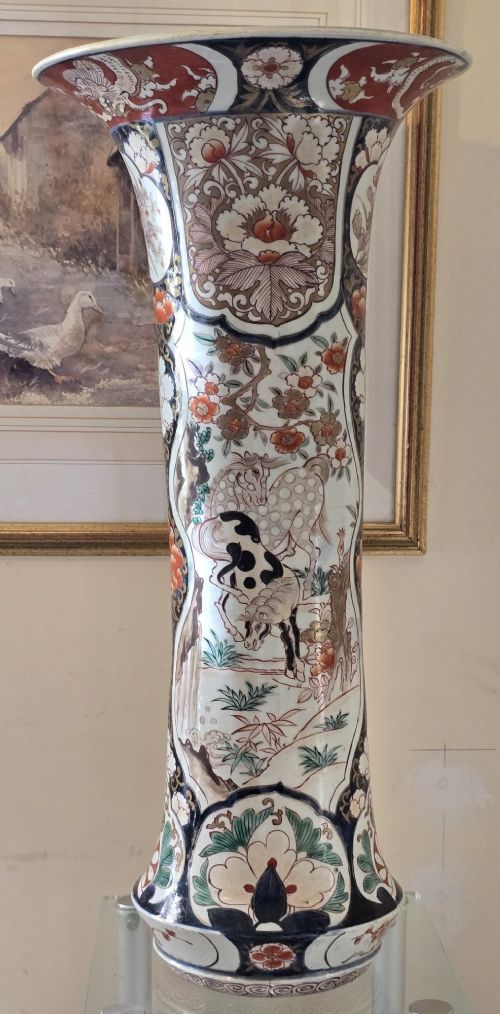
When searching for japanese oriental ceramics, buyers encounter a diverse selection of decorative items spanning the late seventeenth century through the Taisho and Showa periods. The pieces appearing most frequently on this page comprise floor standing vases, chargers, lidded jars, and plates originating from distinct historical eras such as the Meiji period.
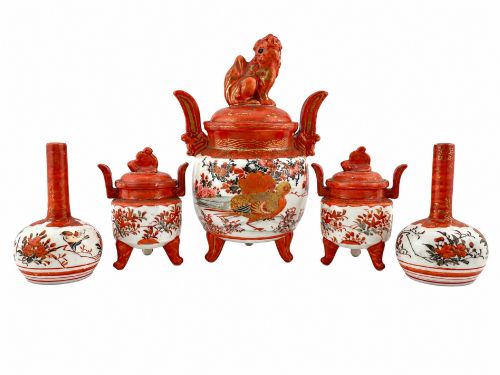
Makers and workshops produced various vessel forms including globular vases, scalloped dishes, and incense burners designed for interior display. Forms range from everyday domestic tableware to large garniture sets and architectural floor vases intended to dominate a room.
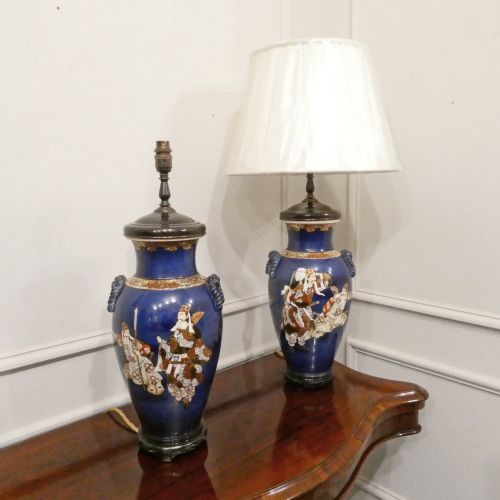
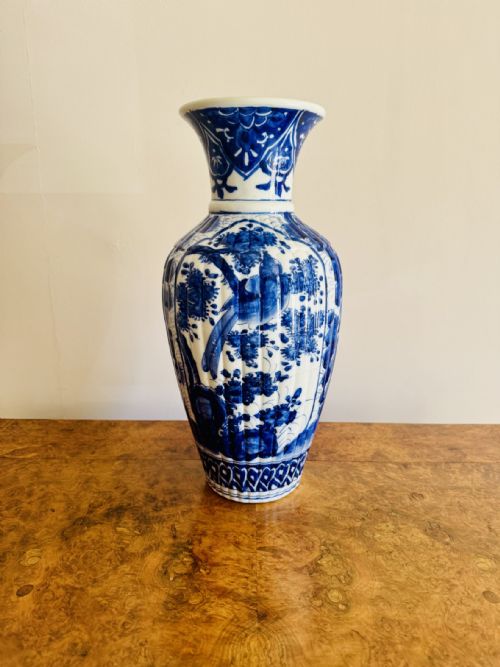
The selection reflects both traditional blue and white porcelain and heavily patterned polychrome wares created for domestic use and export markets. Buyers also find sculptural figures, such as Okimono, alongside utilitarian pitchers and vessels adapted into table lamps.
How they were made
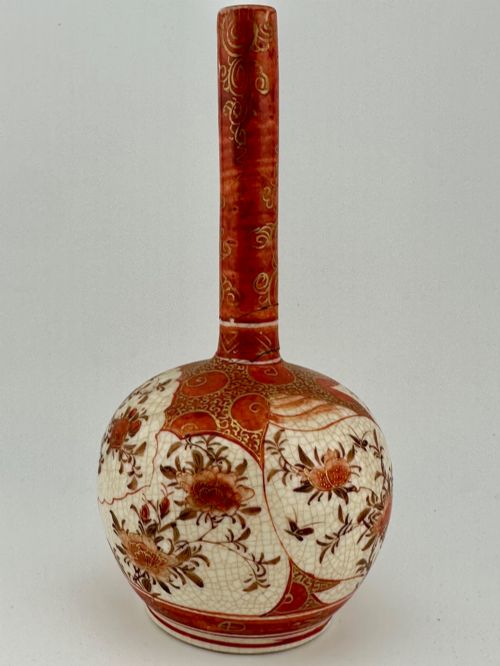
Potters utilised local clays, earthenware, and fine porcelain bodies shaped by hand or on the wheel before firing in wood or coal-burning kilns. Glazes varied from clear, high-temperature finishes to complex flambe effects and thick crackle-patterned surfaces.
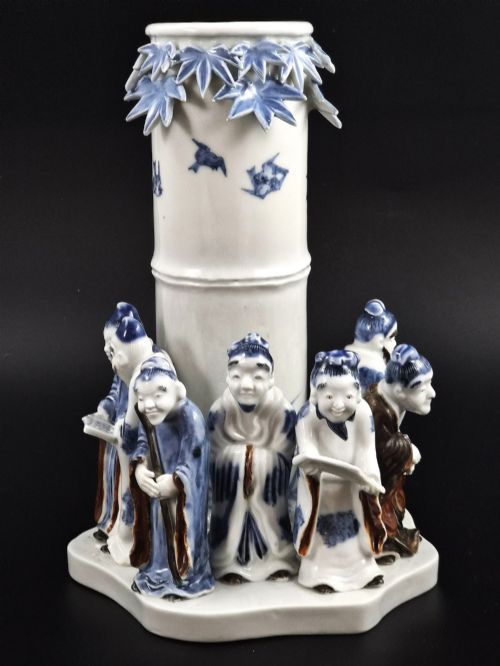
Decoration relied heavily on painted enamel pigments, underglaze cobalt blue, and applied gold leaf details that highlighted figurative and botanical scenes. Sumida Gawa pieces incorporated distinct sculptural figures modelled in relief directly onto the vessel wall alongside pooled, dripping glazes.
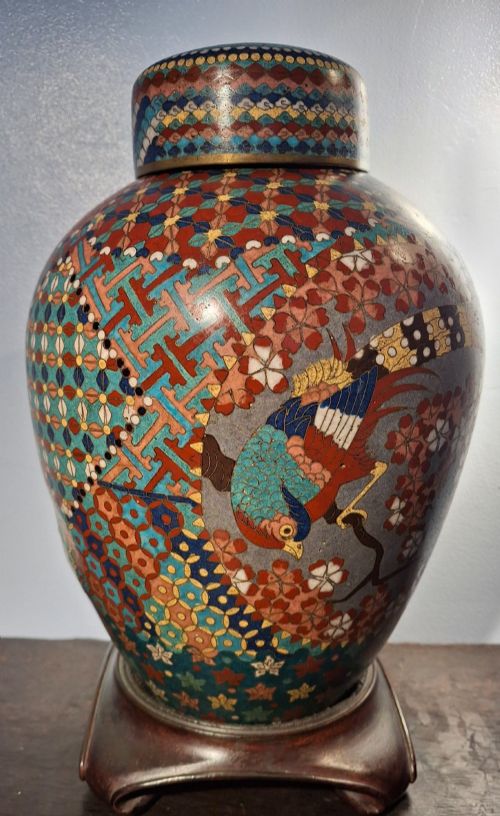
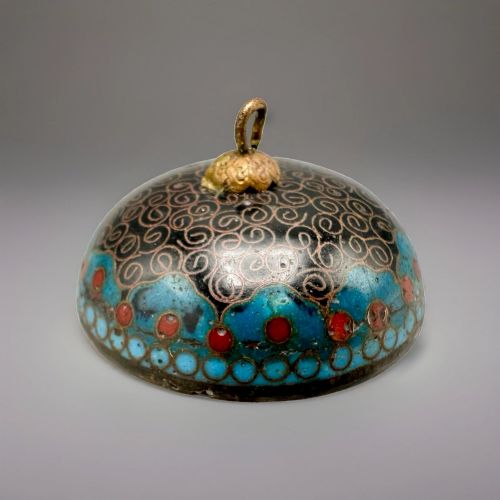
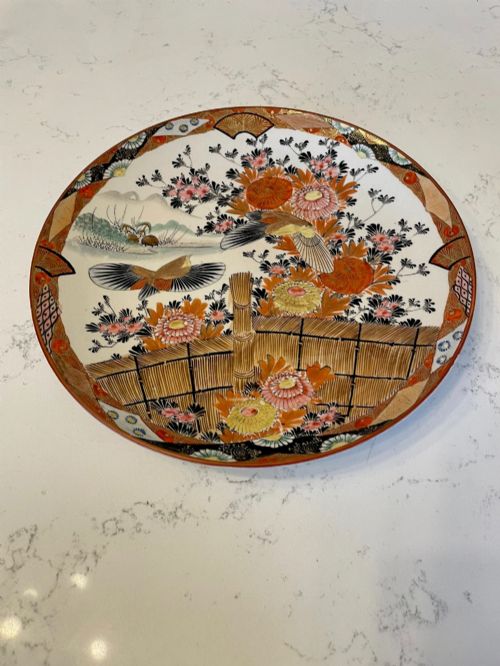
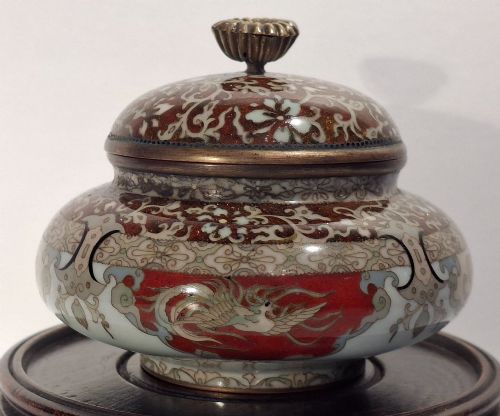
Kutani and Satsuma pieces often employed intricate overglaze enamelling where artisans built up layer upon layer of pigments. Cloisonne enamel items utilised thin metal wires soldered to a base to create cells filled with coloured glass pastes before firing and polishing.
Listings feature periods spanning from the Edo and Meiji eras through to the Taisho and Showa periods, showcasing materials like porcelain, earthenware, and cloisonne enamel.
What varies in quality
The distinction between standard export items and exceptional pieces rests upon the precision and complexity of the brushwork and the refinement of the clay body. Superior examples display crisp, controlled underglaze blue lines or dense, meticulously applied gold leaf and enamel without smudging.
The weight and balance of a vessel also indicate its standard, as larger forms require considerable skill to fire without warping or developing kiln cracks. Relief elements, such as those found on Sumida Gawa pottery, show greater artistic ambition when figures possess expressive facial details and secure attachment to the body.
Signatures and marks stamped or painted on the base frequently separate workshop productions from mass-market output, though unsigned pieces still achieve high quality through decorative execution. The depth and evenness of glazes, particularly on flambe and crackle surfaces, determine the visual richness of the finished object.
Inoue Ryosai·Ban-ni·Maruni Kobe·Shozan
The Japanese Oriental Ceramics Glossary
- Imari
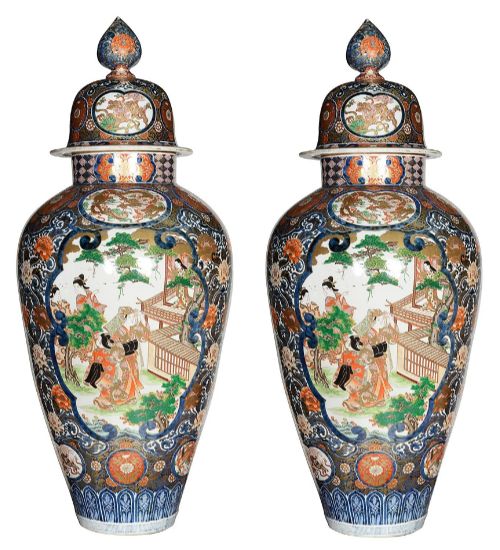
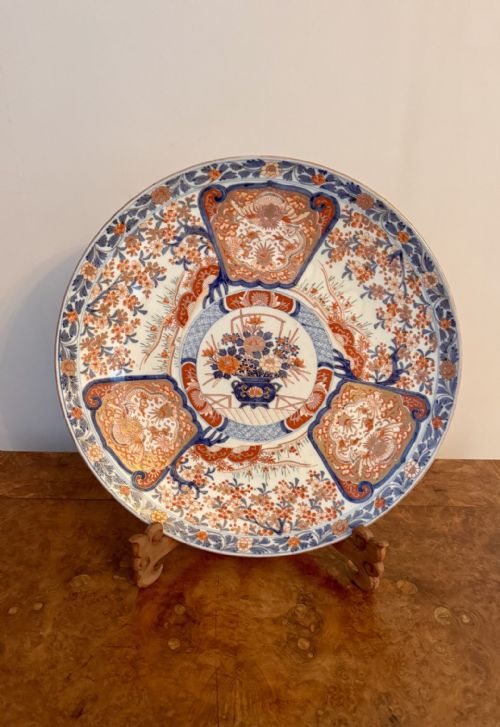
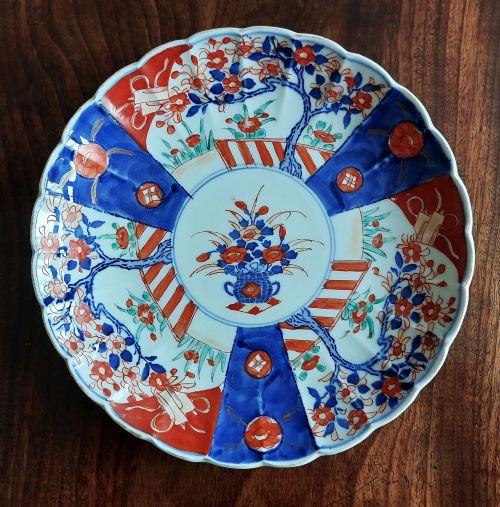
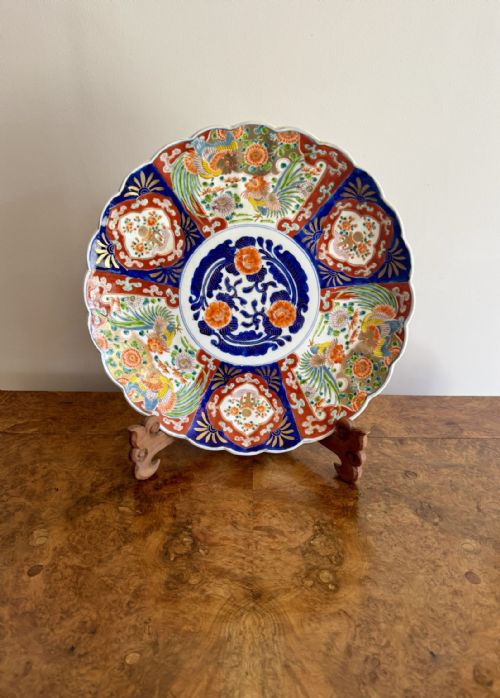
- A style of Japanese porcelain decorated in underglaze blue, iron red, and gold, originating from the kilns at Arita. These pieces often feature dense floral and geometric panelling.
- Satsuma
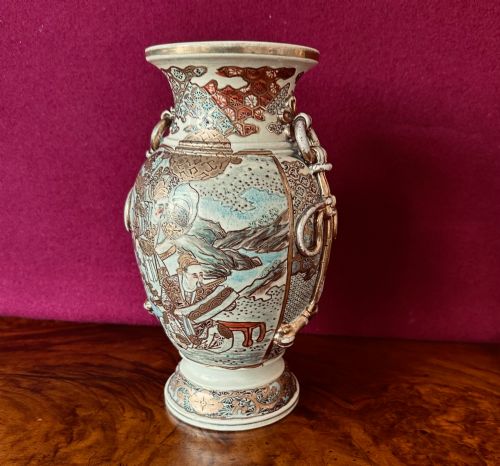
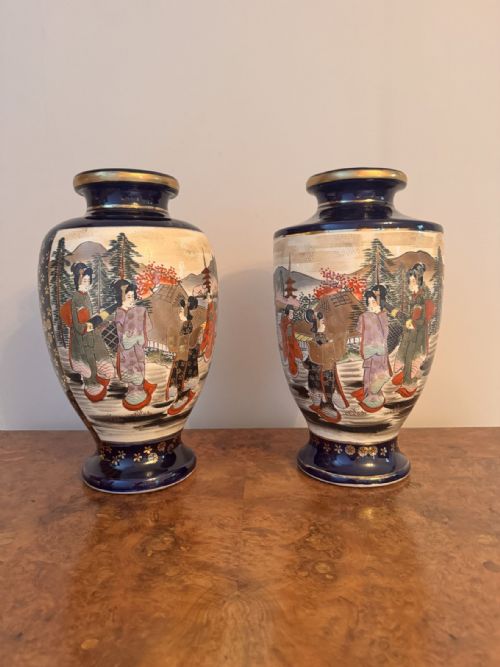
- A type of earthenware with a yellowish, crackled glaze that serves as a canvas for elaborate polychrome enamel and gilt decorations. Figures and landscapes form the primary subjects on these vessels.
- Kutani
- Japanese pottery and porcelain known for its bold colour palettes, particularly strong greens, reds, and golds. The style developed in Ishikawa prefecture and frequently depicts birds, flowers, and historical figures.
- Okimono
- A standalone Japanese carving or ceramic figure intended for display in a tokonoma alcove or on a shelf. These sculptural pieces often represent deities, sages, or animals.
- Flambe glaze
- A streaked or mottled high-fired glaze that changes colour during the reduction firing process, resulting in rich transitions of purple, blue, and red.
Japanese Oriental Ceramics: Frequently Asked Questions
How do I identify Imari porcelain?
Imari porcelain is readily identified by its distinctive palette combining underglaze cobalt blue with iron red and gilt highlights. The patterns typically feature intricate floral arrangements, brocade motifs, and panel designs.
Most pieces date from the late nineteenth century through to earlier historical periods, reflecting a long tradition of export production. The porcelain body is generally hard and dense, contrasting with softer earthenware wares.
What is Satsuma ware?
Satsuma ware consists of earthenware ceramics covered in a characteristic ivory-coloured glaze marked by a fine network of cracks. Artisans painted detailed scenes over this glaze using rich enamel colours and raised gold leaf.
These pieces range from small cabinet vases to large garniture sets and table lamps produced for Western and domestic markets. The surface texture feels slightly warm and porous compared to smooth porcelain.
How should I display a floor standing vase?
Floor standing vases require a stable, low-traffic location where they can stand clear of accidental knocks. Placing them directly on a solid floor or a low, sturdy base ensures proper weight distribution.
Because many of these tall vessels date from the late nineteenth century, keeping them away from direct sunlight preserves the vibrancy of the enamels and gold leaf. Pairing them with complementary decorative objects enhances their scale within a room.