

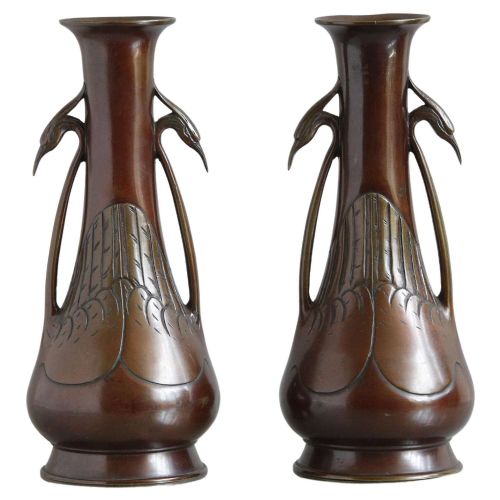


Japanese Metalwork Vase Pair
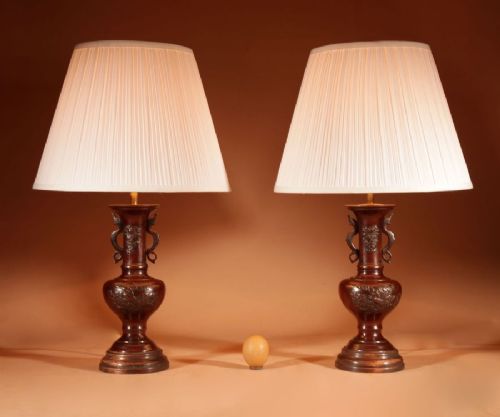
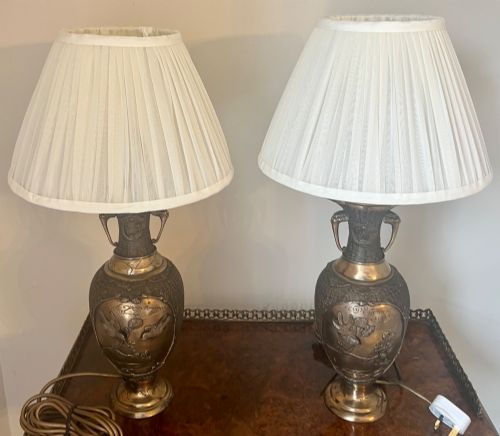
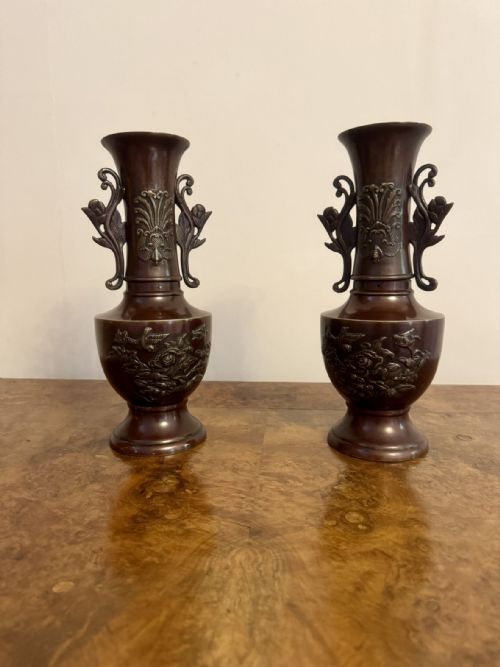
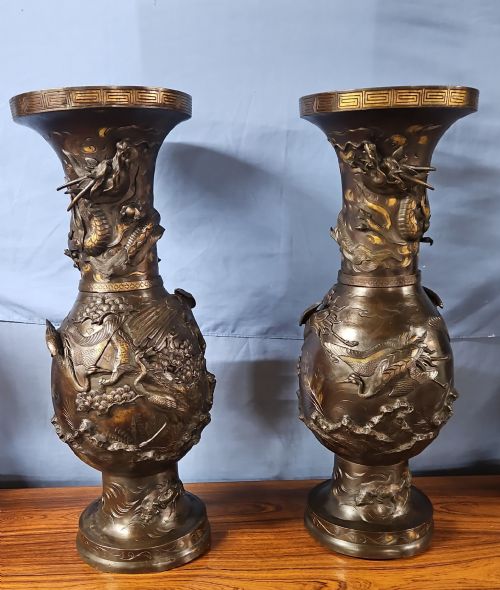
These japanese metalwork vase pair examples bring sculptural weight and intricate surface detail into a room, forged in bronze and copper during the Meiji period.
Japanese Metalwork Vase Pair
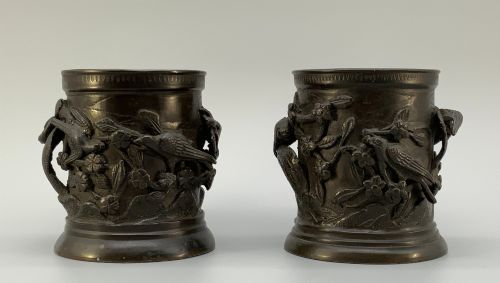
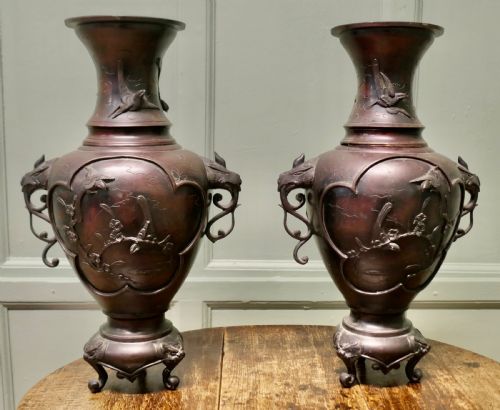
A japanese metalwork vase pair typically consists of matching cast metal vessels created during the Meiji period and the wider nineteenth century. Collectors find baluster urns, twin-handled vessels and amphora forms decorated with birds, floral motifs and raised detail.
Many survivors originate from the Meiji era, spanning late Victorian dates up to the early twentieth century. Workshops produced both standard decorative vases and substantial presentation pieces, alongside examples later adapted as table lamps.
How they were made
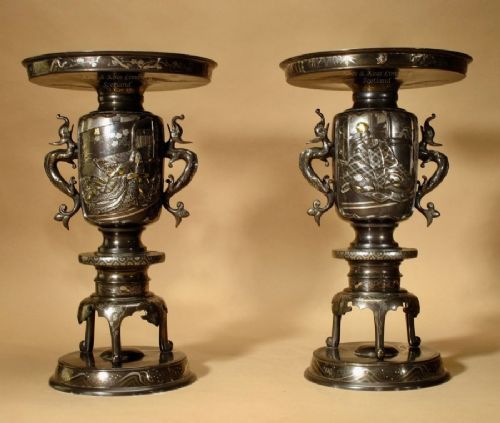
Artisans cast these vessels primarily in bronze, brass and copper, applying patination to achieve deep, dark surface tones. Mixed metal elements, gold inlay and silver inlay provide contrasting highlights for birds, blossoms and foliage.
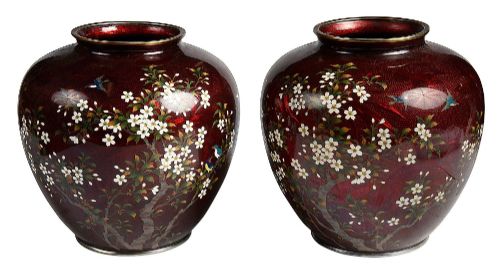
Enamel work appears frequently through cloisonné techniques, where thin wire outlines cells filled with coloured paste and fired. Raised details emerge from the metal body itself through skilled hammering and carving before final finishing.
Current listings feature bronze, copper, brass, and enamel materials across the nineteenth century, Victorian era, and early twentieth century.
What varies in quality
Depth and precision of the surface decoration separate standard production from superior work. Finely chiselled birds, crisp floral relief and secure inlay indicate a higher grade of craftsmanship.
Weight and structural balance also distinguish finer specimens, particularly among larger presentation vessels and heavy bronze urns. The subtlety of the patination and the neatness of wirework in cloisonne pieces determine the overall standard.
The Japanese Metalwork Vase Pair Glossary
- Meiji Period
- The era in Japanese history lasting from 1868 to 1912, associated with rapid artistic output in metalwork and cloisonne. Most antique vases of this type originate from these decades.
- Patinated Bronze
- Metal treated with chemicals to produce a stable surface colour ranging from deep brown to black. This finish protects the bronze while enhancing sculptural depth.
- Cloisonne
- A technique using thin metal wires soldered to a metal base to create compartments filled with enamel. These pieces are then fired and polished to a smooth finish.
- Baluster
- A vase form characterised by a rounded body tapering toward a narrow neck and a flared rim. This silhouette appears often in nineteenth-century Japanese bronze work.
- Mixed Metal
- The combination of different metals such as copper, silver and gold on a bronze or brass ground. Artisans utilised this method to create polychromatic pictorial scenes.
Japanese Metalwork Vase Pair: Frequently Asked Questions
How do I date a Japanese bronze vase?
Examine the style of decoration, the casting quality and any signatures present on the base or body. Many date from the Meiji period between the late nineteenth and early twentieth centuries.
Material finishes and patination also offer clues to age. Victorian import records and dated presentation pieces help anchor specific years.
How should I clean a bronze vase?
Dust gently with a soft, dry cloth to protect the original patinated surface. Avoid chemical polishes that strip away historical colour and metal highlights.
Inlaid details and delicate wirework require particular care. Professional conservation advice is best for pieces showing heavy accumulation of dirt.
What is the difference between bronze and cloisonne?
Bronze vases rely on cast metalwork, relief carving and mixed metal inlays for their visual impact. Cloisonne vases feature colourful enamel paste fired inside wire cells across a metal body.
Both techniques flourished during the Meiji period. Bronze offers sculptural weight, whereas cloisonne provides vibrant surface colour.