



Japanese Meiji Bronze Vessel
These heavy metal works bring quiet craft into a room, offering cast bronze, intricate inlay and centuries of Japanese artistry.
Japanese Meiji Bronze Vessel
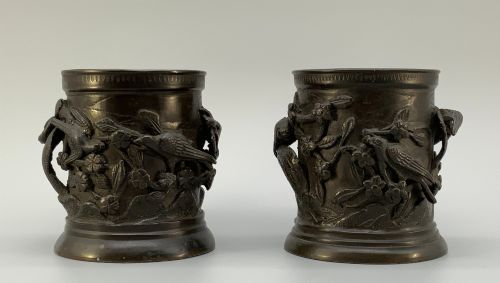
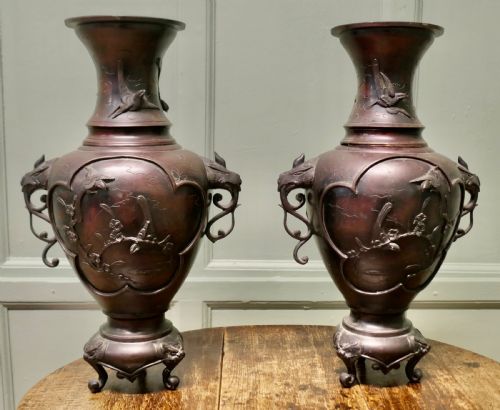
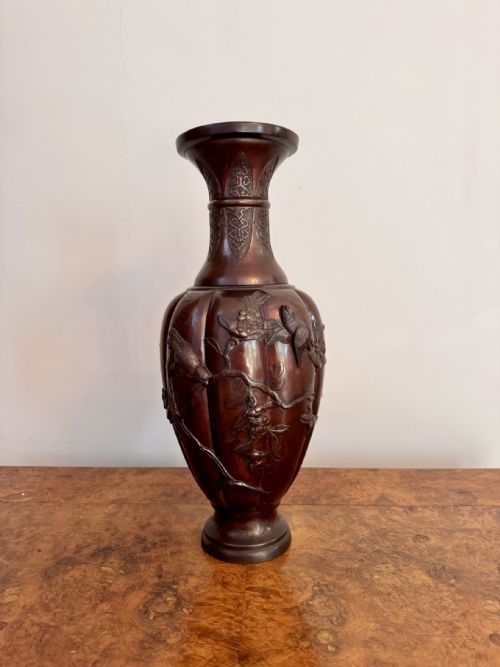
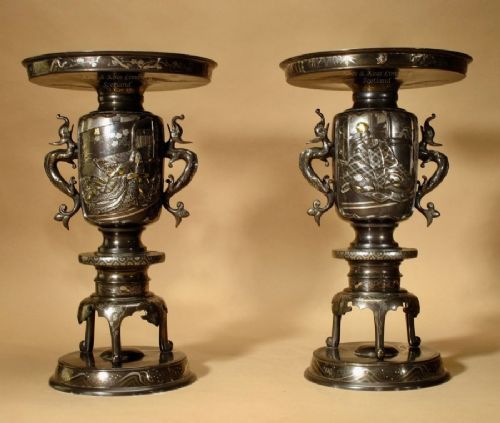
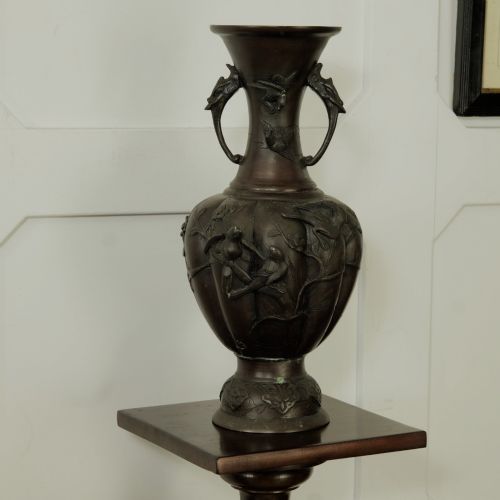
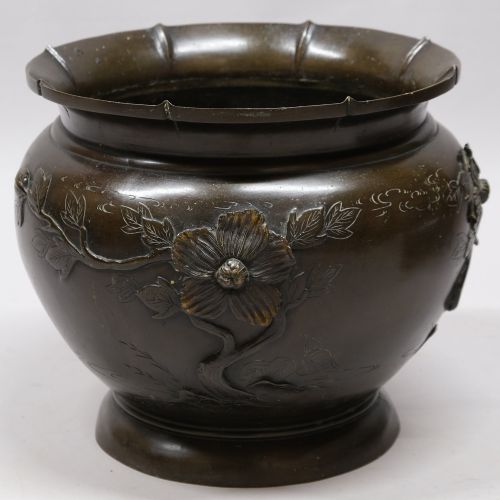
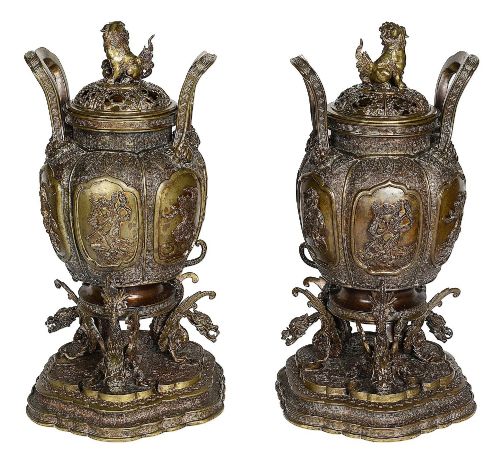
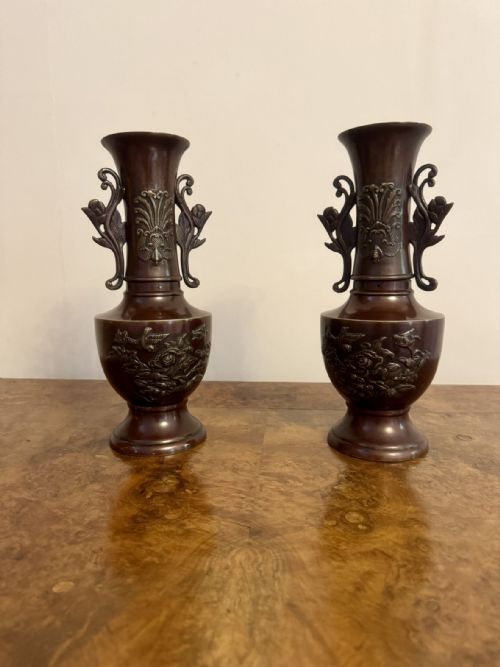
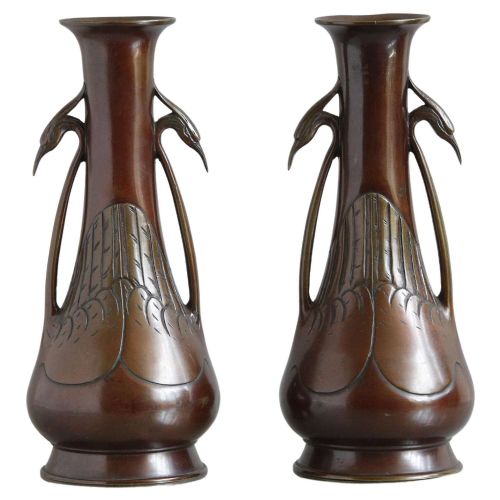
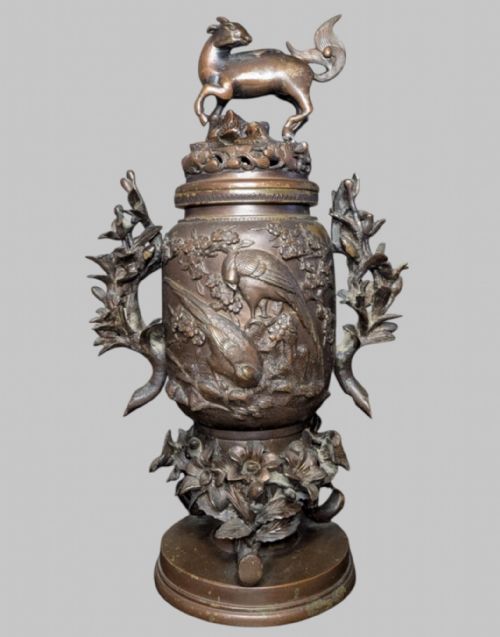
When you search for a japanese meiji bronze vessel, you encounter objects shaped by makers working during the late nineteenth and early twentieth centuries. These pieces appear primarily as vases, incense burners, jardiniere bowls and lidded urns designed for display or ritual use.
The selections on this page stem mostly from the Meiji period, often overlapping with Victorian or later dates up to the early twentieth century. Common forms include twin-handled baluster vases, hanging boat koro and large garden temple vessels carrying birds, blossom or dragons.
Materials and construction techniques
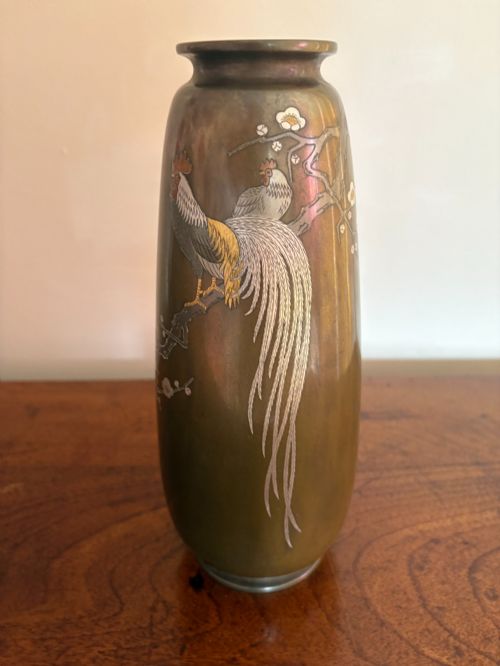
Metalworkers combined copper and bronze with gold, silver and brass to achieve varied surface tones and contrasts. Champleve enamel and cloisonne enamel frequently decorate the metal bodies, adding vibrant colour compartments across the surface.
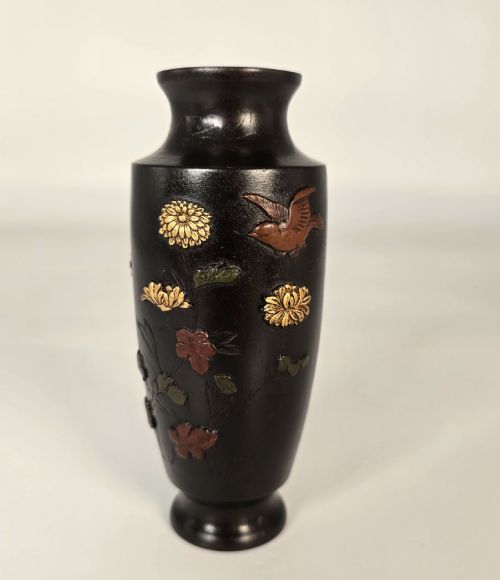
Makers applied patinated finishes alongside gold inlay and mixed metal highlights to create raised floral, bird or aquatic details. Artisans cast these forms using traditional methods before chiselling intricate motifs by hand.
Listings feature 19th-century and early 20th-century Japanese bronze vessels incorporating champleve enamel, gold inlay and patinated finishes.
Distinctions in craftsmanship and finish
The distinction between standard production and superior work rests on the crispness of the chased detail and the depth of the patination. Master metalworkers produced sharp, precise inlay work that integrates smoothly with the bronze body.
Surface finish and weight distinguish finer examples, where mixed metal applications remain secure and balanced. Lesser pieces display simpler cast decoration without the careful hand-chasing found on signed or workshop-attributed items.
KANASAWA·Kibundo·Kizan
The Japanese Meiji Bronze Vessel Glossary
- Patinated bronze
- Bronze treated with chemicals or heat to alter its surface colour. This process creates rich brown, green or dark patinas that protect the metal and define the visual character.
- Champleve
- An enamelling technique where troughs are carved into the bronze and filled with enamel paste before firing. The metal ridges separate the coloured glassy areas.
- Koro
- A traditional Japanese incense burner typically featuring a pierced lid to release fragrance. These vessels often rest on three feet and take animal or architectural forms.
- Usubata
- A distinct type of bronze vase traditionally utilised for flower arrangement. They feature a wide flat rim at the top above a pillar-like body.
- Tetsubin
- A cast iron or bronze kettle used for boiling water for tea. These pieces often display heavy texture and detailed spouts or handles.
- Cloisonne
- Enamelwork created by soldering thin metal wires to a metal base to form cells for enamel paste. Each colour area remains divided by the wire outlines.
Japanese Meiji Bronze Vessel: Frequently Asked Questions
How do I identify a Meiji period piece?
Look for the characteristic combination of dark patinated bronze with mixed metal inlays depicting natural scenes like birds, blossom and fish. Makers during this era often utilised advanced casting and chemical patination techniques.
Examine the base and surface for signature marks or signatures left by individual artists and established schools of metalwork. The integration of champleve enamel also points toward this active period of Japanese export craft.
What is a koro used for?
A koro functioned as an incense burner in Japanese settings, holding aromatic woods or resins during ceremonies or quiet contemplation. The pierced lids allowed scented smoke to drift freely into the surrounding room.
Many examples feature mythical beasts or birds acting as finials upon the lid. Today, these vessels serve as decorative focal points on mantelpieces or display tables.
How should I clean antique bronze?
Dust bronze vessels gently with a soft, dry brush to prevent dirt from accumulating in the recessed chased details. Avoid harsh chemical cleaners or polishes that strip away the original aged patina.
Water and moisture can harm delicate enamel or mixed metal inlay work over time. Keep these pieces in stable indoor environments away from direct dampness.
What does mixed metal mean?
Mixed metal describes the decorative integration of contrasting metals like gold, silver, copper and brass upon a primary bronze body. Artisans hammered or inlaid these elements to create coloured pictorial designs.
This technique required high skill to ensure the separate metals adhered securely to the bronze surface. Pieces featuring mixed metal details usually indicate finer workshop production.