

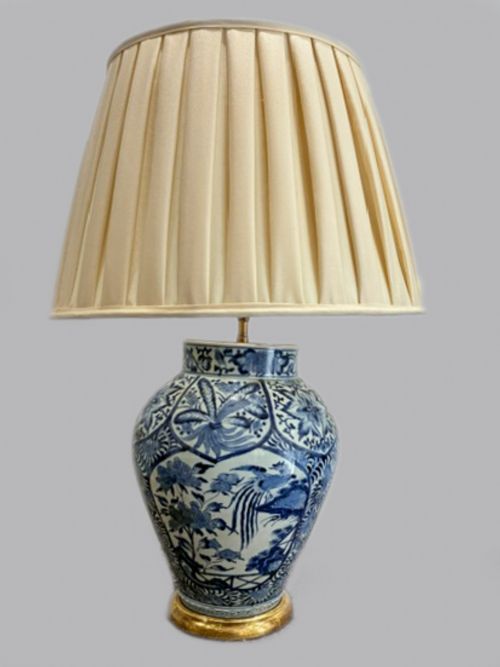


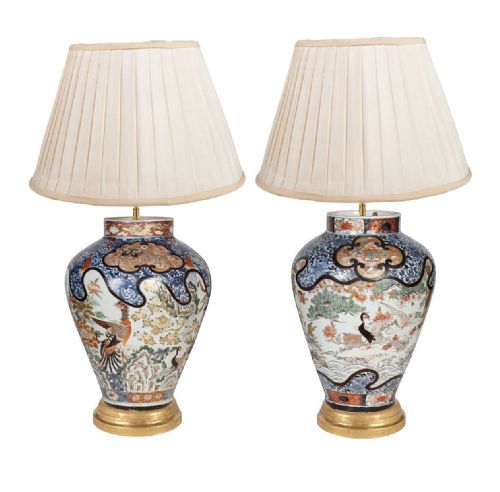
Japanese Imari Table Lamps
Japanese Imari table lamps bring hand-painted iron-red and cobalt porcelain into a room, offering centuries of ceramic artistry wired for modern lighting.
Japanese Imari Table Lamps
These pieces are decorative vessels from the seventeenth, eighteenth, and nineteenth centuries that have been fitted for electricity. When you browse Japanese Imari table lamps on this page, you meet porcelain vases originating from the Edo and Meiji periods.
The selection ranges from single cabinet vases to matched pairs, often accompanied by silk, fabric, brass, wood, or giltwood mountings. Eighteenth-century examples sit alongside nineteenth-century works and occasional seventeenth-century conversions.
A buyer encounters both traditional Arita wares and Fukagawa productions mounted as lamps. Each vessel carries the characteristic palette of the kilns, adapted over generations for domestic illumination.
Materials and construction
Potters shaped these bodies from hard-paste porcelain before applying underglaze cobalt blue and overglaze iron-red enamels, often supplemented with gilt details. The firing took place in wood-burning kilns that imparted subtle variations to the glaze surface.
Metalworkers and cabinetmakers subsequently added brass, ormolu, wood, or giltwood mounts to secure the fittings. Silk and fabric shades complete the construction, balancing the substantial weight of the ceramic base.
Japanese Imari Table Lamps Retail Price Guide 2026
Typical asking prices for japanese imari table lamps among the pieces listed under this phrase on Sellingantiques today, from the lower quarter to the upper quarter. They describe what is for sale here now, not the wider market.
Listings incorporate porcelain, brass, fabric, silk, wood, and giltwood across three distinct centuries.
Judging quality
Quality rests in the crispness of the hand-painted cobalt and the precision of the iron-red enamels. Finer vessels display deep, luminous glazes and carefully controlled pigment application without blurring or pooling.
The physical integration of the mountings also defines the standard of the piece. Superior examples feature mounts in brass, ormolu, or giltwood that respect the ceramic body and complement its proportions securely.
The Japanese Imari Table Lamps Glossary
- Arita
- The Japanese town in Hizen province where porcelain production began in the early seventeenth century. Artisans there created the body of wares destined for Imari export.
- Edo Period
- The period in Japanese history lasting from 1603 to 1868 under the Tokugawa shogunate. Pieces from this era show foundational stylistic shifts in export ceramics.
- Meiji Period
- The era spanning from 1868 to 1912 that followed the Edo period. Production during this time continued export traditions while adopting new industrial methods.
- Ormolu
- Finely chased and gilt bronze used for decorative mounts. French makers frequently applied these mounts to imported Asian porcelain during the nineteenth century.
Japanese Imari Table Lamps: Frequently Asked Questions
How do I date Japanese Imari table lamps?
Dating relies on the ceramic body, glaze characteristics, and painting style associated with specific periods like the Edo or Meiji eras. Archive records and stylistic comparisons help narrow down the decade of production.
The presence of European ormolu or brass mounts can also indicate when the vessel was adapted into a lamp. Earlier pieces from the seventeenth and eighteenth centuries display different potting techniques compared to nineteenth-century works.
Were these porcelain vases originally made as lamps?
Almost none of these vessels started life as lighting. They were originally manufactured as vases or spill vases in Japanese kilns before being converted later in Europe or Britain.
Conversion usually involved drilling a discreet channel for wiring and adding secure metal collars or wooden bases. This adaptation process preserves the antique ceramic while making it functional for contemporary interiors.
How do I care for antique porcelain lamps?
Dust the porcelain gently with a dry, soft cloth to prevent grime accumulation on the glaze and enamels. Avoid harsh chemical cleaners that might damage the overglaze red and gilt details.
Inspect the electrical cord and brass fittings periodically to ensure the lamp remains safe for daily use. Keep the lamp away from direct sunlight to protect any fabric or silk shades from fading.
What is the difference between Edo and Meiji pieces?
Edo period ceramics reflect earlier export aesthetics with hand-potted bodies and traditional cobalt and iron-red palettes. They represent the foundational centuries of Japanese porcelain manufacture.
Meiji pieces often show increased decorative complexity and industrial refinement following the opening of Japan. Both eras offer distinct aesthetic qualities suited to traditional and modern rooms.