

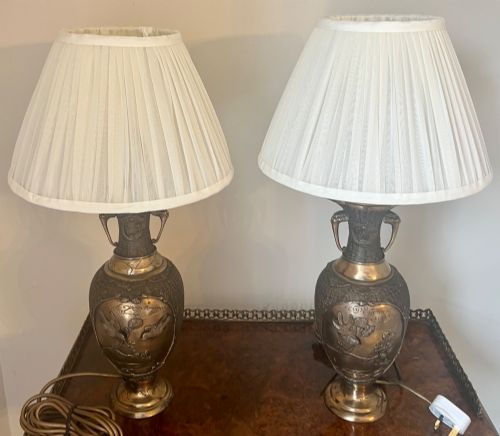
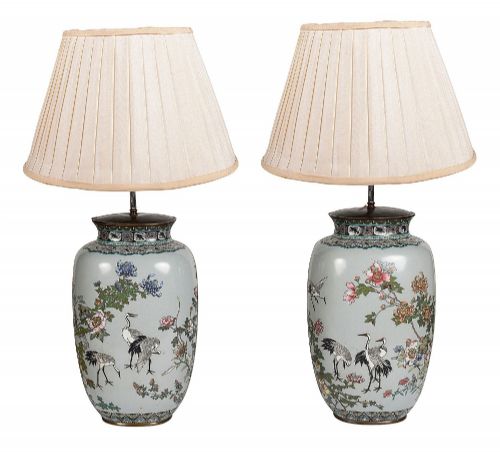
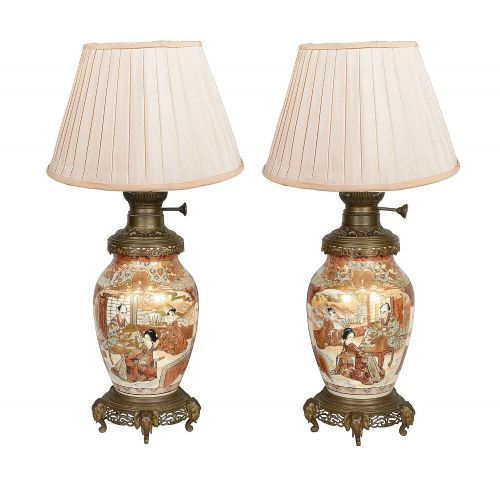


Antique Japanese Lamp Pair
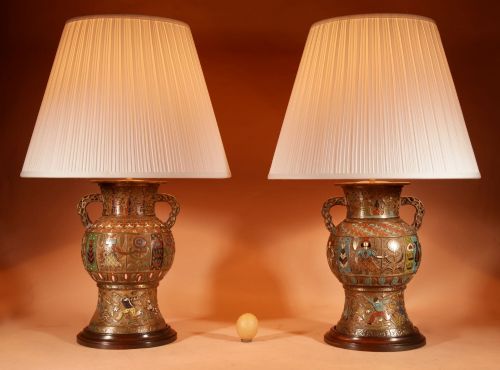
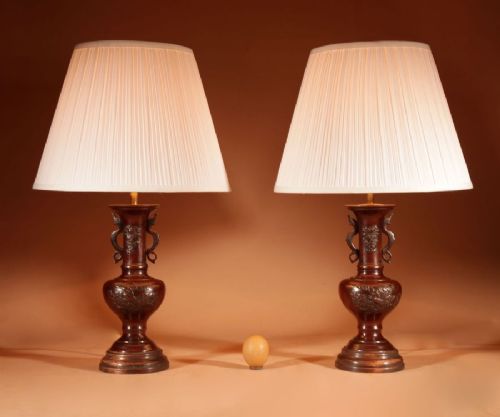
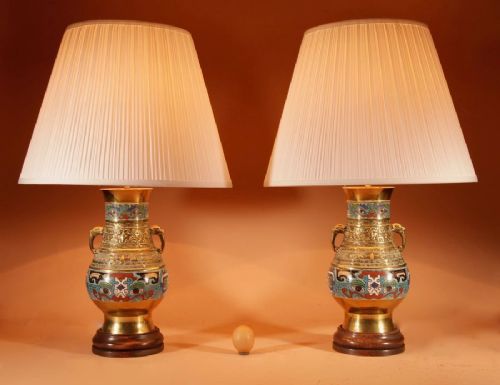
These antique japanese lamp pair items are matched table lights, predominantly formed from nineteenth-century porcelain and bronze vases wired for modern interiors.
Antique Japanese Lamp Pair
An antique japanese lamp pair brings balanced illumination to a room through matched vessels originating from the nineteenth century or earlier. When you search for an antique japanese lamp pair, you encounter coordinated table lights created by converting antique vases into functional lighting. These objects merge traditional Asian ceramics and metalwork with western electrical wiring.
The pieces on this page span the Edo and Meiji periods, alongside later nineteenth and early twentieth-century creations. You will frequently find matching bronze, Kutani porcelain, Imari, and cloisonné enamel vases adapted into table lamps. Most examples derive from nineteenth-century production, retaining their original decorative motifs while serving everyday domestic needs.
Materials and construction methods
The construction of these lamps relies on durable materials such as bronze, brass, and heavy porcelain bodies. Artisans formed metal vessels through casting and chased them with intricate surface designs, occasionally applying champlevé or cloisonné enamel. Ceramic examples utilise porcelain bodies painted in blue and white, or decorated with colourful Satsuma and Kutani glazes.
Many of these lighting pairs began life as decorative vases, urns, or jars before being mounted with ormolu and fitted for electricity. Wood elements, including root wood, also appear among the listed table lamps. Makers selected sturdy media capable of supporting the additional weight of electrical hardware and lamp fittings.
Egyptian interest influences occasionally merge with Japanese bronze, proving that Victorians loved mixing their ancient empires with the Far East.
Factors determining quality
Quality in these lighting pairs rests upon the artistic execution of the original vessel and the harmony between the two matched pieces. Superior examples display crisp casting in bronze, precise cloisonne wirework, or finely hand-painted ceramic details that match evenly across both lamps. Lesser items show discrepancies in proportion or wear that disrupts the symmetry of the pair.
The sophistication of the mounting work also influences the overall standard of the object. Finer conversions integrate ormolu mounts and electrical hardware seamlessly without damaging the underlying antique material. Balance, proportion, and the preservation of the original surface determine the standing of each piece.
The Antique Japanese Lamp Pair Glossary
- Meiji Period
- The era in Japanese history spanning from 1868 to 1912, characterised by extensive artistic production and export to the West. Many bronze and cloisonne lamps originate from this time.
- Cloisonne Enamel
- A decorative technique where thin metal wires are soldered to a metal base to create cells, which are then filled with enamel paste and fired. This method produces intricate coloured patterns on lamp bodies.
- Kutani Porcelain
- A distinct style of Japanese coloured porcelain known for bold palettes and detailed pictorial scenes. These ceramics frequently appear as converted table lamps.
- Imari
- A traditional type of Japanese porcelain decorated in underglaze blue, iron red, and gold. Eighteenth-century Arita Imari vases are commonly found adapted into lighting pairs.
- Ormolu
- Gilded bronze mounts applied to decorate or support decorative objects and lamps. This French-derived technique was frequently added during European conversions.
Antique Japanese Lamp Pair: Frequently Asked Questions
How do I choose matching lamps?
Look for balanced scale, matching coloration, and consistent decorative motifs across both vessels to ensure a cohesive pair on a table. Minor variations often occur in hand-finished antiques.
Consider the height and overall mass in relation to your furniture, as nineteenth-century vases vary significantly in scale.
Were these originally made as lamps?
Almost all pieces began as decorative vases, jars, or urns created during the Edo or Meiji periods. They were later converted into table lamps by adding electrical fittings and mounts.
This conversion process preserves the artistic integrity of the antique ceramic or bronze body while adapting it for modern utility.
How do I date a Japanese lamp?
Dating relies on stylistic markers of the vase body, such as Meiji period motifs, Satsuma glazes, or eighteenth-century Arita Imari characteristics. The underlying ceramic or metalwork provides the primary chronological evidence.
Electrical components usually reflect later twentieth-century rewiring rather than the age of the vessel itself.
What styles of Japanese lamps exist?
The selection includes bronze and champleve enamel vessels, Kutani and Imari porcelain vases, and cloisonne enamel pieces. Root wood forms also appear among the listed table lights.
These styles reflect both traditional Japanese craftsmanship and the nineteenth-century export taste for decorative Asian arts in western interiors.