



Imari Porcelain Vase Lamps
These imari porcelain vase lamps combine centuries-old Japanese ceramics with period mountings to anchor a room with distinct colour and pattern.
Imari Porcelain Vase Lamps
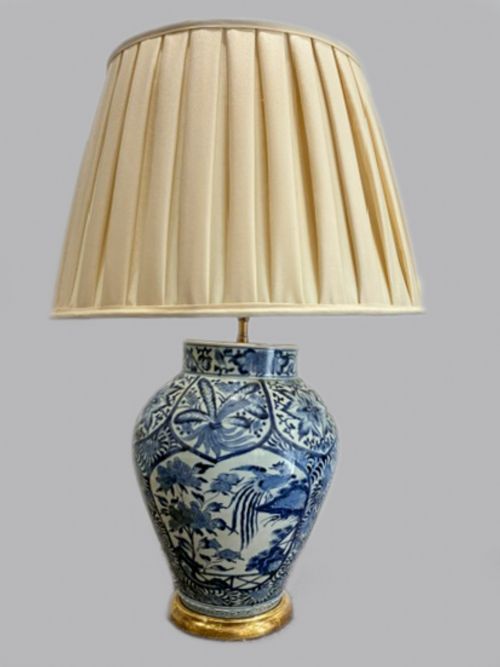
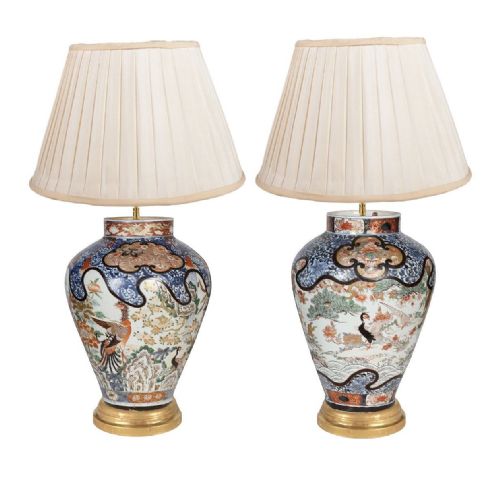
When you search for imari porcelain vase lamps, you encounter antique vessels originally formed in Japan during the seventeenth, eighteenth, and nineteenth centuries that later received electrical fittings for domestic illumination. The examples appearing on this page span the Edo and Meiji periods, showing the characteristic iron-red, underglaze blue, and gilt palettes typical of these wares.
Most pieces date to the eighteenth and nineteenth centuries, with occasional rarer examples originating in the late seventeenth century. These include both individual vessels and matched pairs, taking forms such as standard table lamps and spill vases adapted for modern interiors.
The ceramic bodies originate from Arita and include Fukagawa porcelain creations. These bodies serve as the structural columns for lamps that often incorporate brass, silk, fabric, wood, giltwood, or French ormolu mounts added during their subsequent conversion.
How imari porcelain vase lamps were made
The foundational vessels are shaped from porcelain clay and fired in Japanese kilns before receiving hand-painted underglaze blue and iron-red enamel decoration, frequently heightened with gilt. Artisans during the Edo and Meiji periods produced these ceramics using traditional potting and glazing techniques.
Later conversion into lamps involved the integration of brass, giltwood, wood, and French ormolu mounts to secure electrical components. Fabric and silk shades complete the assembly, combining Far Eastern ceramic art with European mounting practices.
Imari Porcelain Vase Lamps Retail Price Guide 2026
Typical asking prices for imari porcelain vase lamps among the pieces listed under this phrase on Sellingantiques today, from the lower quarter to the upper quarter. They describe what is for sale here now, not the wider market.
Listings span the seventeenth, eighteenth, and nineteenth centuries, incorporating porcelain, brass, silk, wood, and giltwood materials.
What varies in quality
Quality rests in the crispness of the hand-painted underglaze blue and iron-red enamels across the porcelain surface. Finer examples display precise detailing and harmonious colour saturation that remain vibrant across the centuries.
The nature of the secondary mountings also distinguishes the pieces. The integration of materials like ormolu, brass, and giltwood demonstrates the care taken during conversion, separating standard adaptations from more elaborate mountings.
The Imari Porcelain Vase Lamps Glossary
- Imari
- A type of Japanese porcelain decorated in underglaze blue, iron-red, and gilt. The style originated in the town of Arita and became immensely popular for export.
- Arita
- The Japanese town and surrounding region where the production of porcelain first began in the seventeenth century. Kilns here created the distinct ceramic bodies used for these wares.
- Edo Period
- The period in Japanese history spanning from 1603 to 1868. Many of the earlier ceramic vases mounted as lamps date from this era.
- Meiji Period
- The era in Japanese history running from 1868 to 1912. Pieces from this time demonstrate the continued export and decorative adaptation of Japanese porcelain.
- Ormolu
- Gilded bronze mounts applied to decorative objects and furniture. French makers frequently added these metal mounts to imported Asian porcelain.
Imari Porcelain Vase Lamps: Frequently Asked Questions
Are imari porcelain vase lamps original pairs?
Many listings feature matched pairs of vases that were converted into lamps together. Other entries present single vessels or pairings assembled from similar antique bodies.
Examination of the porcelain decoration and the mounting style helps determine if two lamps started their lives together.
How do I identify the period of the porcelain?
Dating relies on the painting style, the characteristics of the porcelain body, and the historical conventions of the Edo and Meiji periods. Seventeenth and eighteenth-century pieces often show different potting weights compared to nineteenth-century examples.
Evidence from the glaze and the palette assists in placing the ceramic within a specific century.
What materials are used in the mounts?
The mountings incorporate brass, wood, giltwood, and fabric alongside specialised additions like French ormolu. These materials were added when the vessels were adapted into table lamps.
European mounting traditions often influenced the choice of metalwork used to secure the electrical hardware.
Where were these porcelain vases made?
The ceramic bodies originate in Japan, specifically from the Arita region and production centres associated with Fukagawa. These kilns supplied porcelain for both domestic use and international trade.
Export wares made their way to Europe, where they later received the fittings that turned them into lamps.