





Japanese Cobalt Plate
A Japanese cobalt plate brings deep blue and iron-red tones to a room, offering striking decorative presence on a wall or dresser.
Japanese Cobalt Plate
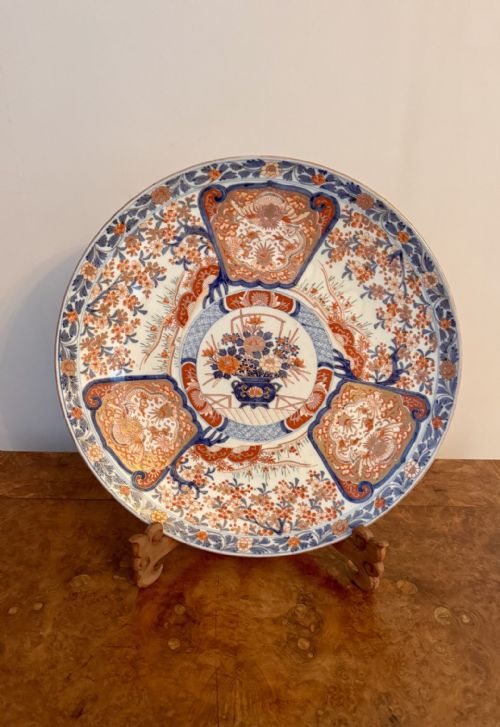
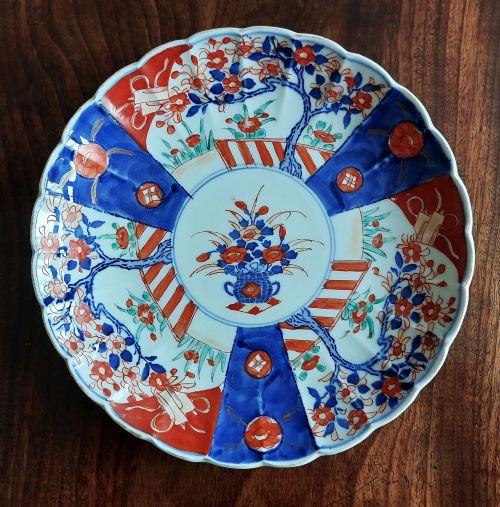
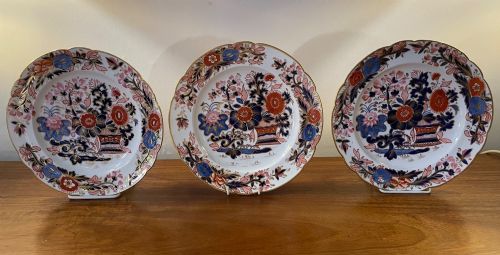
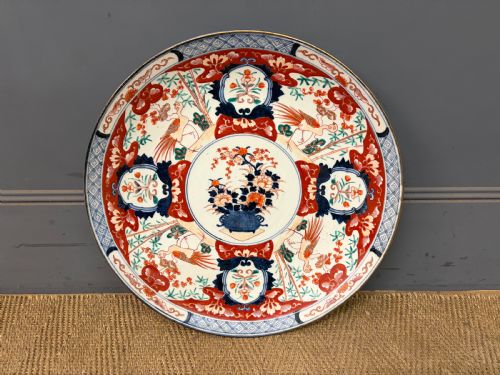
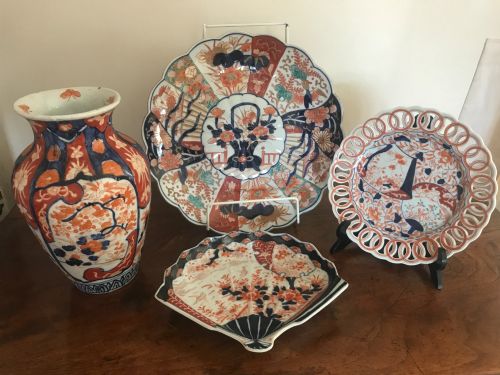
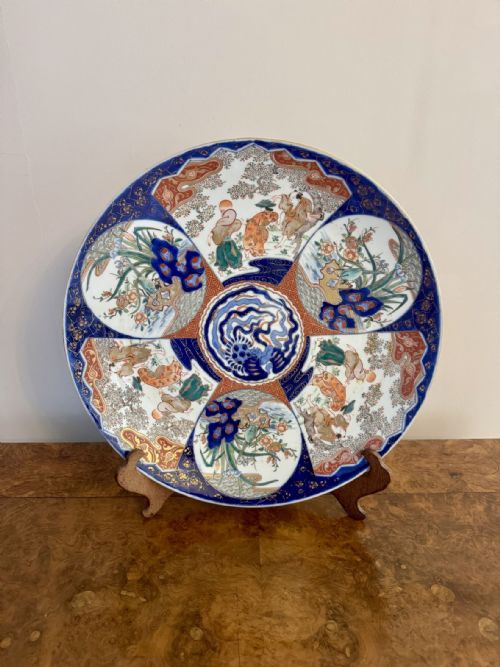
When searching for a japanese cobalt plate, you encounter circular and shaped ceramics decorated in traditional palettes. These pieces span the nineteenth century and the early twentieth century, taking the form of standard dinner plates, deep dishes, and large display chargers.
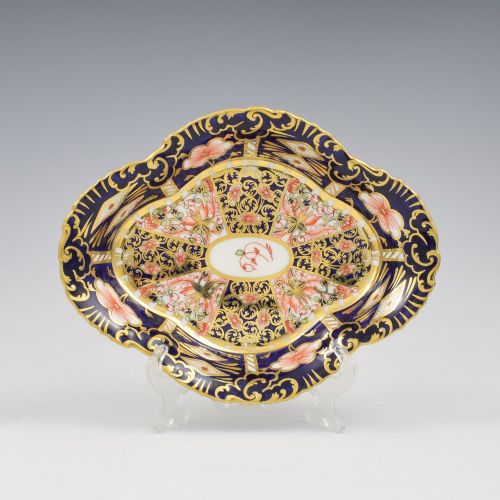
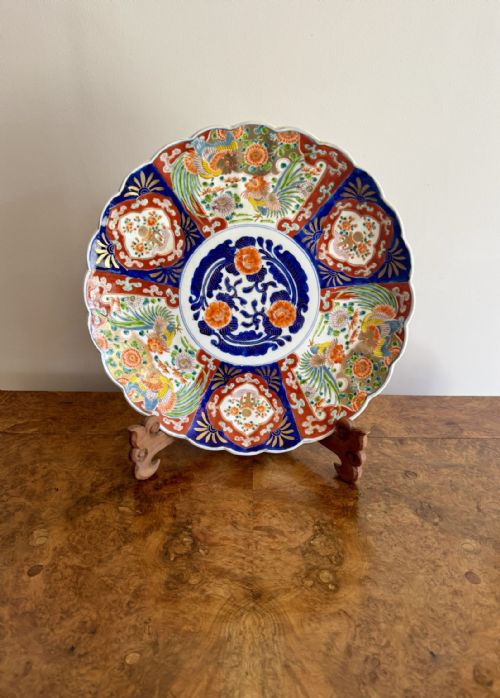
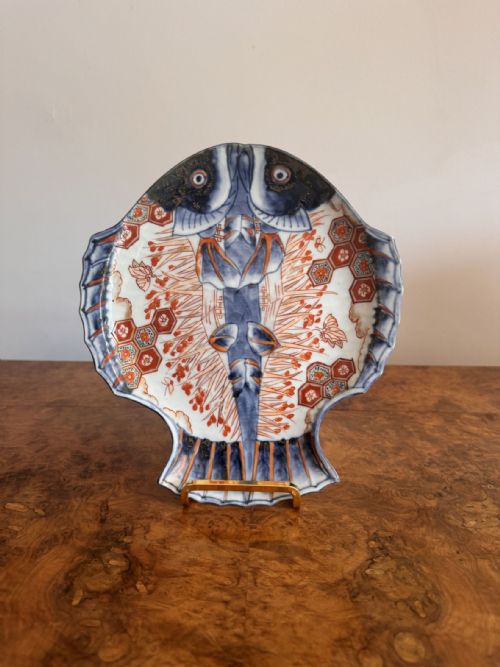
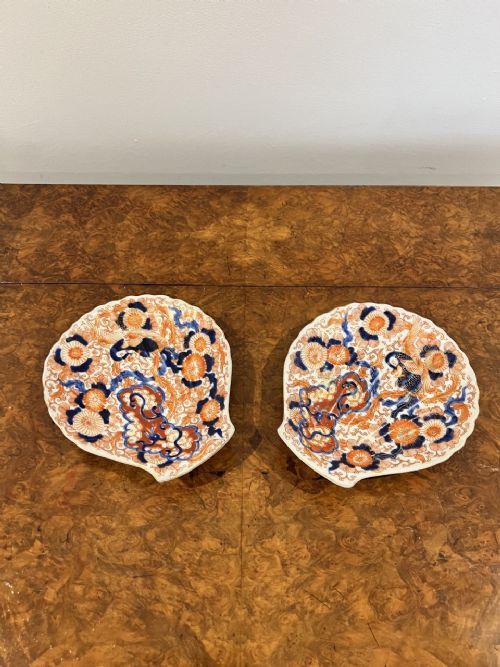
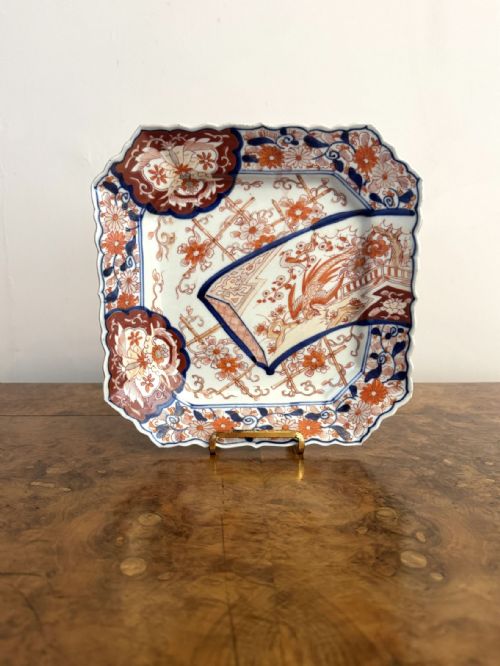
The majority of these ceramics belong to the Imari and Arita traditions, created during the Meiji period and the wider nineteenth century. They appear singly or in matched pairs and sets, often featuring scalloped, hexagonal, or fish-like profiles designed specifically for display.
Makers shaped these surfaces to receive elaborate underglaze cobalt blue alongside iron red and enamel detailing. The resulting items function equally well mounted on walls using appropriate hangers or arranged flat within a cabinet.
Materials and construction
Potters shaped these ceramics from porcelain and earthenware bodies, applying cobalt glaze to create the deep underglaze blue characteristic of the style. Artisans then added enamel highlights and gold leaf details over the initial glaze before a secondary firing.
The physical weight and thickness of the porcelain vary according to the form, with large chargers requiring sturdier construction than smaller scalloped dishes. Surface textures range from smooth glazed fields to raised enamel motifs that catch the light.
Assessing quality and execution
Quality rests in the crispness of the cobalt blue underglaze painting and the precise application of secondary enamel colours and gold leaf. Superior pieces display finely rendered subjects such as exotic birds or the Seven Lucky Gods with clear, sharp linework.
The ambition of the plate's outline also separates standard production from finer work. Scalloped edges, hexagonal cuts, and figurative shapes like fish or shells demand greater skill from the potter than a simple round dish.
The Japanese Cobalt Plate Glossary
- Imari
- A style of Japanese porcelain decorated in underglaze blue, iron red, and gold. This palette originated in Arita and became immensely popular for export.
- Charger
- A large decorative plate intended primarily for display on a sideboard or wall rather than for serving food at table.
- Meiji Period
- The era of Japanese history lasting from 1868 to 1912, marked by significant artistic production for international export markets.
- Arita
- A Japanese town famous for its porcelain production, serving as the central hub for the creation of traditional blue and white wares.
- Underglaze
- A method of decorating pottery before applying a clear ceramic glaze over the top, protecting the pigment during high-temperature firing.
Japanese Cobalt Plate: Frequently Asked Questions
How do I hang a heavy charger safely?
Large chargers require robust spring-loaded brass wall hangers that distribute the weight evenly across the rim. Ensure the fixing engages the wall securely.
Avoid wire-only solutions that rely on friction alone against the glazed ceramic surface.
Can I use these antique plates for dining?
These historical ceramics function best as decorative objects rather than practical tableware. Regular use can wear away the delicate overglaze enamels and gold leaf.
Display them in cabinets or on walls to preserve their surface decoration for the future.
What subjects typically appear on these plates?
Common motifs include exotic birds, floral arrangements, and traditional Japanese figures such as the Seven Lucky Gods. Artisans painted these scenes to convey auspicious meanings and natural beauty.
The complexity of the narrative scene often indicates the original skill level of the workshop.