
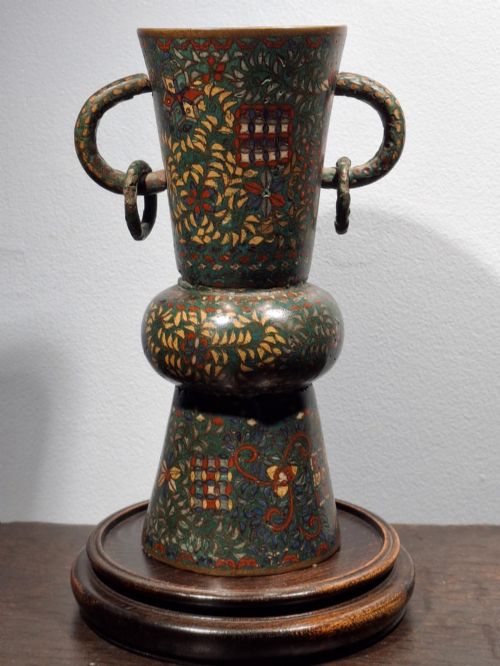
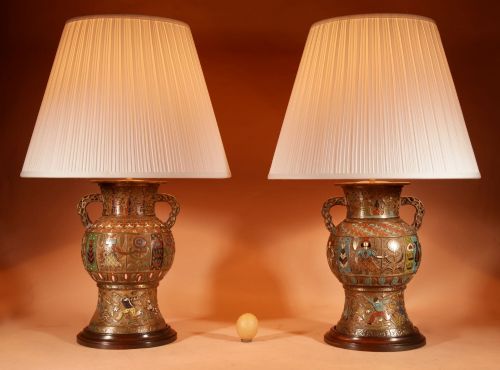
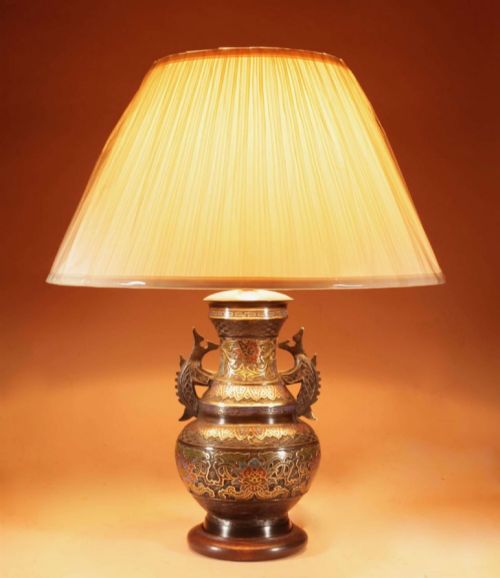
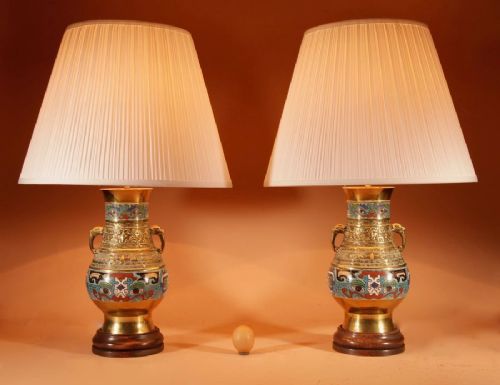




Japanese Champleve Enamel Vase
These japanese champleve enamel vase examples bring heavy cast bronze and vibrant coloured vitreous inlays straight to your mantelpiece or tabletop.
Japanese Champleve Enamel Vase
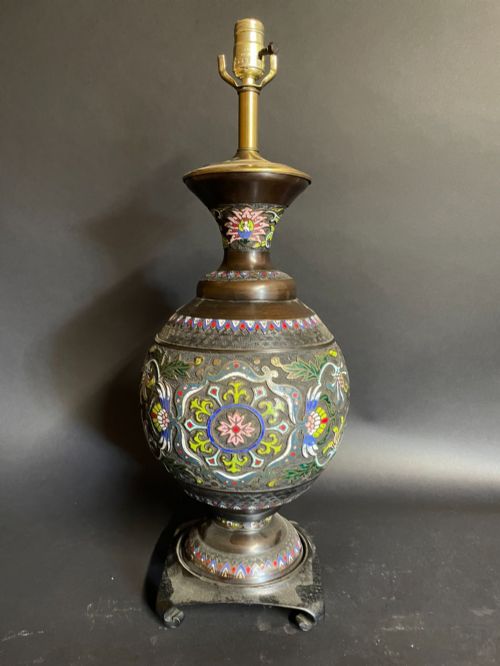
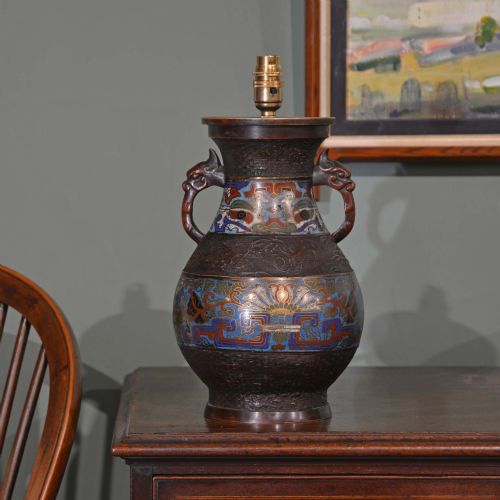
A japanese champleve enamel vase combines heavy cast bronze or brass bodies with recessed cells that hold coloured vitreous paste. These vessels range from compact decorative pieces to large scale vessels and electrified table lamps.
The selections span the nineteenth century and the early twentieth century, including items associated with the Meiji period and oriental styles. Buyers frequently encounter standard vases alongside converted table lamps fitted with wood or fabric elements.
How they were made
Craftsmen cast the structural foundation from bronze or brass, leaving depressed channels and compartments across the surface. This technique distinguishes the work from wire-based methods by carving or casting the design directly into the metal body.
Workers filled the recessed cavities with enamel paste before firing and polishing the exterior smooth with the raised metal borders. Artisans sometimes incorporated archaic motifs and Chinoiserie influences into the final bronze and enamel surface.
Several heavy bronze vases found a second life as nineteenth century table lamps.
What varies in quality
Quality rests on the crispness of the cast bronze and the precision of the enamel fill within the recessed channels. Finer vessels display deep, uniform patination and securely set vitreous material without uneven shrinking.
Scale and proportion separate ordinary vessels from exceptional pairs, particularly when dealing with large decorative urns or heavy table lamps. The integration of auxiliary materials like wood bases or fabric shades also influences the overall visual balance.
The Japanese Champleve Enamel Vase Glossary
- Champleve
- An enamelling technique where troughs or cells are carved or cast into a metal surface to hold vitreous paste. The raised metal walls separate the different coloured enamel areas.
- Meiji Period
- A Japanese historical era spanning from 1868 to 1912 characterised by rapid modernisation and prolific decorative arts production for export. Pieces from this era often display meticulous bronze casting.
- Cloisonne
- An alternative enamelling method utilising thin metal wires soldered to a metal base to create compartments for paste. Some nineteenth century oriental listings group similar decorative metalwork under this heading.
- Patina
- The surface sheen and coloration developed on bronze or brass over decades through oxidation and handling. A stable metallic skin enhances the visual depth of the underlying alloy.
Japanese Champleve Enamel Vase: Frequently Asked Questions
How are these vases cleaned?
Dust the bronze and enamel surfaces gently with a soft, dry cloth to prevent accumulation in the recessed cells.
Avoid chemical polishes or water immersion, as moisture and harsh agents damage both the metal patina and the historic vitreous paste.
Can converted lamps be restored?
Many table lamps retain their original bronze and enamel bodies beneath twentieth century electrical fittings and wiring. Skilled specialists can update or reverse electrification work depending on whether you prefer a lamp or a display vessel.
What periods do these pieces date from?
The available selection primarily dates from the nineteenth century through the early decades of the twentieth century. Specific manufacturing dates span the Meiji period and subsequent 1900s production years.
Where were these vessels placed?
Original owners utilised these decorative items as prominent table ornaments, mantel displays, and ritual objects. Later adaptations frequently converted the larger bronze bodies into functional lighting for domestic interiors.