



Japanese Ceramic Vessel Pair
These Japanese ceramic vessel pair pieces are matched sets of vases, jardinieres, and ginger jars that bring decorative depth to a room.
Japanese Ceramic Vessel Pair
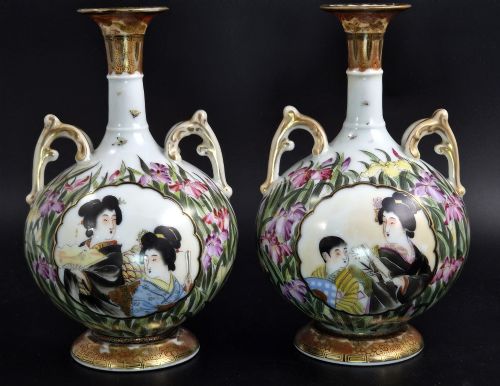
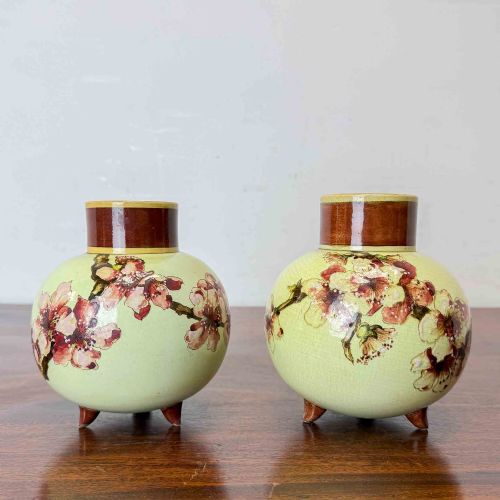
When you search for a japanese ceramic vessel pair, you encounter balanced sets of matching containers originating primarily from the Meiji period and the nineteenth century. These objects include baluster vases, hexagonal forms, ginger jars, and large jardinieres designed for display.
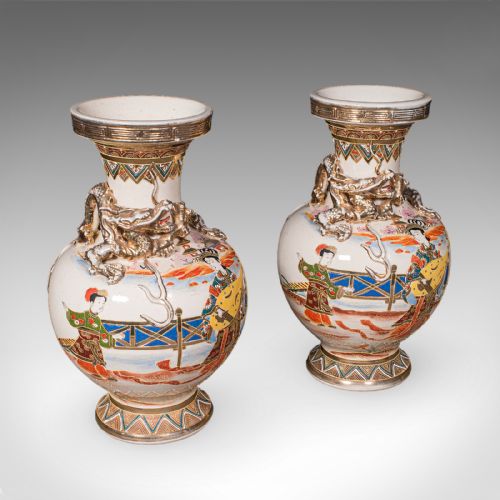
The versions you are most likely to meet on this page span Satsuma earthenware, Imari porcelain, and Kutani wares, alongside British interpretations like Doulton Lambeth and Samson imitations. They range from small cabinet pieces to imposing seventy-six centimetre display vases.
How they were made
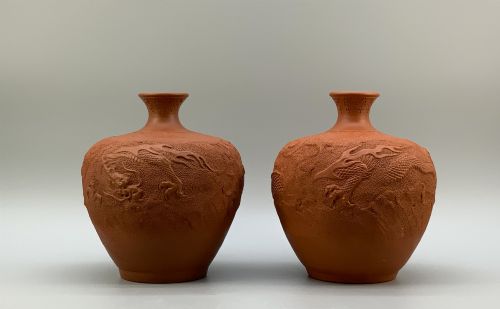
Potters shaped these vessels from porcelain, earthenware, red clay, terracotta, and stoneware, utilising both wheel-throwing and mould techniques. Artisans then applied glazes suited to the specific clay body.
Makers enriched the surfaces using enamel, gold leaf, and moriage relief work. Hand-painted panels frequently depict dragons, phoenixes, figures, and botanical subjects.
Japanese Ceramic Vessel Pair Retail Price Guide 2026
Typical asking prices for japanese ceramic vessel pair among the pieces listed under this phrase on Sellingantiques today, from the lower quarter to the upper quarter. They describe what is for sale here now, not the wider market.
Dragons and phoenixes peer across these surfaces, guarding the mantelpiece with expressions of ancient ceramic determination.
What varies in quality
The standard of a japanese ceramic vessel pair rests upon the precision of the hand-painted brushwork and the delicacy of the decorative panels. Superior examples display crisp details in figures such as Rakan, alongside well-preserved heavy gilding.
Material body and glaze execution further distinguish the work. Finely potted porcelain and well-controlled earthenware bodies demonstrate greater technical accomplishment than simpler commercial output.
Kinkozan·Tashiro·Doulton Lambeth·Samson
The Japanese Ceramic Vessel Pair Glossary
- Satsuma
- A type of Japanese earthenware featuring a crackled ivory glaze and elaborate polychrome and gilt decoration. These pieces often depict historical figures, landscapes, and religious panels.
- Imari
- A style of Japanese porcelain decorated in underglaze blue, iron red, gold, and auxiliary colours. It gained significant popularity during the Meiji period.
- Kutani
- Japanese pottery and porcelain known for vibrant colour palettes, particularly iron red and gold. These wares frequently incorporate nature motifs and figurative scenes.
- Moriage
- A decorative ceramic technique using piped clay slips to create raised, textured patterns beneath the glaze. This method adds tangible relief to floral and geometric motifs.
- Baluster
- A vase form with a rounded body that tapers towards the base and flares at the neck. This shape provides a stable foundation for complex surface painting.
Japanese Ceramic Vessel Pair: Frequently Asked Questions
What is a japanese ceramic vessel pair?
A japanese ceramic vessel pair consists of two matching decorative containers, such as vases, ginger jars, or jardinieres, created to balance a mantelpiece or tabletop.
These sets reflect various Japanese ceramic traditions, notably Satsuma earthenware and Imari porcelain, alongside European interpretations.
How do I date a japanese ceramic vessel pair?
Dating relies on stylistic markers, materials, and historical periods associated with the piece. Many examples originate from the Meiji period and the late nineteenth century, while others date towards nineteen twenty.
Examine the potting style, the type of crackle in the glaze, and the specific application of enamel and gold leaf to place the item correctly.
How were these vessels used?
These pieces served primarily as decorative ornaments within domestic interiors, displayed on tables, shelves, and mantelpieces. Larger jardinieres held plants or floral arrangements.
Their striking painted surfaces were intended to catch the eye and showcase the owner's appreciation for fine craftsmanship.
How do I care for a japanese ceramic vessel pair?
Keep the vessels out of direct sunlight to protect delicate enamel colours and gold leaf details. Dust them gently with a soft, dry cloth.
Avoid using water or cleaning solutions on antique earthenware and gilded surfaces to prevent moisture damage and wear.