


Japanese Ceramic Temple Jars
Japanese ceramic temple jars are substantial lidded vessels bringing decorative power and historical depth to a room.
Japanese Ceramic Temple Jars
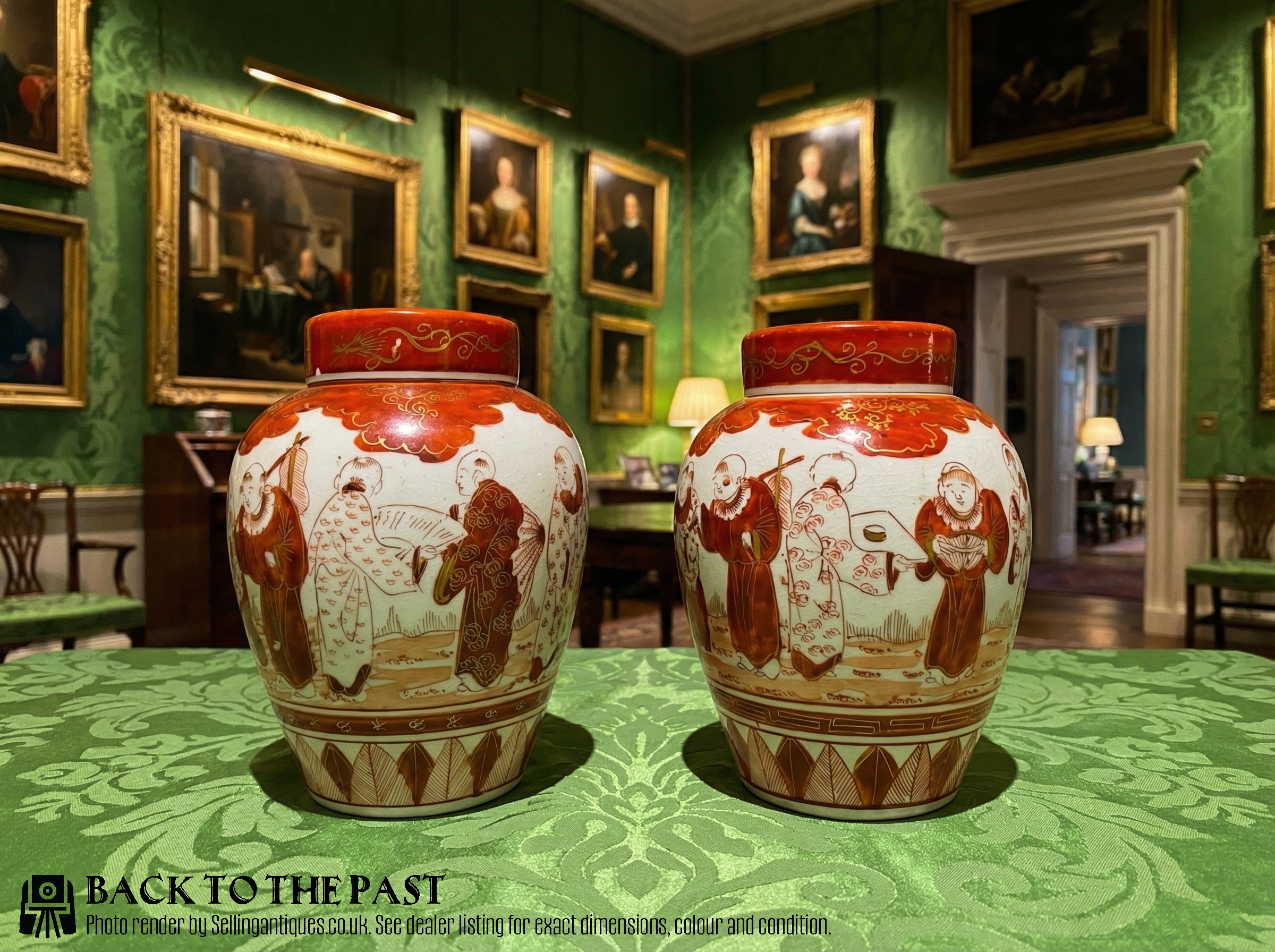
When you search for japanese ceramic temple jars, you encounter robust lidded vessels originating primarily from the seventeenth, eighteenth, and nineteenth centuries. These forms include baluster vases, ginger jars, and large garniture pieces designed for prominent display.
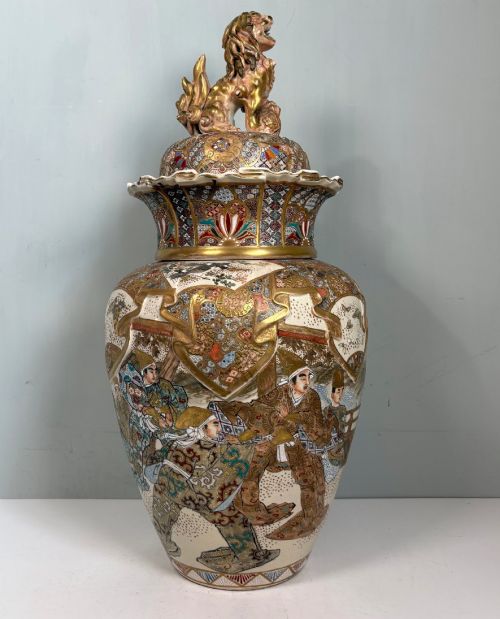
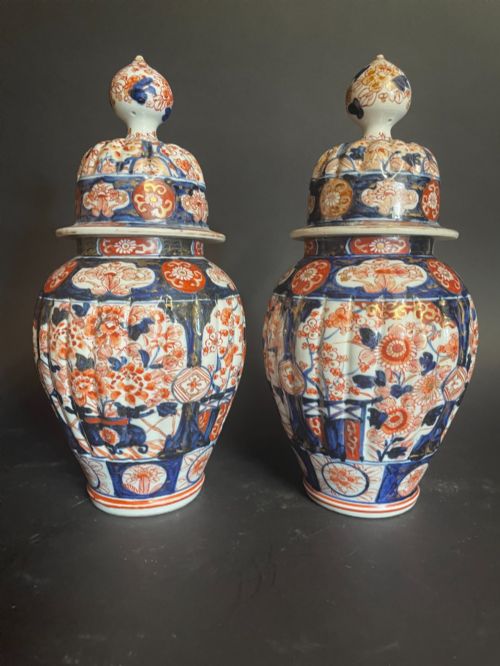
The specimens met most frequently on this page belong to the nineteenth century, particularly the Meiji period and Victorian eras. These later creations often display the rich Imari palette, Satsuma earthenwares, or Kutani styles produced in centres like Arita and Kyoto.
Earlier examples dating back to the Edo period also appear, showing the foundational blue and white porcelain traditions of Arita kilns. Collectors find both paired garnitures and single monumental jars carrying distinct historical marks and traditional motifs.
How they were made
Potters shaped these vessels using porcelain and earthenware bodies, throwing them on wheels or moulding them into octagonal and baluster profiles. Kiln workers then applied underglaze blue, vibrant enamel colours, and detailed hand-painted designs before high-temperature firing.
Finishing touches often involved the application of gold leaf, gilt, and gilding to accentuate specific decorative panels. Some European makers such as Samson also produced interpretations using comparable ceramic techniques and enamelling methods.
Nineteenth-century drawing rooms frequently placed these towering jars where guests could admire the intricate hand-painted landscapes and mythical creatures.
What varies in quality
The standard of a vessel rests upon the precision of the hand-painting and the complexity of the enamel and gilt work. Finer pieces display crisp lines, balanced proportions, and careful rendering of traditional landscape or floral motifs.
The integrity of the body and the preservation of the original matching cover also dictate the standing of a jar. Superior specimens maintain vibrant surface pigments and intact gilding without heavy wear from past handling.
Yamashu·Fukagawa·Samson
The Japanese Ceramic Temple Jars Glossary
- Imari palette
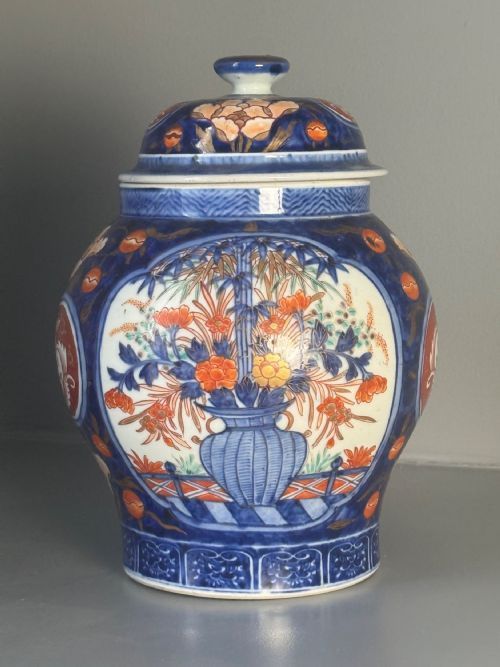
- A traditional colour scheme utilising underglaze blue, iron red, and gilt on a white porcelain ground. This combination creates a rich, contrasting visual effect common on export wares.
- Satsuma
- An earthenware ceramic body typically covered with a finely crackled ivory glaze and richly decorated with enamels and raised gold leaf. These pieces originated in the Satsuma province and later Kyoto workshops.
- Arita
- The Japanese town renowned as the birthplace of Japanese porcelain production, where kilns created durable blue and white wares and Imari export pieces.
- Baluster
- A vase shape characterised by a rounded body that tapers toward the base and swells near the lower centre, resembling the profile of an architectural baluster.
- Garniture
- A set of matching vases and lidded jars designed to be displayed together on a mantelpiece or shelf.
- Kutani
- A style of Japanese pottery distinguished by bold, multicoloured enamel designs often featuring greens, blues, purples, and extensive gilding.
Japanese Ceramic Temple Jars: Frequently Asked Questions
What were temple jars used for?
These large lidded vessels originally served to store dry goods, spices, or medicinal herbs in domestic and ceremonial spaces. Over time, workshops produced them primarily for ornamental display within wealthy interiors.
Export demand in Europe during the nineteenth century cemented their role as grand decorative centrepieces for mantelpieces and entrance halls.
How do I identify Imari decoration?
Imari pieces are instantly recognisable by their distinctive palette combining deep underglaze cobalt blue with iron red and abundant gilding. This triad of colours creates a striking contrast against the white porcelain ground.
Designs frequently incorporate floral arrangements, panels of landscapes, and mythical motifs arranged in symmetrical geometric patterns.
What is the difference between Arita and Satsuma?
Arita wares are hard-paste porcelains known for their resonance, durability, and smooth blue-and-white or Imari glazed surfaces. They represent the foundational porcelain industry of Japan.
Satsuma pieces are earthenware bodies featuring a characteristic ivory-coloured crackle glaze, heavily painted with polychrome enamels and raised gold leaf.
How should I clean my jar?
Dust the exterior gently with a soft, dry microfibre cloth to remove everyday particles without disturbing delicate enamel surfaces. Avoid using commercial cleaning liquids, abrasive pads, or submerging the vessel in water.
Particular care is necessary around areas featuring applied gold leaf or gilt, as harsh cleaning agents can permanently damage the metallic finish.
Are lids usually original?
Many surviving jars retain their original matching covers, which is a significant factor for collectors seeking complete period garnitures. Due to the fragile nature of ceramics over centuries, replacement lids do occur.
Examining the glaze consistency, clay body, and wear patterns helps determine whether the cover belongs to the same production period as the base.