


Japanese Ceramic Statue
A Japanese ceramic statue brings expressive figures and mythical deities into the room, shaped by centuries of kiln traditions.
Japanese Ceramic Statue
When you search for a Japanese ceramic statue, you encounter a range of sculptural forms depicting legendary figures, sacred deities, and animals. The selection spans distinct eras, from the Edo and Meiji periods through to the Taisho era, showing remarkable variety in subject matter.
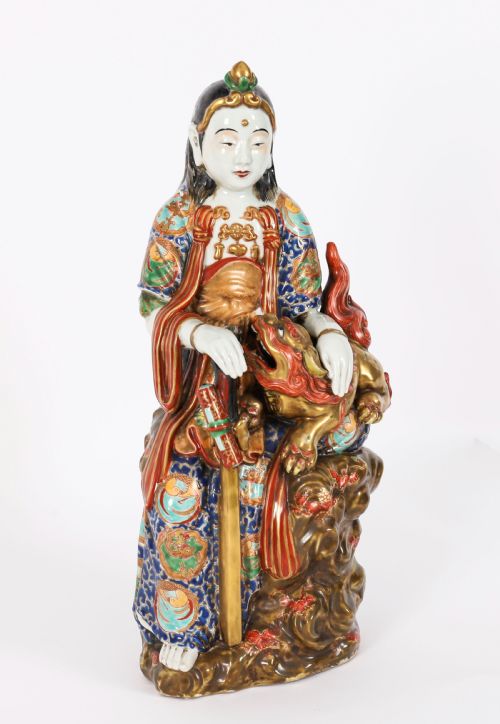
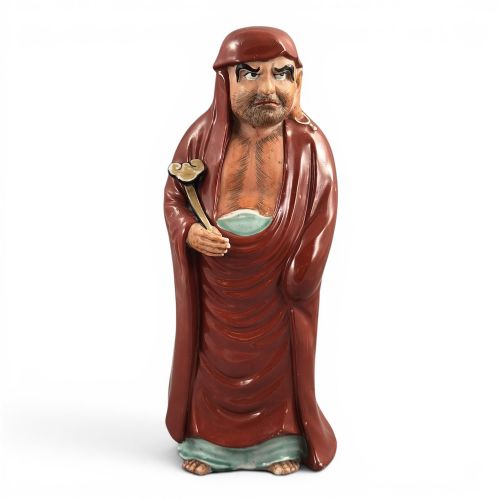
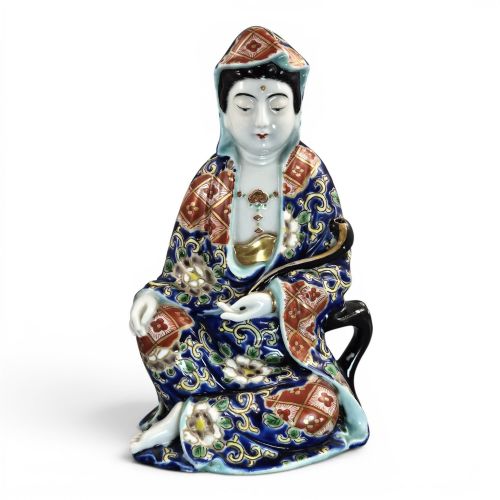
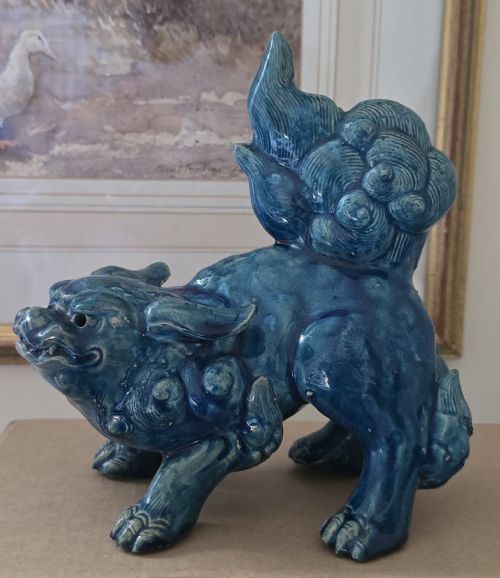
You meet representations of Buddhist and Daoist figures such as Kannon, Jurojin, Daruma, and Hotei alongside guardian lions known as shishi or karashishi. Human subjects like courtly bijin and monks appear frequently, reflecting cultural narratives deeply rooted in Japanese history.
The objects take the form of okimono for display, larger architectural roof ornaments, and detailed figurines. Figures often sit or recline, capturing moments of contemplation or dynamic movement through careful modelling.
Materials and construction
The pieces utilise durable ceramic bodies including refined porcelain and denser earthenware, shaped by hand or moulded at historical kilns. Glazes provide smooth surfaces, ranging from turquoise tones to rich polychrome enamel finishes.
Makers applied decorative techniques such as moriage relief work and intricate gold leaf or gold gilt detailing. Enamel pigments bring depth to robes and backgrounds, while careful firing fixed the colours permanently.
Several ceramic lions keep a watchful eye over the collection, refusing to look serious while guarding against misfortune.
Distinctions in execution
The complexity of the glaze application and the restraint or richness of the gilding separate standard production pieces from finer works. Preservation of delicate enamel work and crisp surface relief also define the better examples.
Makuzu Kozan II
The Japanese Ceramic Statue Glossary
- Okimono
- A decorative object designed for display on a shelf or tokonoma alcove rather than for ritual use. These ornamental carvings and ceramic figures depict animals, deities, and daily scenes.
- Kutani
- A style of Japanese pottery and porcelain traditionally associated with rich polychrome decoration and generous use of gold. Figures from these kilns often feature detailed enamel garments.
- Satsuma
- A type of earthenware with a fine crackle glaze, typically decorated with polychrome enamels and gilt. Satsuma figures frequently portray immortals and historical figures with ornate patterning.
- Shishi
- A mythical guardian lion dog originating from Chinese tradition, adopted into Japanese art as a protector. These muscular beasts appear with swirling manes and fierce expressions.
- Bijin
- A traditional Japanese artistic depiction of a beautiful woman, often shown in courtly or traditional dress. Ceramic figures in this genre highlight elaborate robes and gentle poses.
Japanese Ceramic Statue: Frequently Asked Questions
How do I identify Meiji period figures?
Meiji period figures often combine traditional religious subjects with heightened realism and intricate surface decoration. Makers during this era utilised refined porcelain and complex enamel techniques.
The style reflects a period of opening international trade that influenced domestic craft production.
What is a shishi guardian?
A shishi is a mythical guardian lion dog designed to ward off evil spirits and protect sacred spaces. In ceramic sculpture, they feature open mouths, curly manes, and powerful stances.
You often find pairs guarding doorways or serving as standalone decorative objects.
Where were these statues made?
The pieces originated in various historical kilns across Japan, including regional centres renowned for specific pottery traditions. Satsuma, Kutani, and Arita represent some of the prominent production sites.
Each region developed distinct glazing and painting styles that distinguish their ceramic figures.