


Japanese Ceramic Display Vases
These japanese ceramic display vases bring nineteenth-century kiln craft into the room, offering intricate hand-painted detail and scale for any mantel or floor.
Japanese Ceramic Display Vases
When you search for japanese ceramic display vases, you encounter a distinct group of vessels made primarily during the nineteenth century, spanning periods from the late Edo through the Meiji and Taisho eras. These items arrive in various forms, from miniature pieces to monumental floor-standing cylinders, lidded jars, and handled vessels designed specifically for display.
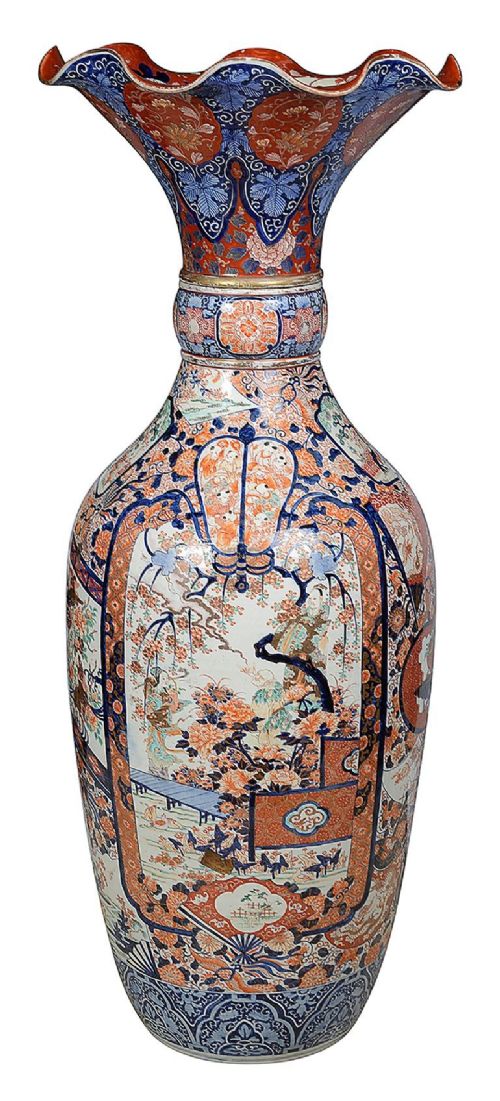
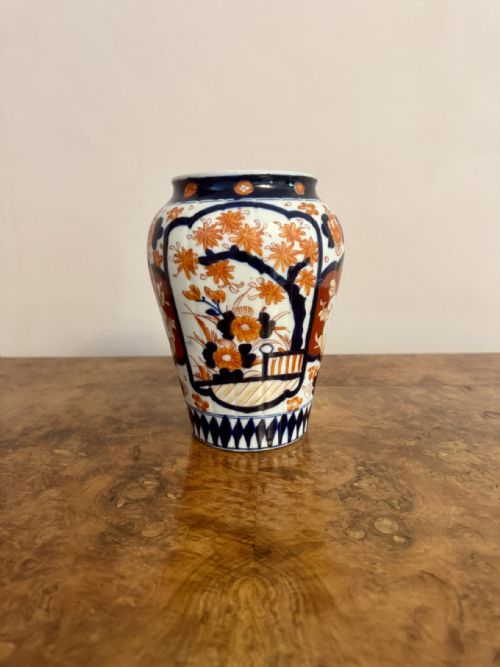
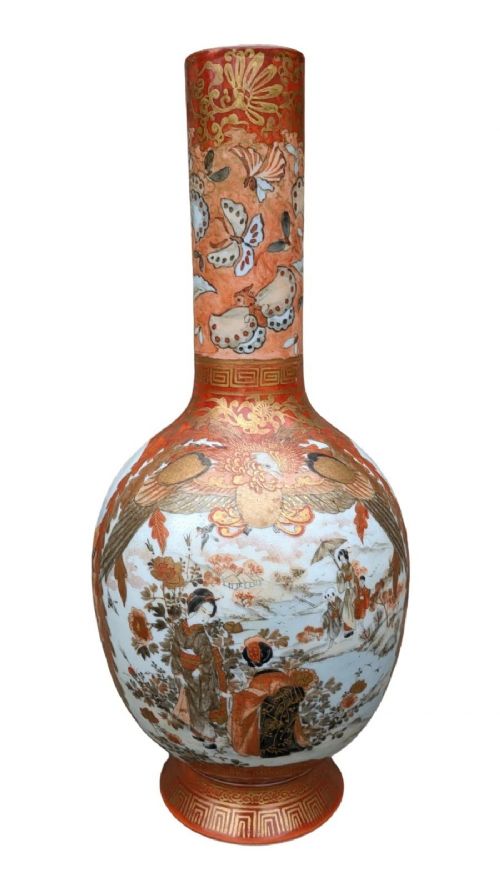
The most common examples on this page belong to traditions such as Imari, Satsuma, and Kutani, which reflect the aesthetic priorities of their makers during the Victorian and Edwardian periods of export. Imari pieces typically present rich cobalt and iron red palettes with gilt highlights, while Satsuma wares offer cream earthenware surfaces dense with figurative processions and landscape panels.
Makers fashioned these display forms both singly and in matched pairs or garnitures, intended to anchor the decor of nineteenth-century interiors. Whether you encounter a small cabinet vase or a tall ribbed cylinder, each item represents the output of traditional ceramic centres shipped to Western markets.
How they were made
Potters shaped porcelain and earthenware bodies by throwing on the wheel or moulding in sections, occasionally adding ribbed surfaces or bamboo-handle forms before firing. Once fired, these pieces received detailed decoration using mineral pigments, enamels, and heavy gold leaf or gilt.
Techniques such as moriage were applied to build up raised paste details that gave depth to figures and floral motifs, while other vessels combined painted glazes with lacquer over black paint. Workshops controlled kiln temperatures carefully to fix the intricate overglaze enamels characteristic of Satsuma and Kutani output.
One exceptional nineteenth-century Satsuma vase incorporates a functional bamboo-handle form into its ceramic body, merging basketry traditions with pottery.
What varies in quality
The distinction between ordinary export wares and top-tier pieces rests on the precision of the brushwork and the density of the gilding. Master workshops employed skilled painters whose miniature figures and thousand-flowerhead patterns maintained strict control across complex surfaces.
Weight, scale, and potting uniformity also signal quality, as seen in heavy floor vases and exhibition-grade pairs with signed artist marks. Superior examples balance their elaborate surface decoration with well-proportioned forms that command visual attention without appearing cluttered.
Chosei Mark·Seiko-en Chokei·Hododa·Kinkozan·Kinrin Workshop
The Japanese Ceramic Display Vases Glossary
- Imari
- A traditional Japanese porcelain style originating from Arita, characterised by a palette of underglaze blue, iron red, and abundant gold gilt. These pieces often feature panelled botanical and geometric designs.
- Satsuma
- A type of Japanese earthenware featuring a crackled ivory glaze decorated with enamels and raised gilding. Makers frequently used this surface for dense figurative scenes depicting court figures and immortals.
- Kutani
- A style of Japanese ceramic identified by bold colour schemes, notably strong greens, blues, and reds, often depicting landscapes or birds. The Kaga region produced these distinctive wares for both domestic and export markets.
- Moriage
- A decorative ceramic technique where slip is piped onto the surface to create raised, three-dimensional designs before glazing and firing. This method adds tactile relief to robes, dragons, and floral borders.
- Garniture
- A set of matched vases or jars designed to be displayed together on a mantelpiece or cabinet top. These sets typically consist of three or more coordinated vessels sharing identical decorative schemes.
Japanese Ceramic Display Vases: Frequently Asked Questions
What is an Imari vase?
An Imari vase is a porcelain vessel decorated in deep cobalt blue and iron red, frequently accented with gold gilt. These pieces originated in the town of Arita and became staples of nineteenth-century interior decoration.
The distinct colour palette and busy panel designs make them instantly recognisable among antique ceramics. They were produced in various sizes, ranging from small ginger jars to large floor-standing vessels.
How do I identify Satsuma ware?
Satsuma ware is easily identified by its distinctive crackled, ivory-coloured earthenware glaze and intricate polychrome enamel painting. Artisans often added heavy gold gilt and raised moriage details to depict historical figures, deities, and landscapes.
Unlike hard-paste porcelain, Satsuma has a warmer, porous body that absorbs glazes differently. Many better pieces carry workshop signatures on the base, such as those from the Kinkozan or Hododa enterprises.
Where were these vases displayed?
During the Victorian and Edwardian eras, these vases were prominently exhibited on mantelpieces, tables, and pedestals within formal reception rooms. Large floor vases and paired garnitures were positioned in hallways and drawing rooms to display exotic taste.
Their substantial scale and rich gilding caught the gaslight or daylight of nineteenth-century interiors. Collectors today continue to place them where their detailed painted panels can be closely appreciated.
What is a garniture of vases?
A garniture is a matched set of three, four, or five vases and lidded jars designed to be displayed together as a unified decorative scheme. These sets balanced the mantel or sideboard with symmetrical arrangements of related forms and motifs.
Each piece in the set shared the same palette, narrative themes, and workshop signature style. Finding a complete, surviving garniture from the nineteenth century is a notable discovery for collectors.