





Japanese Ceramic Basin
A japanese ceramic basin brings historic kiln craft into the home, offering deep bowls and jardinières shaped by centuries of tradition.
Japanese Ceramic Basin
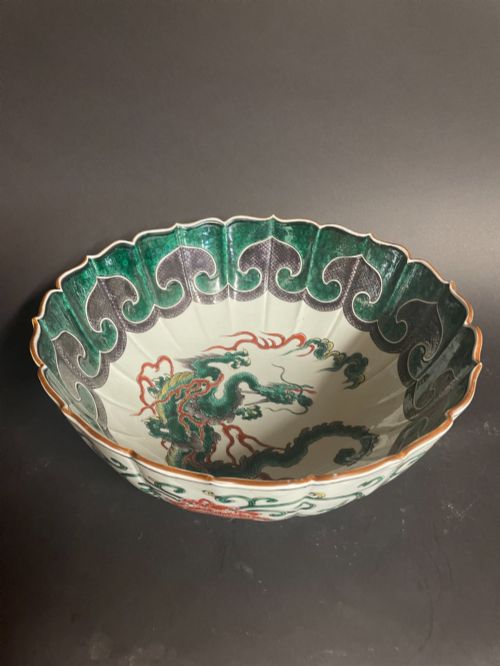
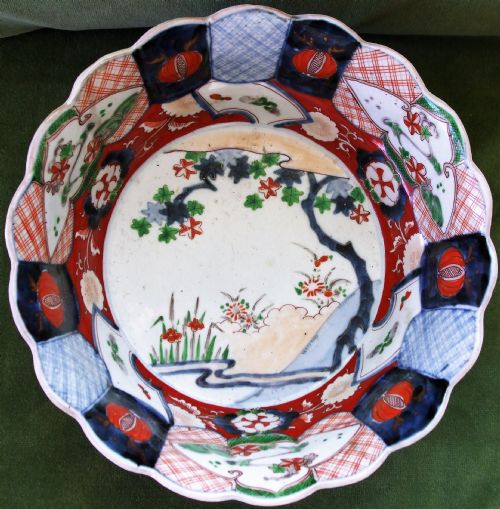
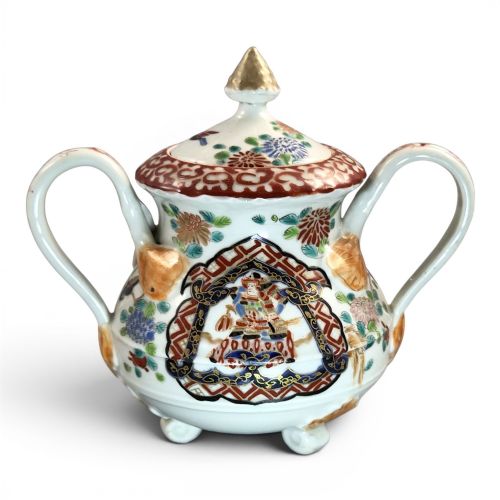
When you search for a japanese ceramic basin, you encounter vessels spanning from the seventeenth century through to the early twentieth century. The selection ranges from large Arita Imari chargers and jardinières to delicate Satsuma bowls and sugar bowls.
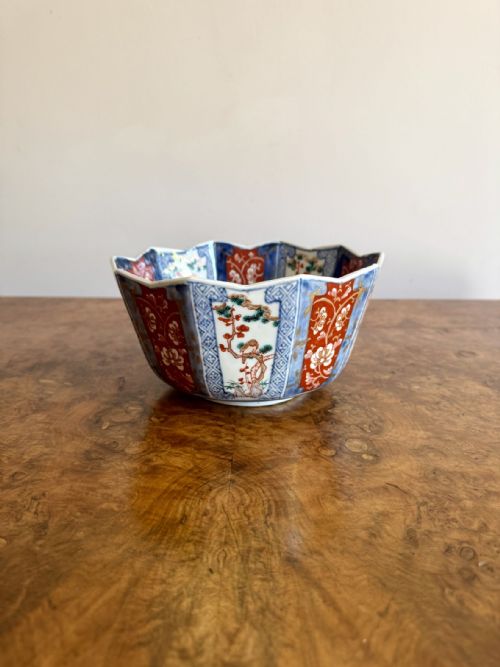
Imari porcelain and Satsuma earthenware dominate the offerings on this page. You will frequently find scalloped edges, hexagonal forms, and tripod bases alongside deep vessels intended for floral displays or brush washing.
The periods represented stretch across the Edo and Meiji eras up to the Edwardian period and Showa times. These pieces reflect both domestic use and export production for Western markets.
Assessing quality
The refinement of the painting separates standard production wares from master works. Precision in brushwork, particularly on detailed samurai scenes and floral millefleur patterns, marks the superior tier.
The complexity of the form influences the standing of a piece. Hexagonal shapes, scalloped rims, and large monumental jardinières require greater technical skill during the throwing and firing stages than simple round bowls.
A few climbing figures attempt to scale the side of a nineteenth-century brush washer.
Fukagawa Mark·Kōko·Ryuzan·Nikko·Kinkozan·Shozan
The Japanese Ceramic Basin Glossary
- Imari
- A style of Japanese porcelain decorated in underglaze blue, iron red, and gold. It originated in the town of Arita and was widely exported to Europe.
- Satsuma
- A type of earthenware originating from the Satsuma Province, known for its ivory crackle glaze and elaborate polychrome and gilt decoration.
- Jardiniere
- A large decorative ceramic pot or basin designed to hold growing plants or flowers. They often sit on associated hardwood stands.
- Suiban
- A shallow ceramic basin used for holding water and viewing stones or small arrangements. These function as traditional Japanese brush washers or display trays.
- Mon
- A Japanese heraldic badge or crest used to identify families or clans. They frequently appear on Satsuma and Imari ceramics.
Japanese Ceramic Basin: Frequently Asked Questions
What is a japanese ceramic basin used for?
These vessels served various functions ranging from domestic dining and sugar storage to holding plants as jardinières. Some specialised forms operated as brush washers for calligraphy.
Today, they function primarily as decorative centrepieces or display bowls within modern interiors.
How do I identify Meiji period pieces?
Meiji period ceramics typically date between 1868 and 1912, a time when Japanese export art flourished. Look for detailed hand-painted scenes, rich gilding, and specific workshop signatures.
Many pieces from this era combine traditional motifs with styles tailored for Western Victorian tastes.
What is the difference between Imari and Satsuma?
Imari pieces are porcelain, fired at high temperatures to produce a ringing tone and a smooth, vitreous body. They rely on cobalt blue and iron red underglazes.
Satsuma items are earthenware with a characteristic crackled ivory glaze, decorated over the surface with opaque enamels and gold leaf.
How should I clean my antique bowl?
Dust ceramic basins gently with a soft, dry cloth to prevent scratching the surface glaze. Avoid using water, detergents, or chemical cleaners, especially on Satsuma wares.
Over time, moisture can seep into the crackled glaze of earthenware or damage delicate gold leaf details.