

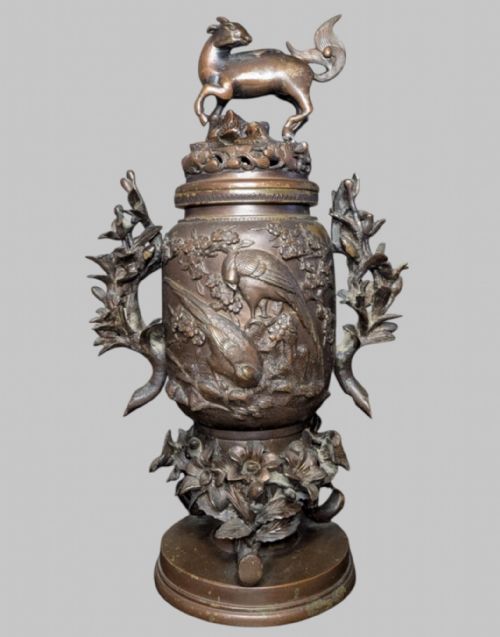


Japanese Censer Vessel
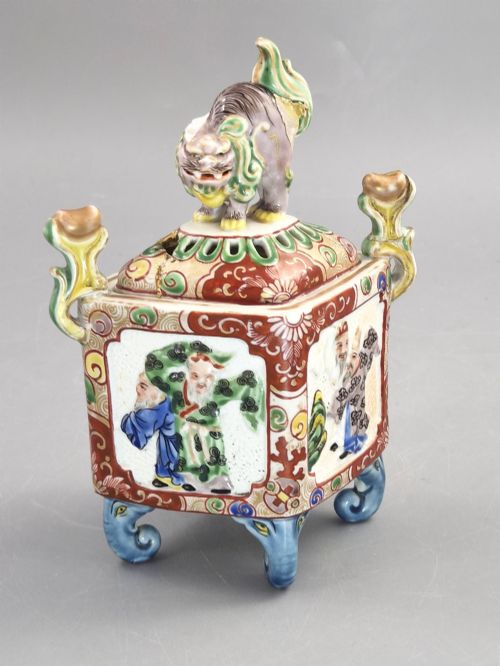
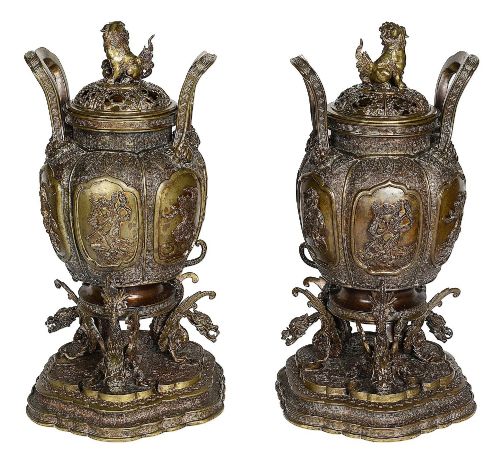
A Japanese censer vessel brings sculptural form and ritual tradition into a room, most often appearing here as a lidded bronze koro or decorated ceramic burner.
Japanese Censer Vessel
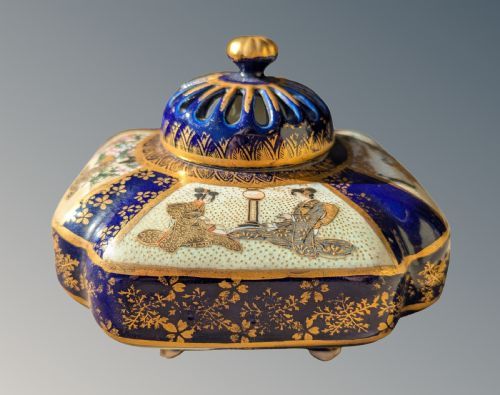
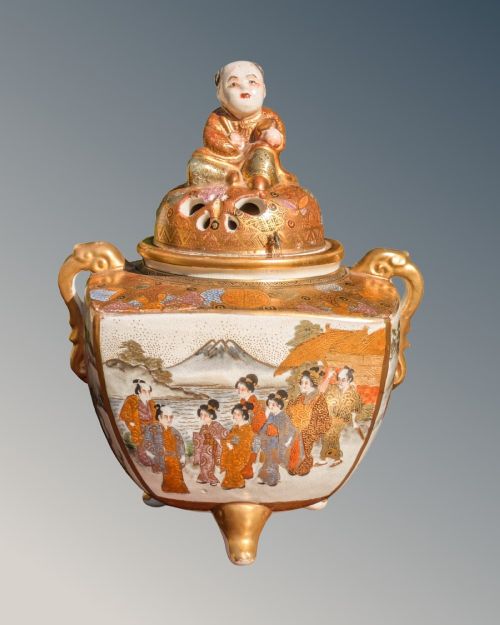
A japanese censer vessel serves primarily as a container for burning aromatic incense, taking forms such as covered koro, footed bowls, and hanging boats. These pieces emerge predominantly from the Meiji and Edo periods, reflecting centuries of metalwork and ceramic artistry.
Ceramic examples frequently display Kutani, Satsuma, or Imari decoration, often finished with figural finials like the karashishi lion or elephant head feet. Bronze alternatives utilise patination, gilding, and intricate enamel work to present sculptural motifs, including dragons and archaic vessel shapes.
Distinctions in Quality
Quality rests upon the crispness of the casting in metalwork and the precision of the enamel brushwork in ceramics. Superior examples exhibit deliberate balance in proportions, particularly where finials, handles, and feet meet the main body.
Signed pieces and those bearing identifiable workshop crests demonstrate higher standards of execution. The depth of the patina on bronze and the clarity of the gilding on Satsuma or Kutani surfaces separate standard production from exceptional work.
At least one bronze censer comes complete with a playful goat perched atop the lid as a finial.
Kinkozan·Kizan·Kotobuki do
The Japanese Censer Vessel Glossary
- Koro
- A traditional Japanese incense burner, typically fitted with a pierced cover to release smoke. These vessels stand on small feet and appear in both ceramic and bronze materials.
- Meiji Period
- The era spanning from 1868 to 1912, characterised by a surge in decorative arts created for both domestic use and export. Work from this time often shows high technical precision.
- Satsuma
- A type of Japanese earthenware featuring a crackled pale glaze decorated with elaborate enamel and gold leaf. These wares frequently depict figurative scenes and traditional motifs.
- Shi-Shi
- A mythical lion dog often sculpted as a finial perched upon the lid of a censer. This guardian figure appears across numerous bronze and ceramic pieces.
Japanese Censer Vessel: Frequently Asked Questions
How do I use a Japanese censer vessel?
These vessels were designed to burn incense safely by placing aromatic materials inside and resting the pierced lid on top to diffuse the smoke. Modern owners typically display them as decorative objects rather than active burners.
Ensure the interior remains clean if you choose to burn incense inside, as residual ash can accumulate over time on older ceramic or bronze surfaces.
What is the difference between Edo and Meiji pieces?
Edo period vessels often reflect restrained, archaic forms or traditional bronze casting, whereas Meiji pieces frequently showcase intricate ornamentation intended for international exposition.
Examining the complexity of the surface decoration and the recorded production era helps establish whether a piece belongs to the earlier feudal period or the later Meiji expansion.
How should I clean bronze and ceramic censers?
Bronze pieces require gentle dusting and occasional light application of a dry cloth to preserve their natural patina. Avoid using chemical polishes that strip away historical surface ageing.
Ceramic vessels like Satsuma or Kutani need careful handling to protect delicate gold leaf and enamel details from abrasion during routine maintenance.
Are all these vessels meant for burning incense?
While originally created for incense rituals, many larger items listed function as decorative bowls, jardinieres, or lidded urns. Their sculptural presence makes them suitable for ornamental placement around a home.
Form dictates function, so pieces with solid covers or without internal ventilation holes serve primarily as decorative containers rather than active burners.