




Japanese Cast Bronze Figure
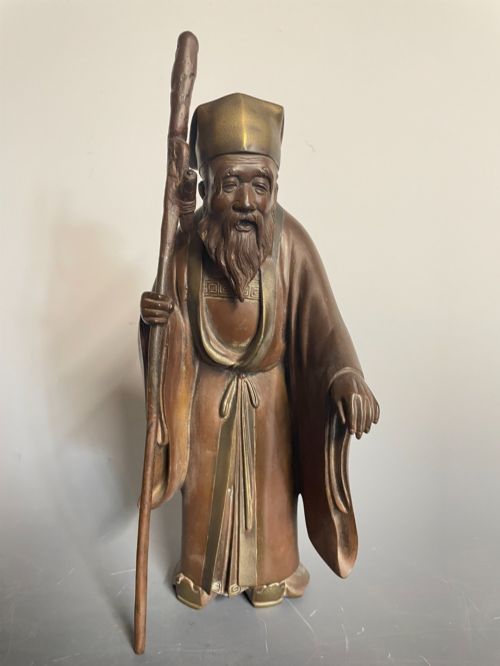
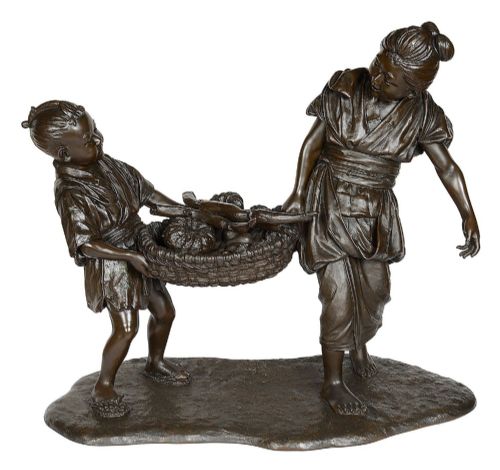
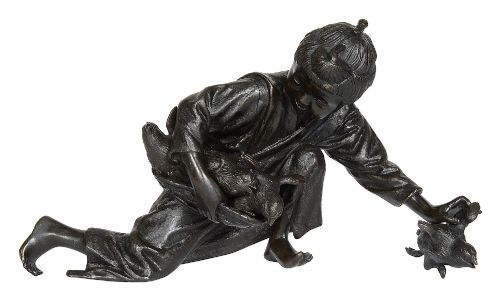
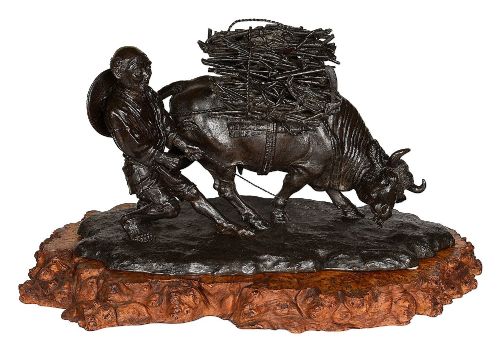
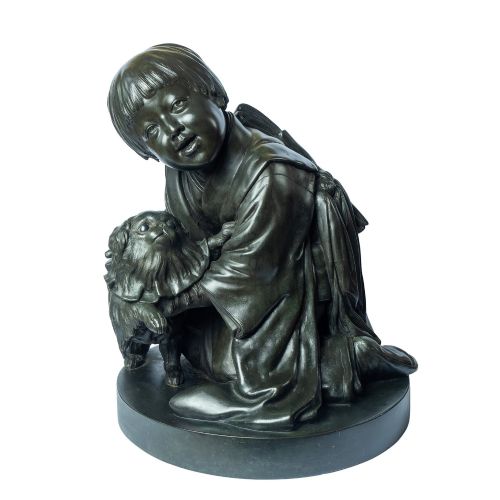
These Japanese cast bronze figure examples capture extraordinary naturalism and detailed casting from the Meiji period.
Japanese Cast Bronze Figure
A japanese cast bronze figure brings detailed animal and human subjects into interior spaces, ranging from modest tabletop works to large garden sculptures. When exploring this selection, buyers encounter depictions of wildlife, legendary figures, and everyday subjects.
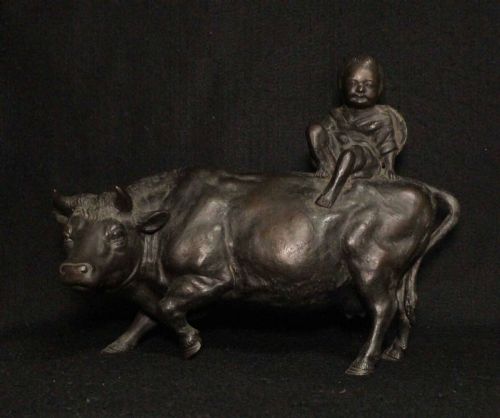
The objects span from the nineteenth century into the early twentieth century, aligning with the Meiji period and the later impact of Japonisme. Forms include domestic animals, figures carrying fruit, and dynamic okimono placed upon naturalistic bases.
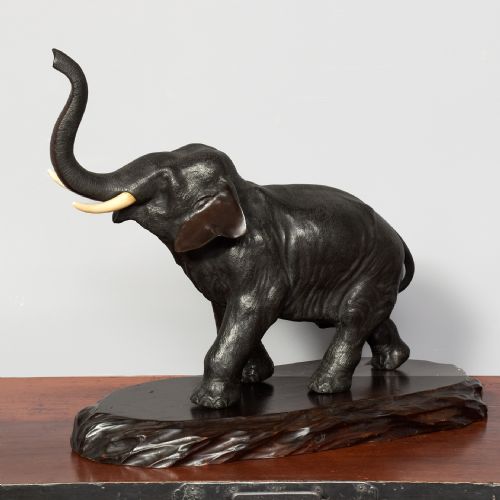
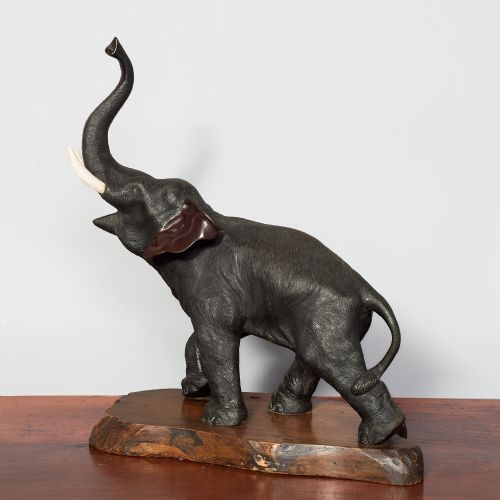
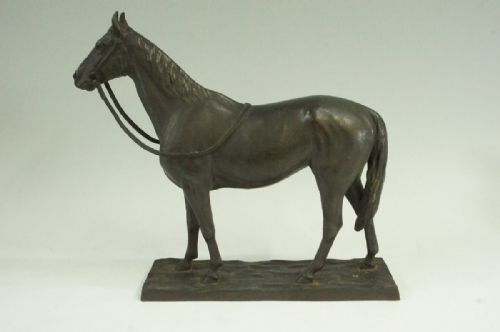
Common subjects in this inventory include elephants with ivory tusks, horses, dogs, and human figures such as geisha and woodmen. These sculptures demonstrate the technical ambitions of Japanese metalworkers working across various decades.
Materials and casting methods
Makers utilised bronze, often patinated to achieve dark brown or metallic tones, sometimes combined with wood, ivory, bone, brass, burr wood, and marble. Selected pieces incorporate contrasting elements like diamond eyes or inlaid tusks to accentuate the subject matter.
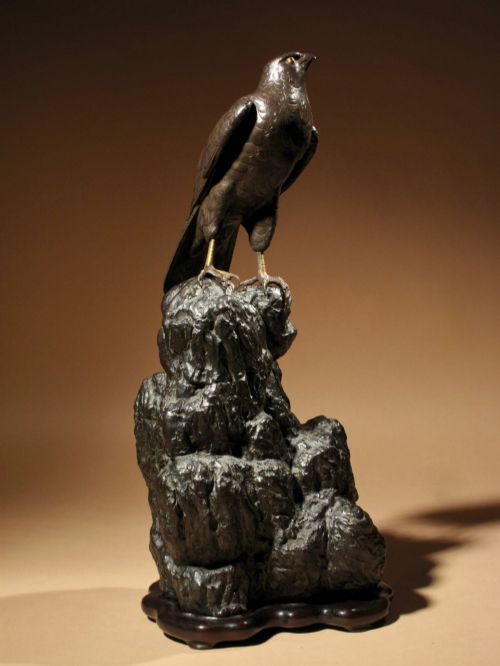
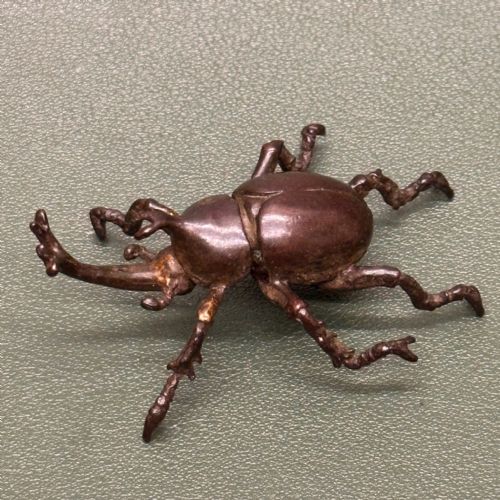
The casting process allowed for precise rendering of fur, feathers, and textures, as seen on pieces depicting rhinoceros beetles, rats clutching chestnuts, and hawks on craggy rocks. Foundries in Tokyo and specialised workshops applied patination to create depth and shadow across the surface.
A sturdy rhinoceros beetle stands ready to guard your desk.
Distinctions in execution
Quality rests in the precision of the casting and the sensitivity of the modelling, separating standard production from works bearing distinct artistic authorship. Finer examples display meticulous attention to anatomical details, surface textures, and balanced compositions.
The sophistication of the patina and the integration of secondary materials, such as contrasting tusks or detailed bases, differentiate the scope of these sculptures. Works associated with known makers or established foundries exhibit superior finishing and compositional weight.
MASAAKI·Kunio Itô·Kaniya Kuniharu·Tokyo Foundry, Sakai Kōzan
The Japanese Cast Bronze Figure Glossary
- Okimono
- A standalone Japanese decorative object or sculpture designed for display on a shelf or in a tokonoma alcove.
- Meiji Period
- The era in Japanese history lasting from 1868 to 1912, characterised by rapid modernisation and the opening of trade with the West.
- Patinated Bronze
- Metal treated with chemical solutions to produce a specific surface colour or weathered appearance.
- Japonisme
- The influence of Japanese art and design on Western aesthetics during the late nineteenth and early twentieth centuries.
Japanese Cast Bronze Figure: Frequently Asked Questions
What is an okimono?
An okimono is a traditional Japanese decorative sculpture intended for display inside a home.
These pieces sit on flat surfaces rather than serving a functional role, focusing purely on artistic representation.
How do I date these bronzes?
Dating relies on stylistic markers associated with the Meiji period and early twentieth-century manufacturing techniques.
Changes in patination styles and the incorporation of specific signatures help place items within the nineteenth and early twentieth centuries.
Where were these figures displayed?
Historically, these figures stood in domestic interiors upon tables, shelves, or custom wooden bases.
Larger versions were suited for gardens or grand reception rooms during the height of the export market.
Are mixed materials common?
Many sculptures incorporate secondary elements such as ivory tusks, bone, or contrasting metals to enhance visual detail.
These additions are integrated into the primary bronze structure during the creation process.