





Japanese Carved Lacquer Cabinet
A japanese carved lacquer cabinet brings tactile depth and intricate craftsmanship into a room, offering both storage and a striking focal point.
Japanese Carved Lacquer Cabinet
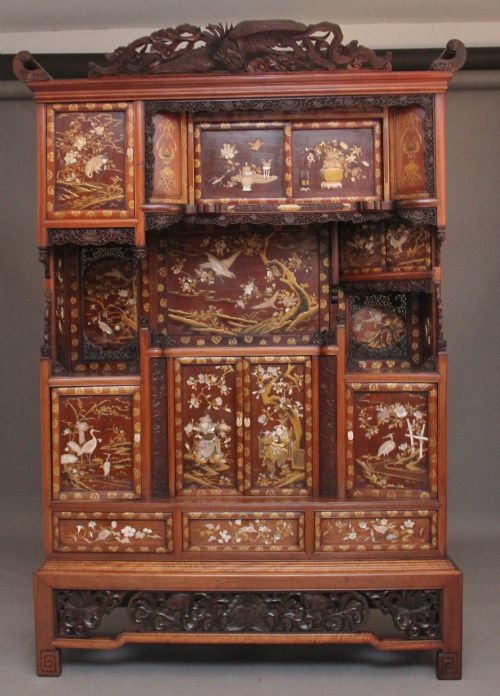
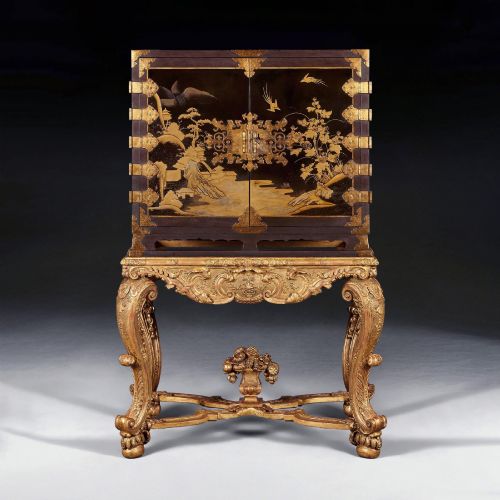
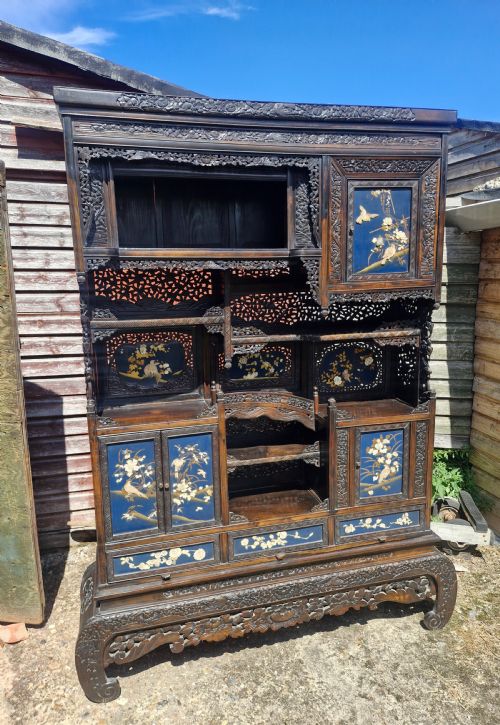
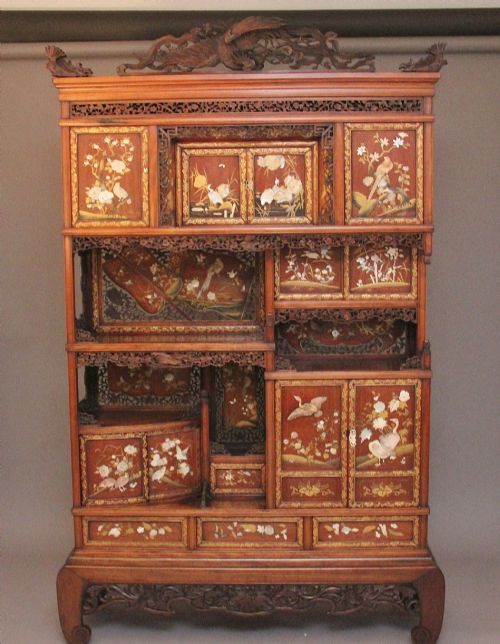
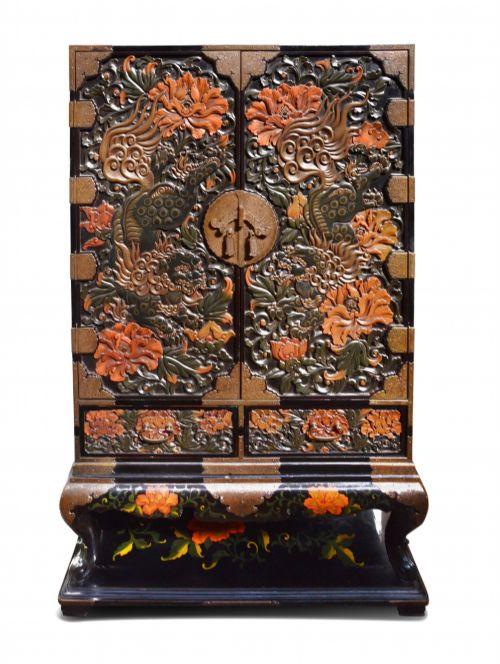
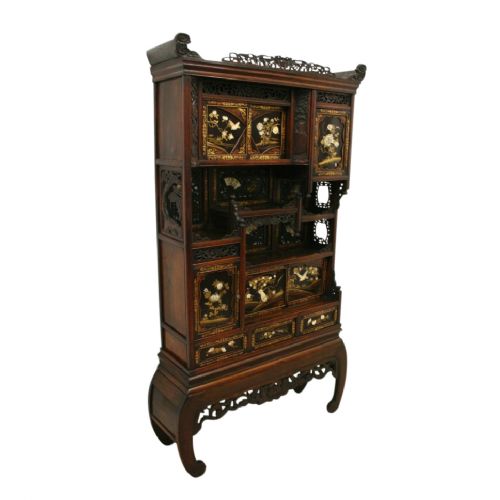
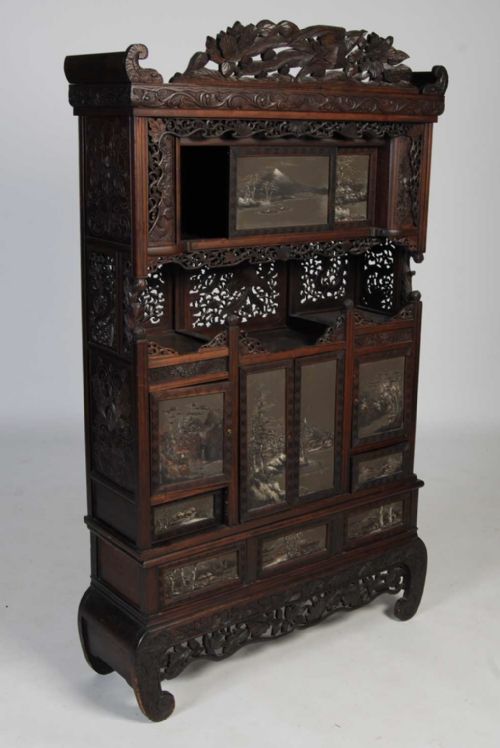
A japanese carved lacquer cabinet encompasses several traditional forms, most notably the shodona and table cabinet, originating primarily from the Meiji period alongside 17th-century and early 20th-century examples. These pieces often arrive mounted on stands, including French giltwood Regence frames or carved wooden bases, blending Eastern surfaces with Western mounting traditions.
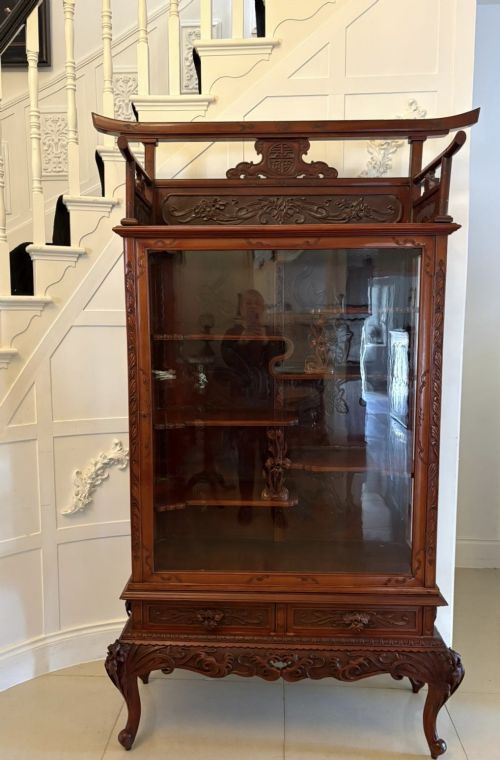
Buyers will frequently encounter large decorative display cabinets and smaller table cabinets across the selection. The forms serve both utilitarian storage functions and ornamental display roles, often featuring internal shelving and compartments behind panelled doors.
Materials and construction
The primary construction relies on hardwood or general wood frames finished with layers of lacquer, sometimes appearing in distinct red, black, or cinnabar tones. Artisans built up these surfaces before applying intricate carved details and decorative panels.
Detailing frequently incorporates mother-of-pearl, bone, and brass elements to accent the lacquered surfaces. Giltwood appears on specific European stands paired with the Asian cabinets.
Japanese Carved Lacquer Cabinet Retail Price Guide 2026
Typical asking prices for japanese carved lacquer cabinet among the pieces listed under this phrase on Sellingantiques today, from the lower quarter to the upper quarter. They describe what is for sale here now, not the wider market.
The selection spans pieces from the 17th century through the early 20th century, with a strong representation of Meiji period craftsmanship.
Assessing quality and execution
Quality rests heavily on the depth and precision of the carved lacquer work and the integration of inlaid materials such as bone and mother-of-pearl. Superior examples display crisp definition in the floral and figurative motifs rather than shallow or softened surface detailing.
The stability and harmony of the stand relative to the cabinet body determine the structural success of pieces presented on mounts. Well-executed stands, whether carved wooden bases or giltwood frames, complement the proportions of the main cabinet without appearing mismatched.
The Japanese Carved Lacquer Cabinet Glossary
- Shodona
- A traditional Japanese display cabinet featuring multiple asymmetrical shelves and cupboards. These pieces were designed to showcase small art objects and scholarly items.
- Cinnabar lacquer
- A technique involving numerous layers of red lacquer carved with intricate designs. This method produces deep relief patterns with a distinct crimson hue.
- Meiji period
- The era in Japanese history spanning from 1868 to 1912, known for significant craft production aimed at international export markets. Cabinets from this time often exhibit highly decorative carved panels.
- Regence stand
- A European furniture base style dating from the early 18th century, characterised by gilded woodwork and scroll motifs. These stands were occasionally paired with imported Japanese lacquer cabinets.
Japanese Carved Lacquer Cabinet: Frequently Asked Questions
How are these cabinets cleaned?
Dusting gently with a soft, dry cloth keeps the lacquer surface safe from abrasion.
Avoid using liquid cleaners, polishes, or harsh chemicals that can damage the delicate lacquer finish and inlaid details.
Where should I place a cabinet?
Position the piece away from direct sunlight and strong heat sources to prevent the lacquer from drying out or cracking.
A stable interior environment with moderate humidity levels protects both the wooden core and the surface decoration.
What is a shodona?
A shodona is a Japanese decorative display cabinet designed with an arrangement of staggered shelves and small doors.
These cabinets were traditionally used to display prized ceramics, incense burners, and other scholarly ornaments.
Can these cabinets hold heavy items?
Most of these cabinets are intended for displaying light decorative objects, porcelain, or curiosities rather than heavy books.
The internal shelving and smaller proportions of table cabinets and shodonas suit delicate collections best.