





Carved Red Lacquer Stand
These carved red lacquer stand examples offer rich cultural forms that bring depth and distinct character to any interior scheme.
Carved Red Lacquer Stand
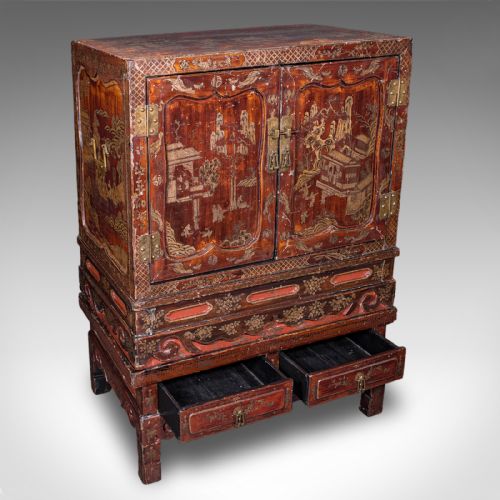
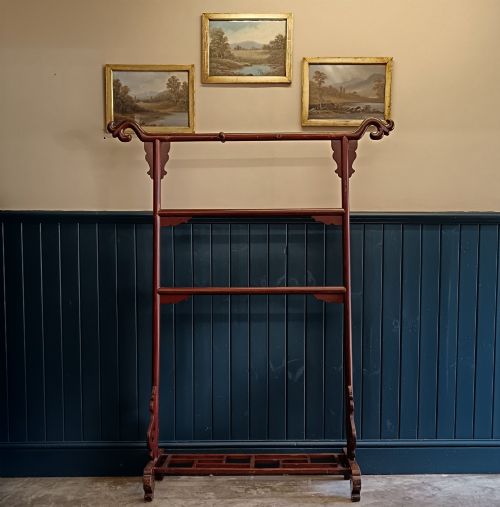
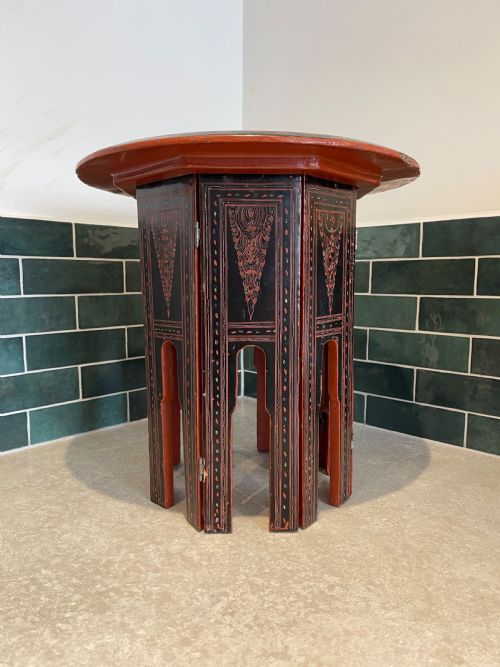
A carved red lacquer stand encompasses a variety of decorative furnishings, including occasional tables, plant holders, and robe racks originating from diverse global traditions. Buyers searching for a carved red lacquer stand will encounter items spanning from the Victorian era into the early twentieth century.
Most examples serve as display surfaces for vases or as compact side tables, bringing bold colour and tactile relief carving into domestic spaces. The forms reflect traditional craftsmanship from Meiji and Taisho period Japan alongside Qing Dynasty influences and Anglo-Indian designs.
Materials and construction methods
The physical construction relies on a sturdy wood core that serves as the foundation for multiple layers of applied lacquer, pigment, and occasional gold leaf detailing. Artisans built up these surfaces over time before carving intricate motifs directly into the hardened layers.
Many items incorporate supplementary materials such as brass fittings or giltwood accents to enhance structural joints and decorative borders. The integration of painted pigments and glazed finishes further distinguishes the tactile quality of these decorative furnishings.
Carved Red Lacquer Stand Retail Price Guide 2026
Typical asking prices for carved red lacquer stand among the pieces listed under this phrase on Sellingantiques today, from the lower quarter to the upper quarter. They describe what is for sale here now, not the wider market.
Materials recorded across the inventory include lacquer, cinnabar lacquer, wood, giltwood, brass, gold leaf, and painted pigment.
Quality and craftsmanship variations
Quality reveals itself in the depth and precision of the carved relief work across the lacquer surface, where sharper chisel control distinguishes finer workshop production. The thickness and stability of the underlying wood substrate also dictate the structural integrity of each piece over time.
The complexity of the regional ornamentation, such as detailed Chinoiserie motifs or carefully applied giltwood and gold leaf accents, separates standard utilitarian items from more ambitious decorative examples.
The Carved Red Lacquer Stand Glossary
- Cinnabar lacquer
- A heavy red lacquer derived from mercuric sulphide that is built up in thick layers and carved with intricate motifs. This technique yields a distinct matte finish with deep relief detail.
- Chinoiserie
- A European decorative style reflecting Chinese artistic influences, frequently applied to cabinets, tables, and stands during the nineteenth and twentieth centuries. It employs painted scenes and lacquer effects.
- Meiji Period
- The era of Japanese history lasting from eighteen sixty-eight to nineteen twelve, known for significant craft production and international export. Pieces from this time often display refined surface decoration.
- Giltwood
- Wood that has been coated with a thin layer of gold leaf or gold paint to highlight carved details. It appears on various stands and frames to provide contrasting metallic brilliance.
- Anglo-Indian
- Furniture and decorative objects made in India under British colonial rule, combining local wood and lacquer techniques with European forms. These items often feature vibrant red pigments and turned wooden components.
Carved Red Lacquer Stand: Frequently Asked Questions
How do I care for a carved red lacquer stand?
Keep these items away from direct sunlight and dramatic humidity changes to prevent the wood substrate and lacquer layers from drying out. Dust them gently with a soft, dry cloth without applying modern chemical polishes.
Maintaining a stable indoor climate protects the delicate carved surfaces and prevents the lacquer from cracking over decades of domestic use.
What periods do these stands come from?
The available pieces primarily date from the nineteenth century through the early decades of the twentieth century. This timeframe includes Victorian productions alongside Meiji and Taisho period Japanese items and Qing Dynasty Chinese works.
Each period brings distinct stylistic nuances, from British colonial interpretations to traditional East Asian export goods.
How were these stands used originally?
Many served as dedicated supports for valued decorative objects, including porcelain vases, bronze vessels, and tabletop display pieces. Others functioned as occasional tables, clothes racks, or specialised side cabinets within domestic interiors.
Their sturdy wood and lacquer construction allowed them to bear the weight of heavy display items while adding decorative colour to a room.
Are these stands purely decorative?
While highly ornamental due to their carved red surfaces and gilt details, most examples were built for practical everyday use. Tables, cabinets, and plant stands provide functional horizontal surfaces or enclosed storage within a living space.
Buyers can readily integrate them into modern rooms as functional side tables or display pedestals.